
REBIRTH ACADEMY · KNOWLEDGE
Knowledge Centre
Explore material assessment, care techniques, risk management, product use, shop operations, pre-owned luxury goods and sneaker care. Find clear, practical guidance for the questions you face.
Try: colour loss, light leather, condition assessment, sole separation or item intake
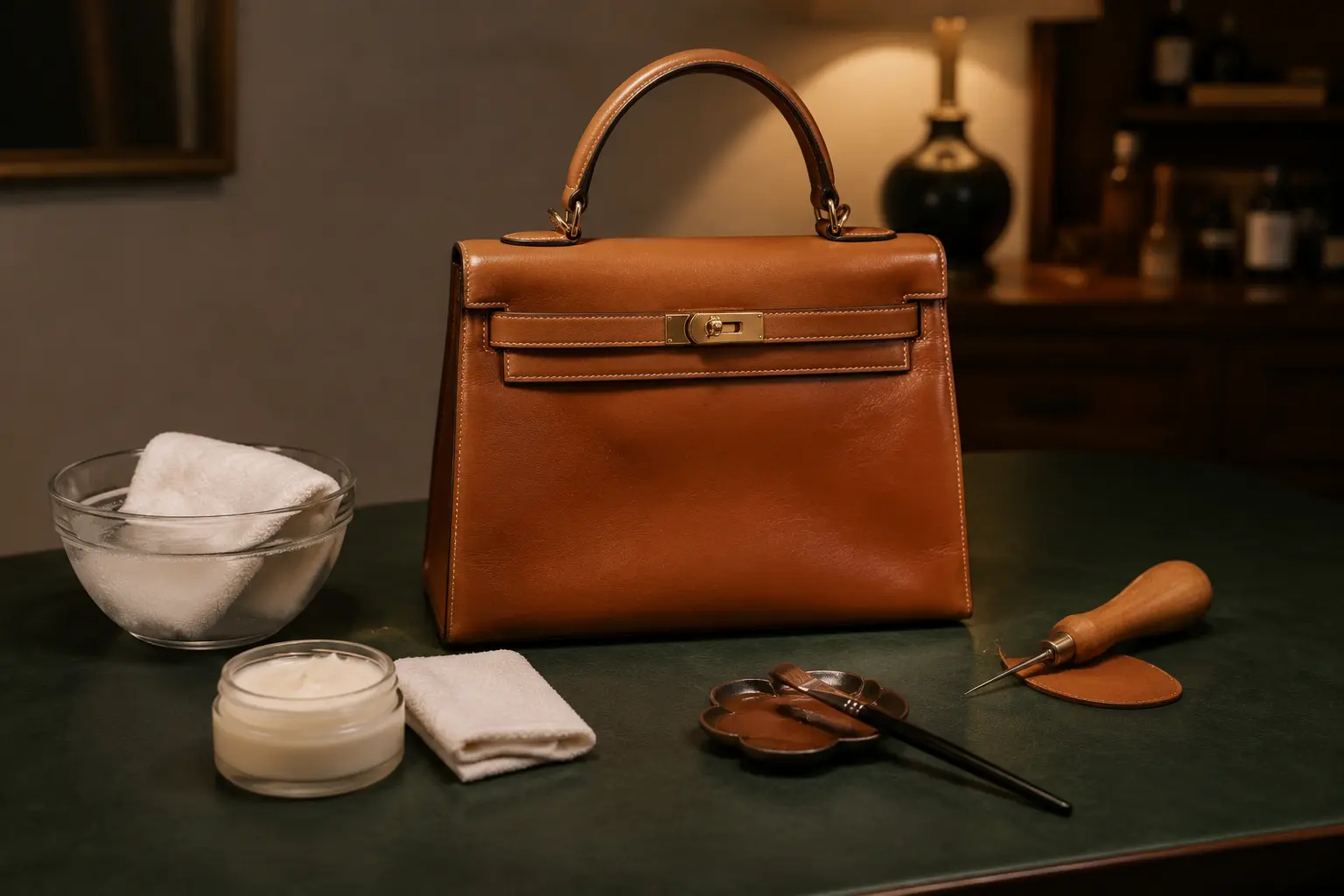
Identify the problem. Choose the next step.
Connect care techniques, workshop practice and business experience through a growing library of professional knowledge.
KNOWLEDGE LIBRARY
Find guidance for the problem at hand
Browse by area of practice, from care techniques to shop operations and pre-owned luxury goods. Build the knowledge to deliver better work and explain your services clearly.
114 articles
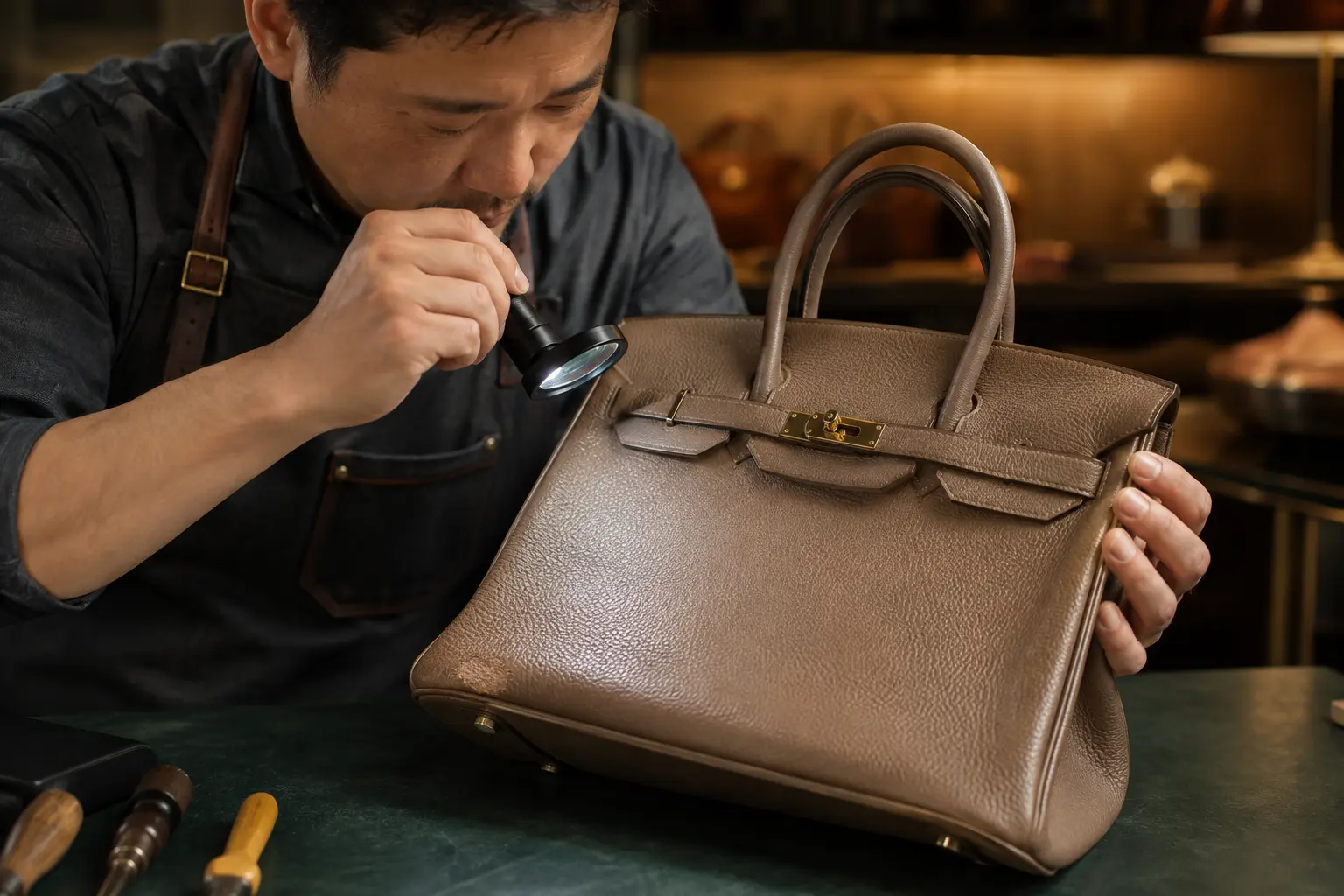
Why you should identify the material before cleaning
What looks like dirt may be surface soiling, changes in the finish, wear, colour loss or an earlier repair. Identifying the material and the nature of the problem helps prevent irreversible damage from being mistaken for a cleaning task.
Read article →Cleaning, conditioning, recolouring and repair: what each one does
Cleaning, conditioning, recolouring and repair are different processes. Each addresses a different problem and requires its own materials, risk assessment and checks on the finished result.
Read article →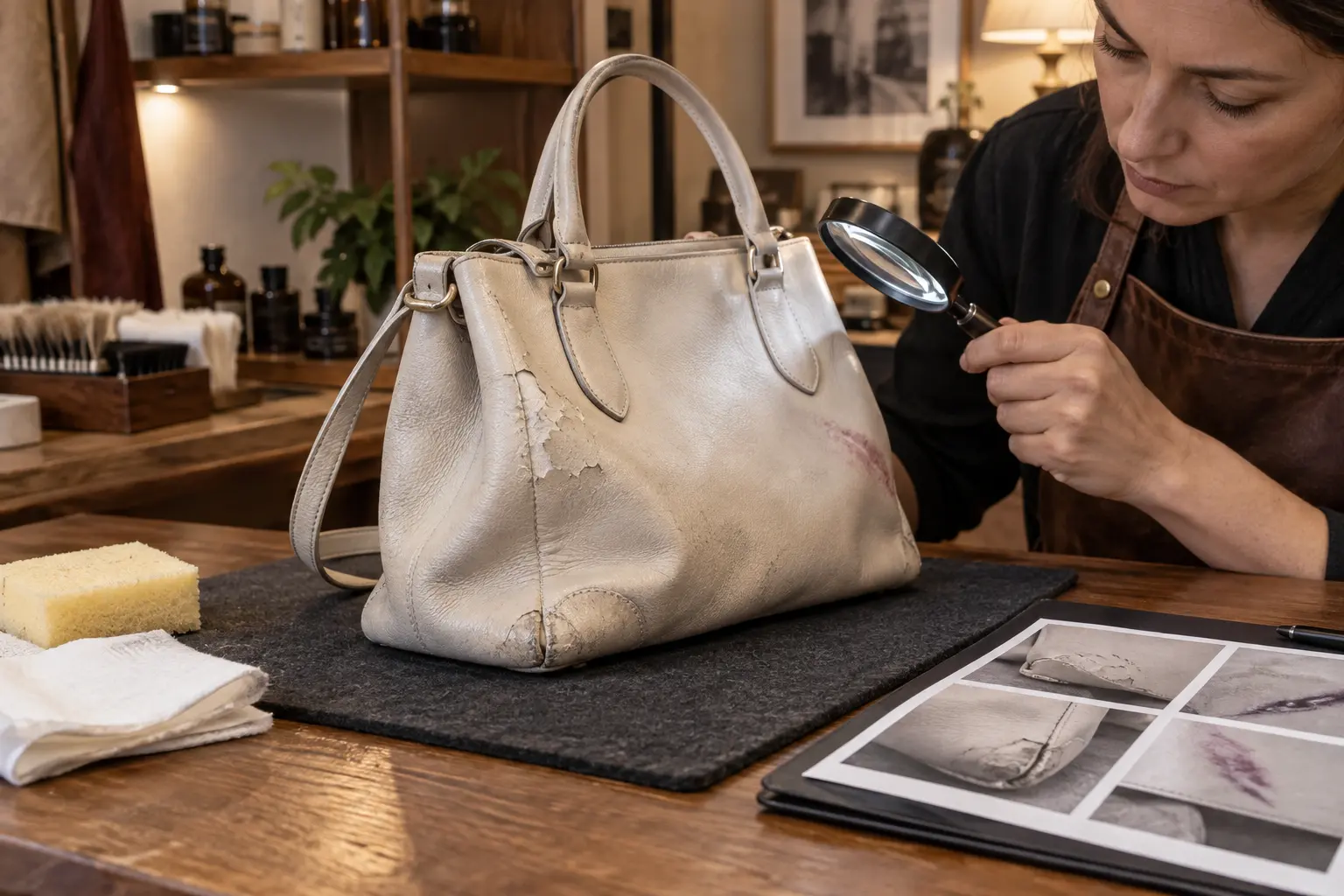
Can you clean your handbag at home? Six reasons to stop and seek advice
Routine dust removal and basic care may help with minor problems. For valuable items, sensitive materials, unstable surfaces or treatments with irreversible consequences, stopping can be the right care decision.
Read article →
Online learning or in-person leather care training? Choose the support you need
Recorded lessons help build a knowledge framework and support repeated study. In-person training develops practical observation and technique with immediate correction. Each addresses a different learning need.
Read article →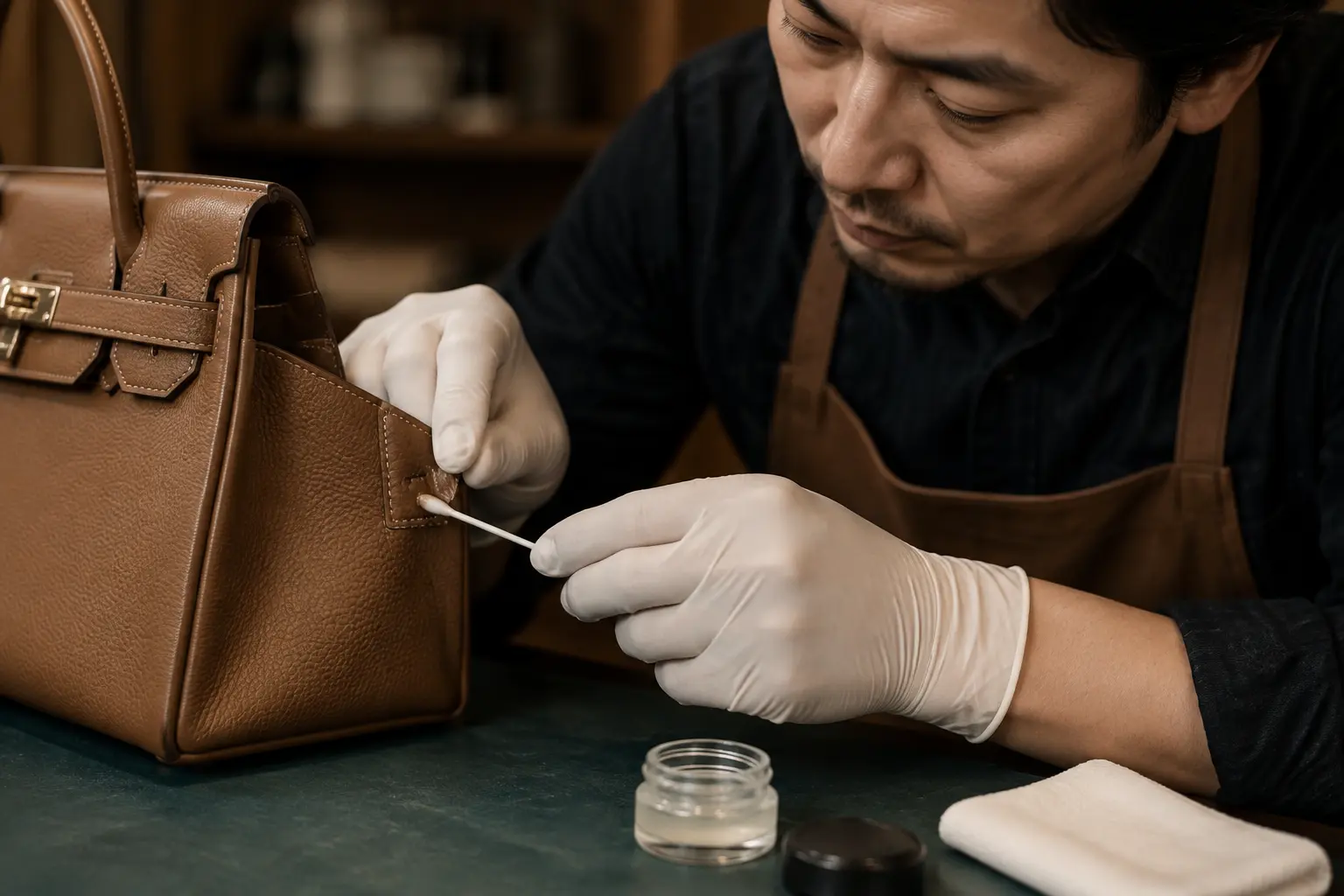
Why every new care product needs a small-area test
A small-area test checks colour, sheen, feel and surface stability. It is an essential risk check before treatment, rather than a formality.
Read article →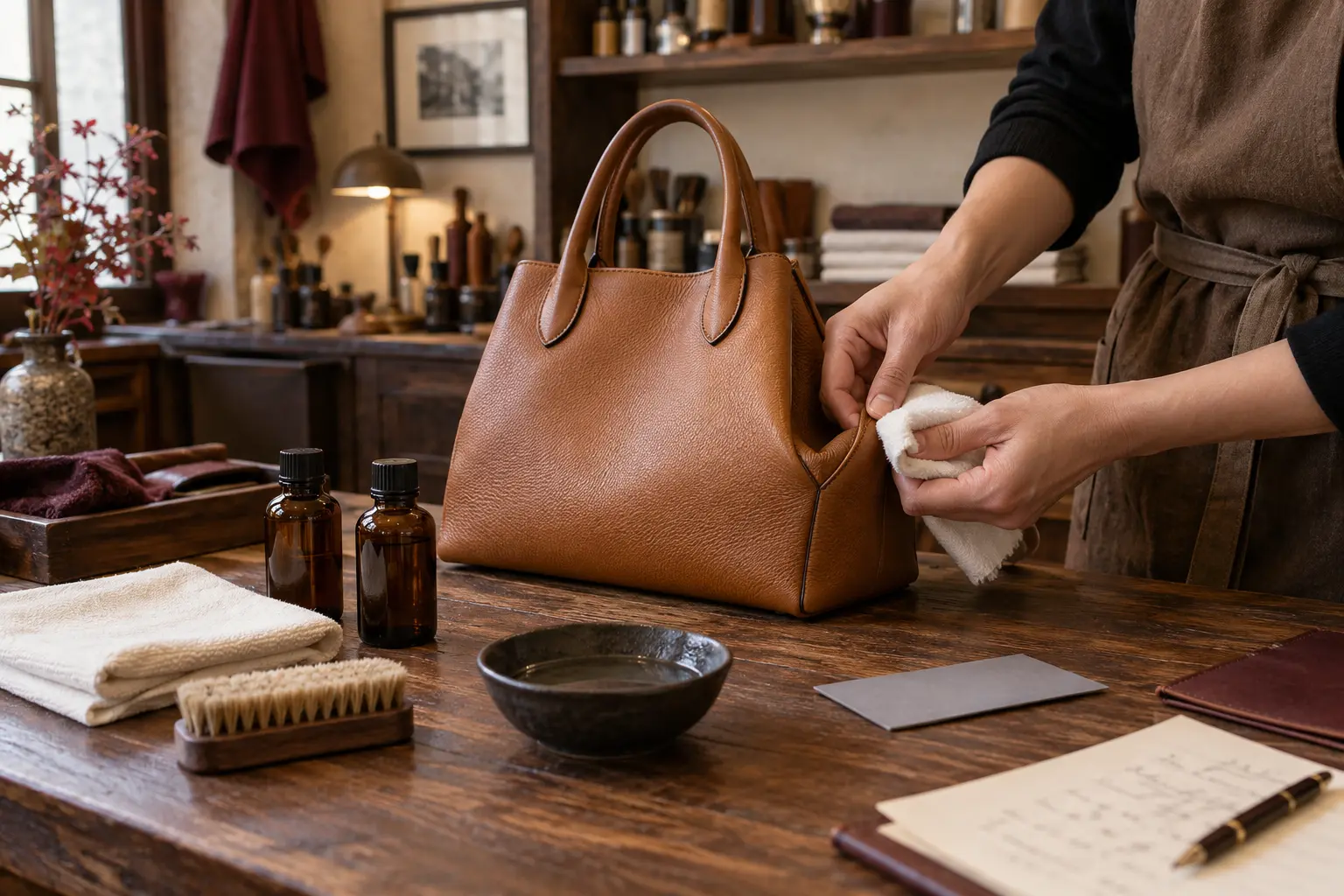
Leather cleaner or conditioner first? REBIRTH recommends cleaning before conditioning
A cleaner addresses suitable surface soiling; a conditioner supports routine care after cleaning. Identify the leather, test each product, then clean before conditioning.
Read article →
Good leather care is about more than shine
More shine does not necessarily mean better care. Colour, feel, grain, uniformity, stability and performance in use all contribute to the result.
Read article →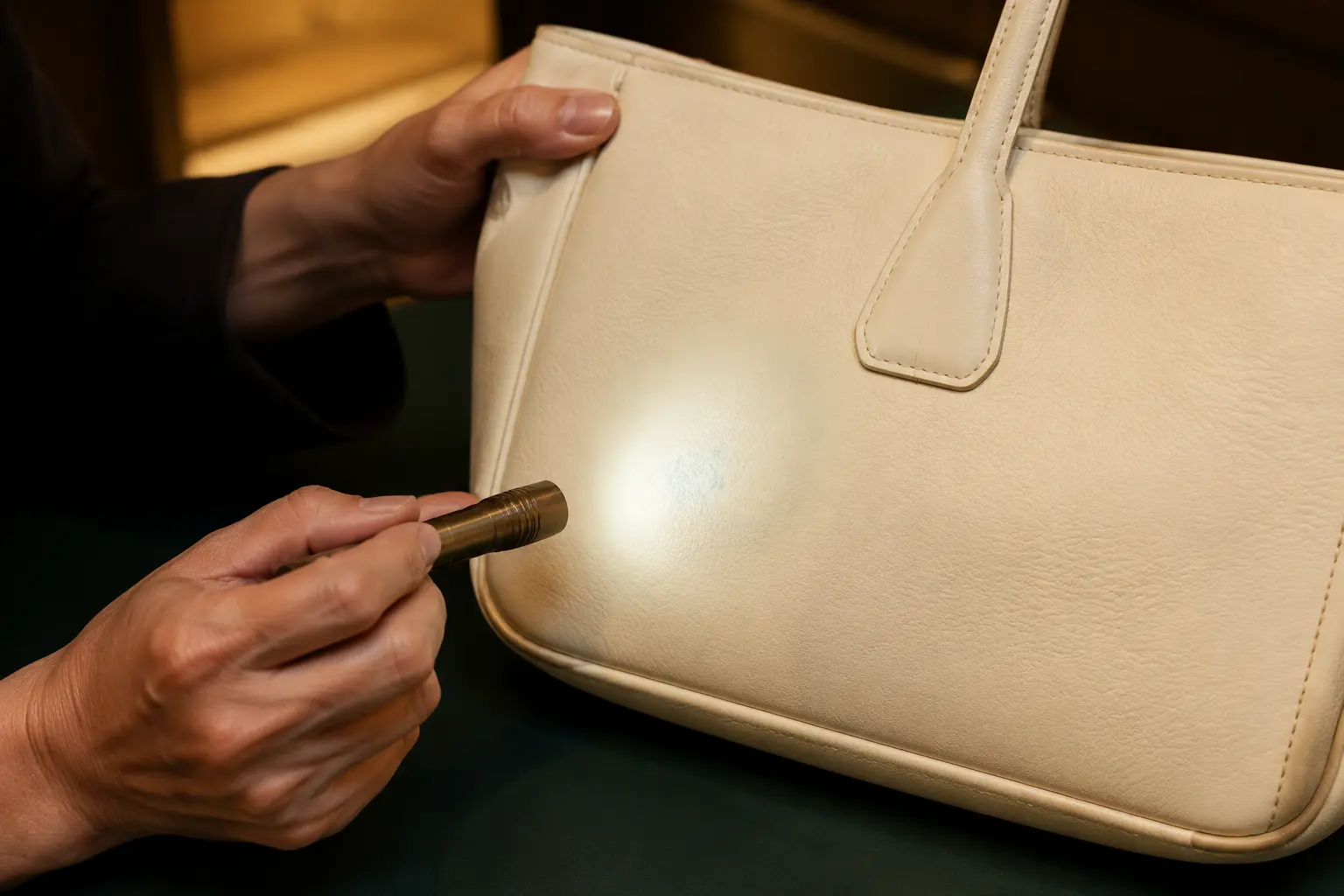
The risks that are easy to miss when cleaning light-coloured leather
Water marks, rings, darkening and dye transfer show more readily on light-coloured leather. Assess the material, type of soiling, earlier repairs and overall colour uniformity before treatment.
Read article →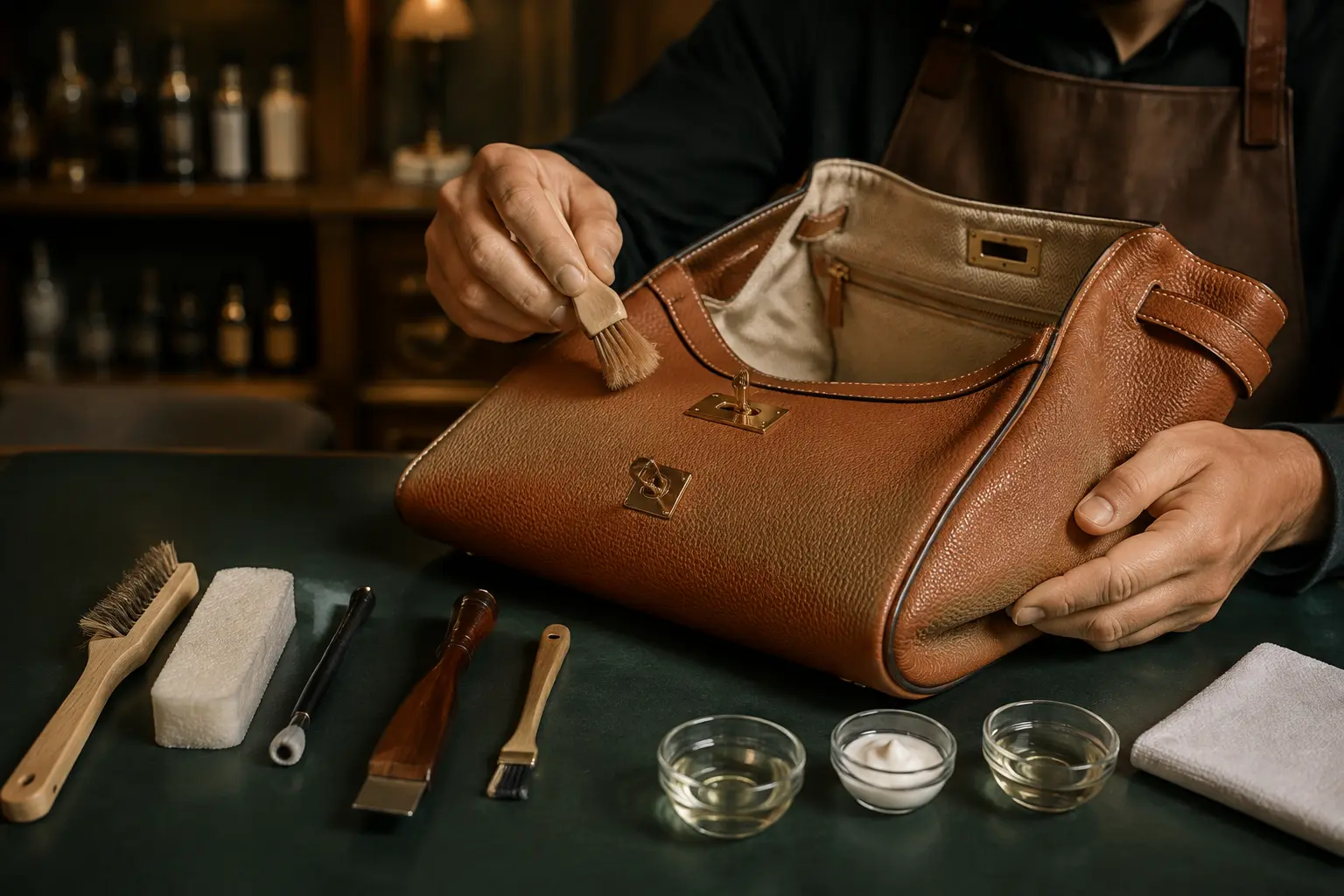
Why the bag body, edge paint, hardware and lining need different treatment
A handbag combines different materials and forms of construction. Its body, edge paint, hardware and lining differ in tolerance, treatment goals and risks, so each area needs its own assessment.
Read article →
How to document a leather-care case: before, during and after treatment
A useful case record supports risk assessment, review of the work, team coordination and the explanation given at handover. It does more than show a before-and-after result.
Read article →
Learning luxury leather care from scratch: REBIRTH's four-stage approach
Start with material and risk assessment, progress to cleaning and conditioning, then colour and repair. Use casework to develop recording, review and handover skills.
Read article →
A practical intake checklist for a leather-care business
Taking in an item means recording its original condition, the customer's priorities, earlier treatments and the agreed limits of the result. This creates a shared basis for assessment, quotation, treatment and handover.
Read article →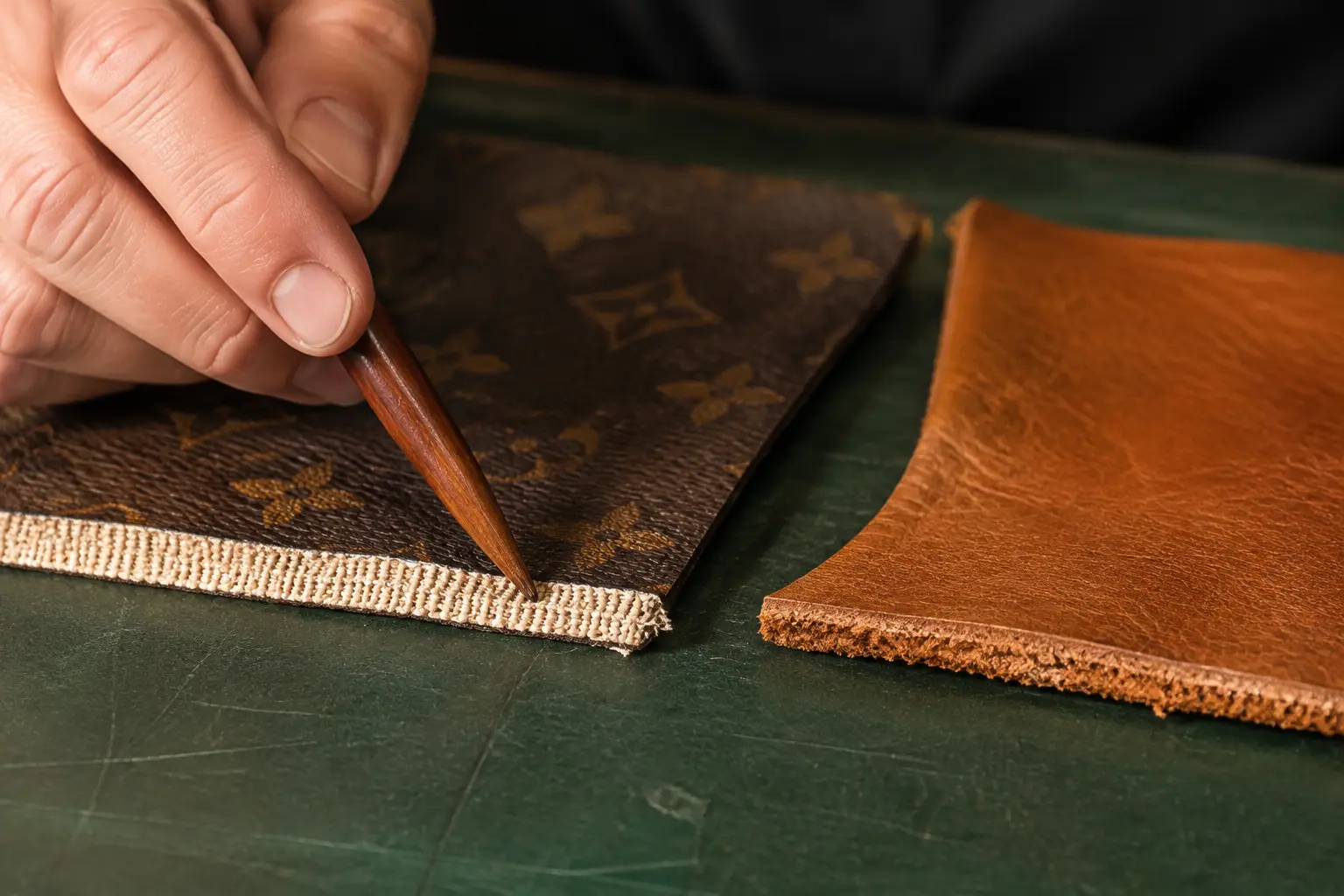
Coated canvas or leather? How to assess the material before care
Coated canvas and leather can look similar, but their surface structure, tolerance and treatment needs differ. Cross-check visible edges, texture, response to gentle pressure and construction details.
Read article →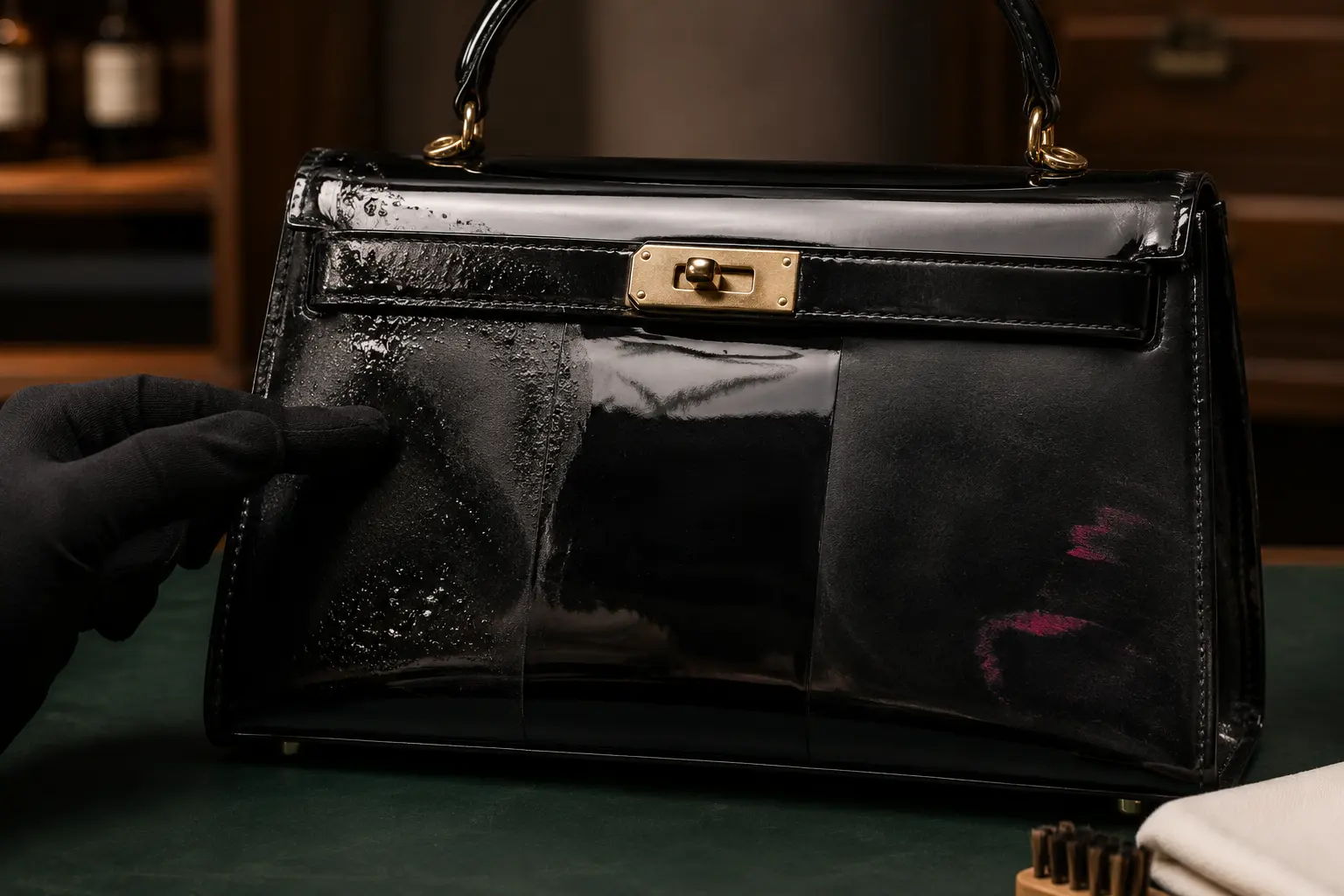
Tackiness, dullness and dye migration on patent leather: different warning signs
Patent-leather problems are not always dirt on a glossy surface. Tackiness, loss of sheen and dye migration can have different causes and require different limits on treatment.
Read article →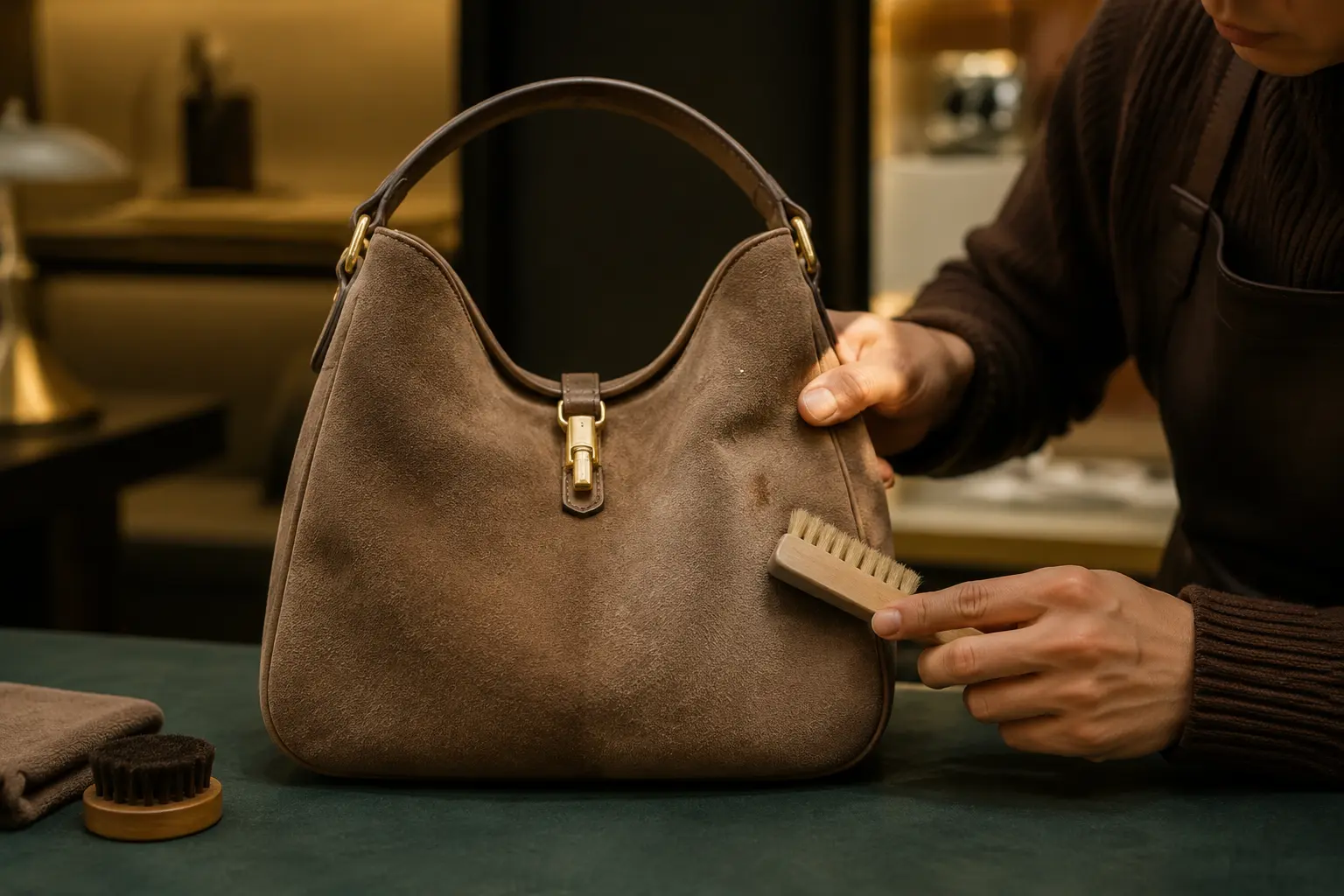
Dark and light patches on suede: a stain or a change in the nap?
Suede changes appearance with nap direction, lighting and pressure marks. Look from different angles and try gentle brushing before mistaking normal nap shading for a stain.
Read article →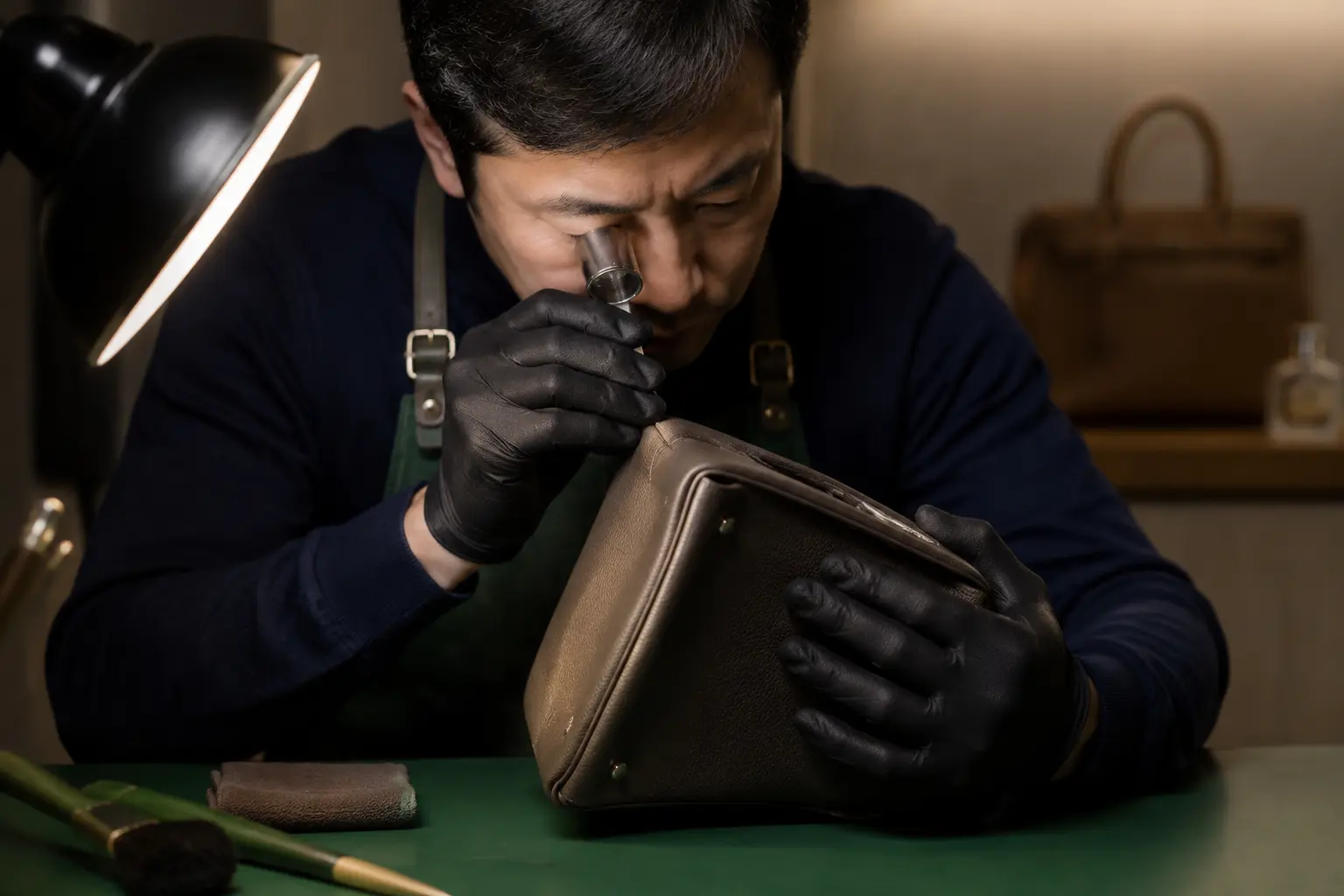
How to recognise previous recolouring or restoration on a handbag
Earlier recolouring changes the conditions for cleaning and adhesion. Examine the grain, stitching, hardware edges and layers of wear for evidence of previous treatment.
Read article →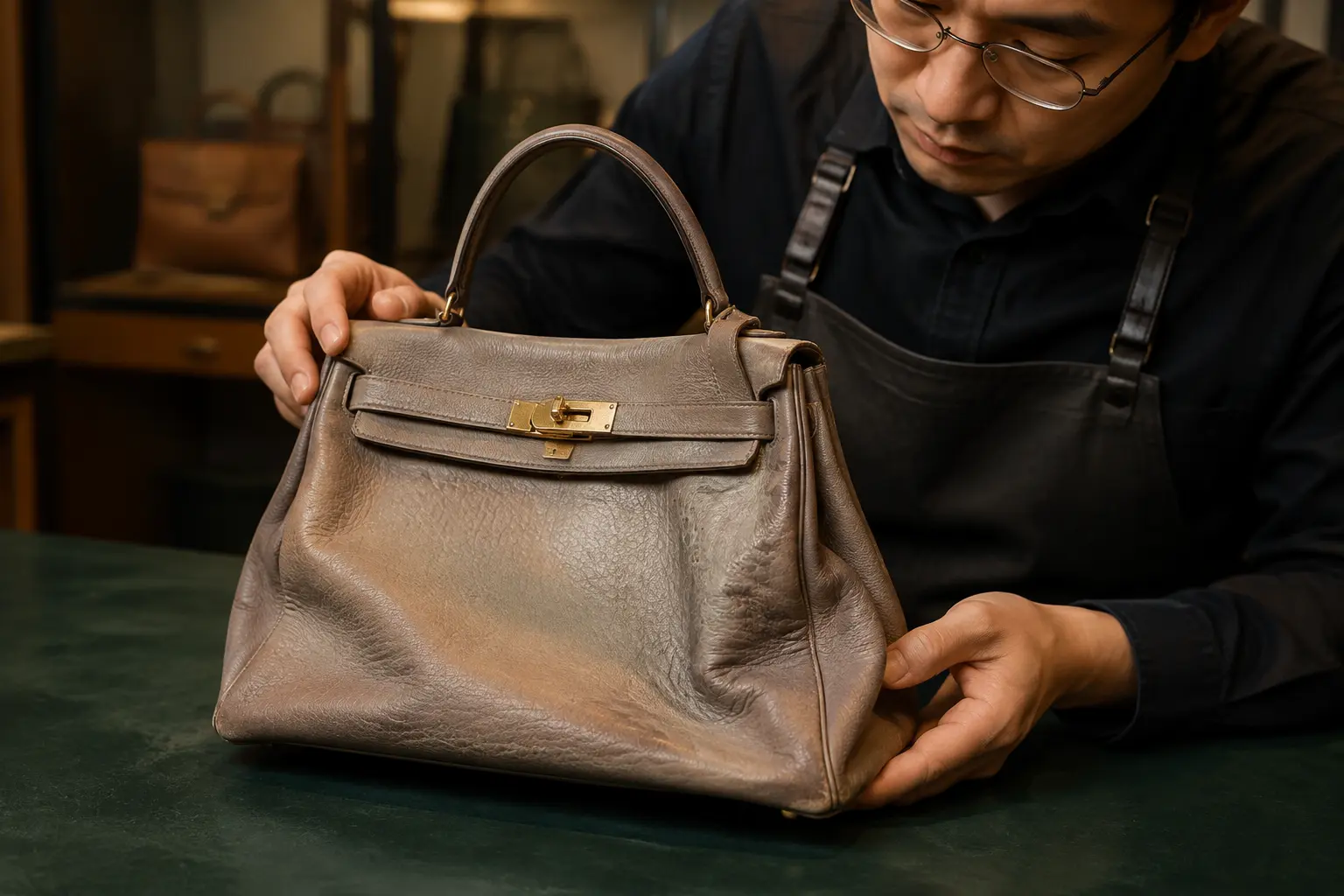
Dry leather, loss of shape or structural collapse: how to tell them apart
Surface dryness, distortion and failing internal support may occur together. Conditioning cannot resolve every structural problem.
Read article →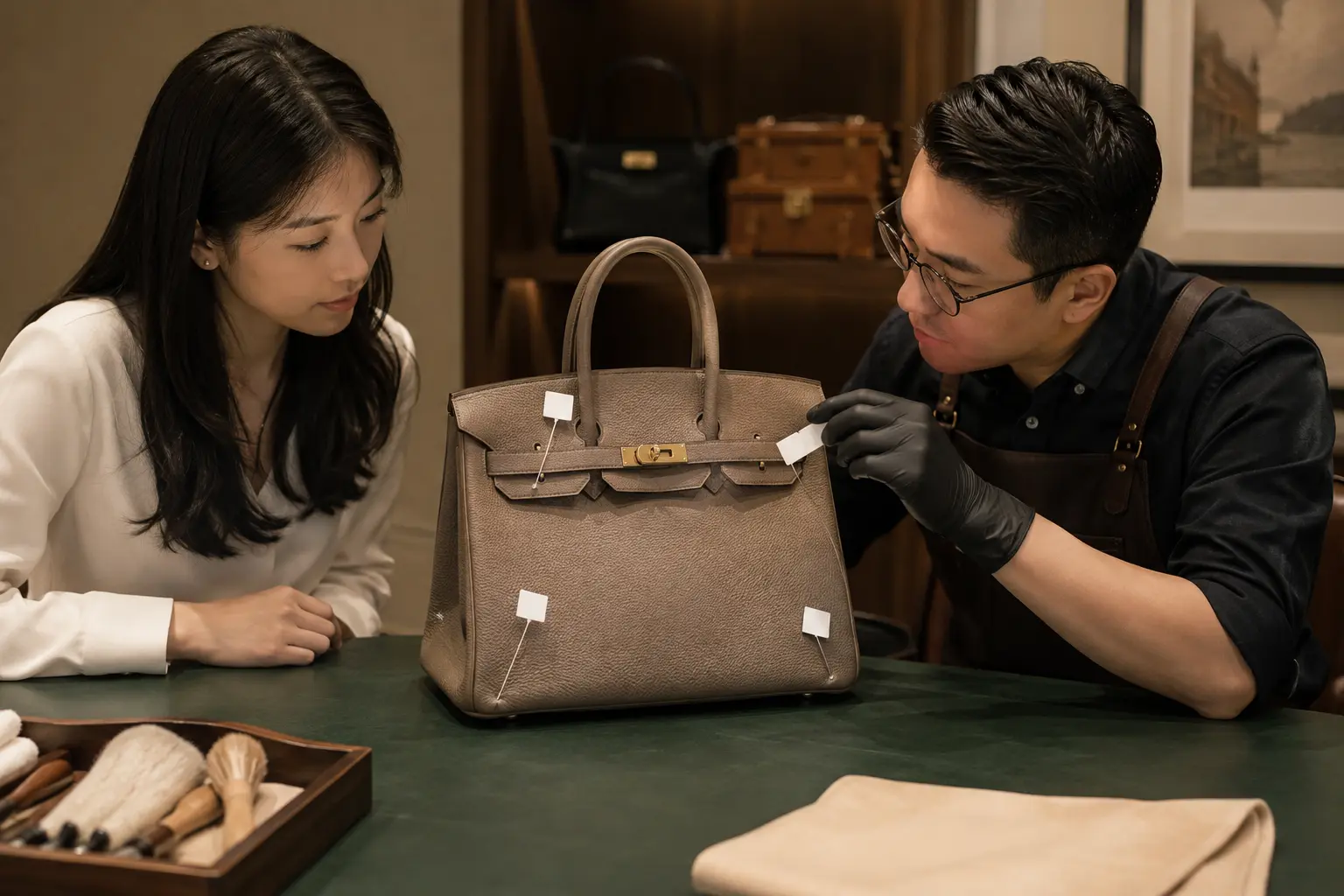
Setting realistic goals before leather care or restoration
A professional plan sets achievable priorities based on material, condition, budget and value, rather than promising an as-new result.
Read article →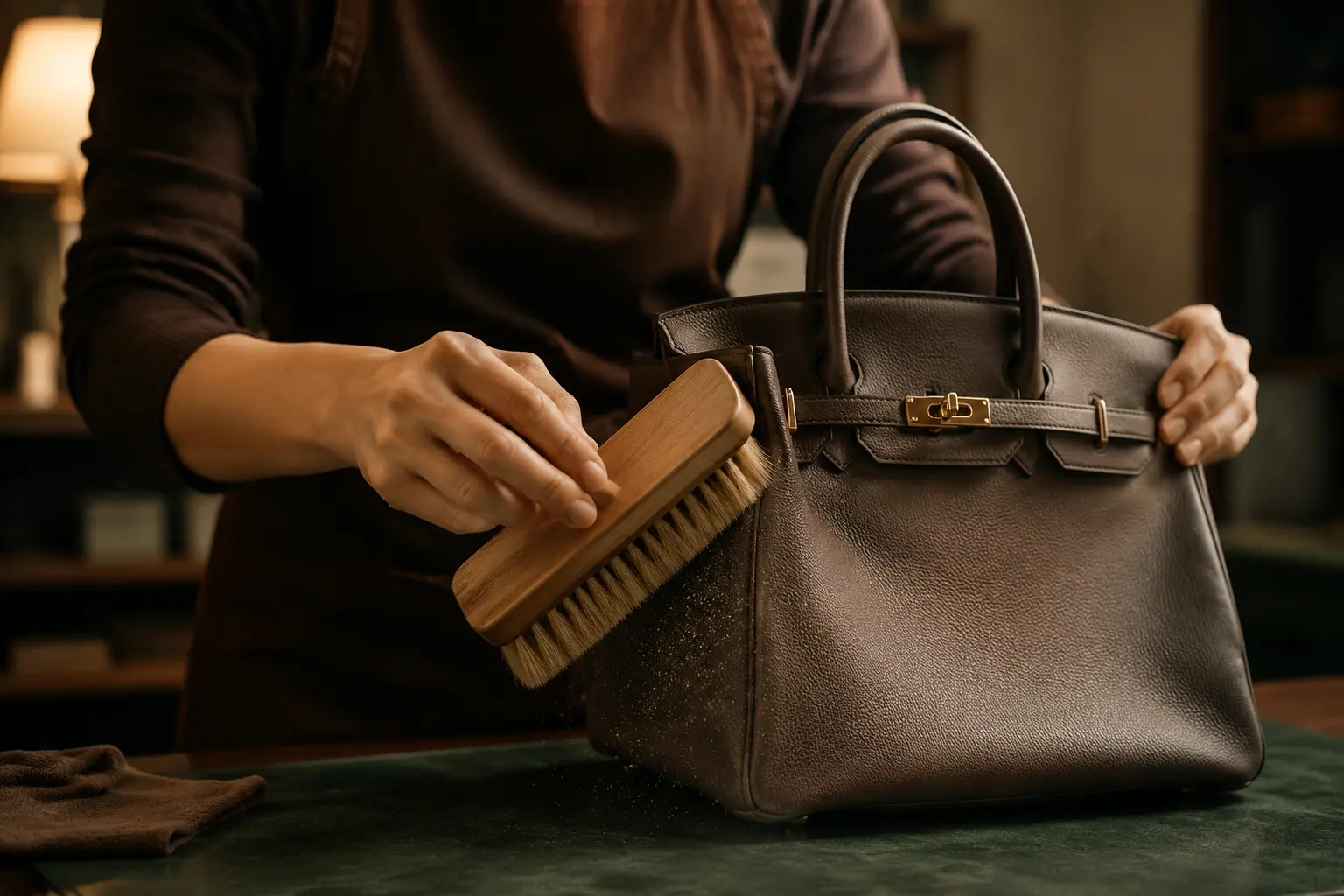
Why remove loose dust before wet cleaning?
Wet wiping over loose particles can turn them into muddy residue and carry them into grain, seams and painted edges.
Read article →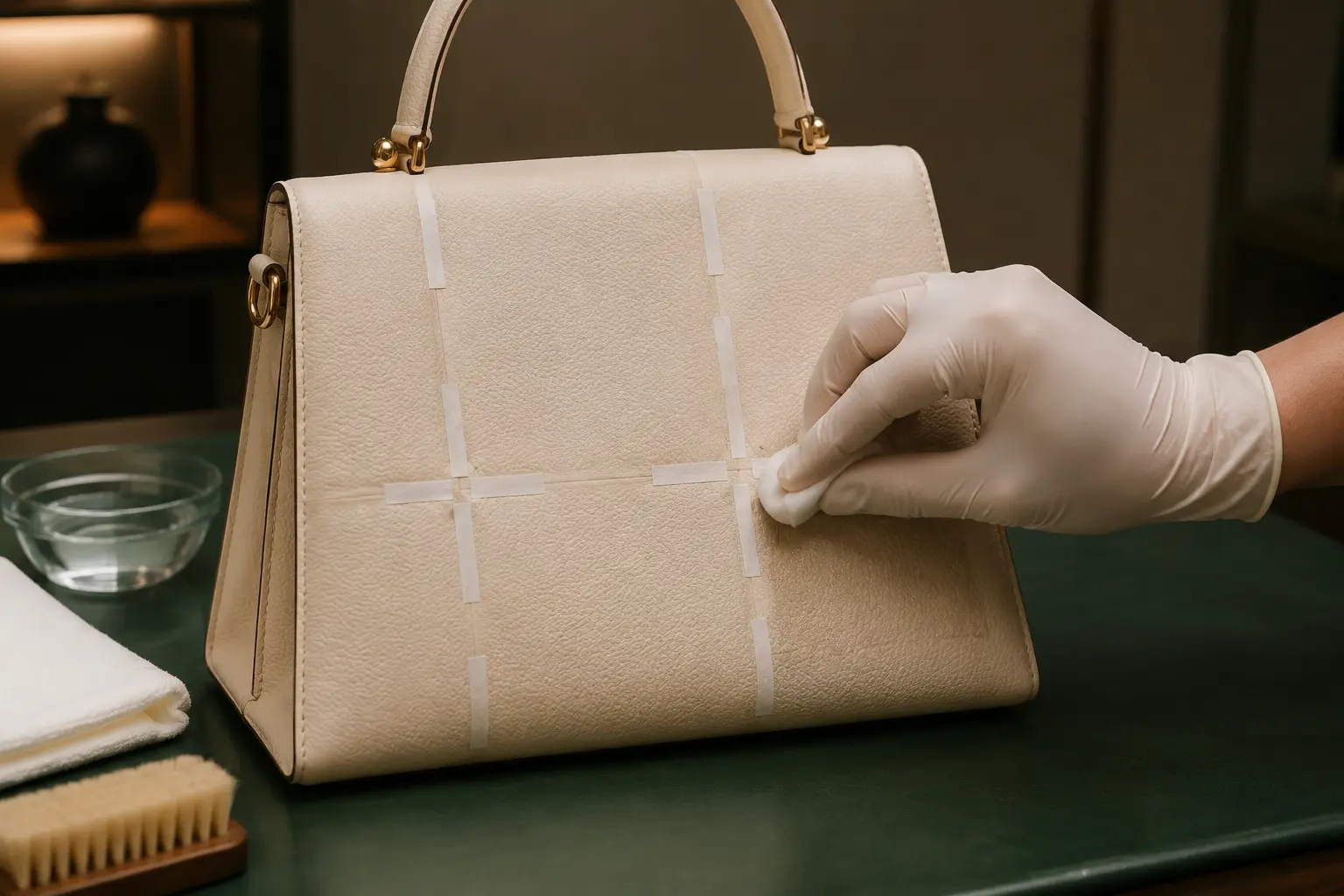
Controlled section-by-section cleaning of light-coloured leather
Control moisture, treatment boundaries and contact time on pale leather to reduce local whitening, darkening and tide marks.
Read article →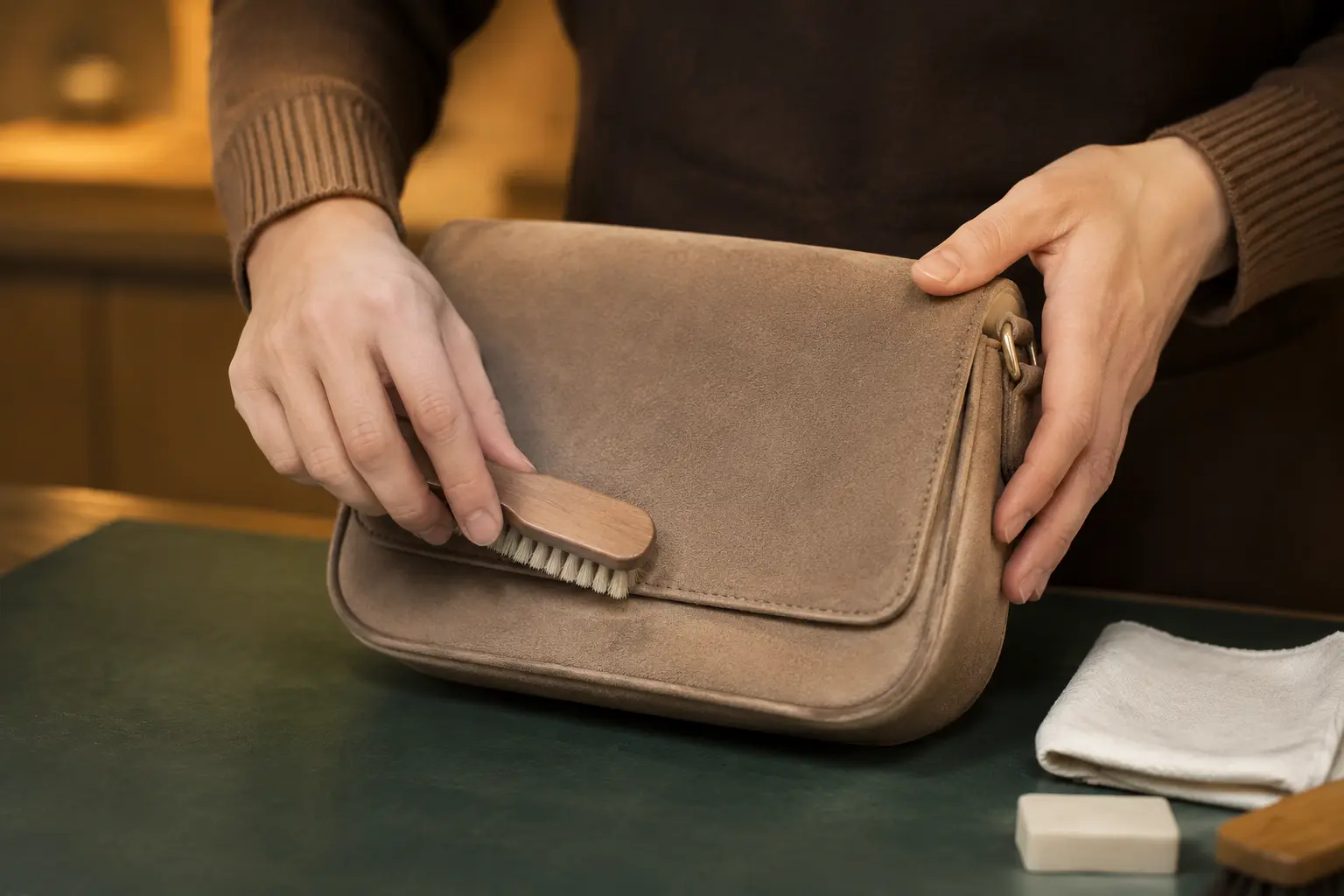
Cleaning suede in the right order: dust removal, local treatment and nap grooming
Begin by gently freeing the nap, reassess remaining soiling, then use limited local treatment and allow complete drying.
Read article →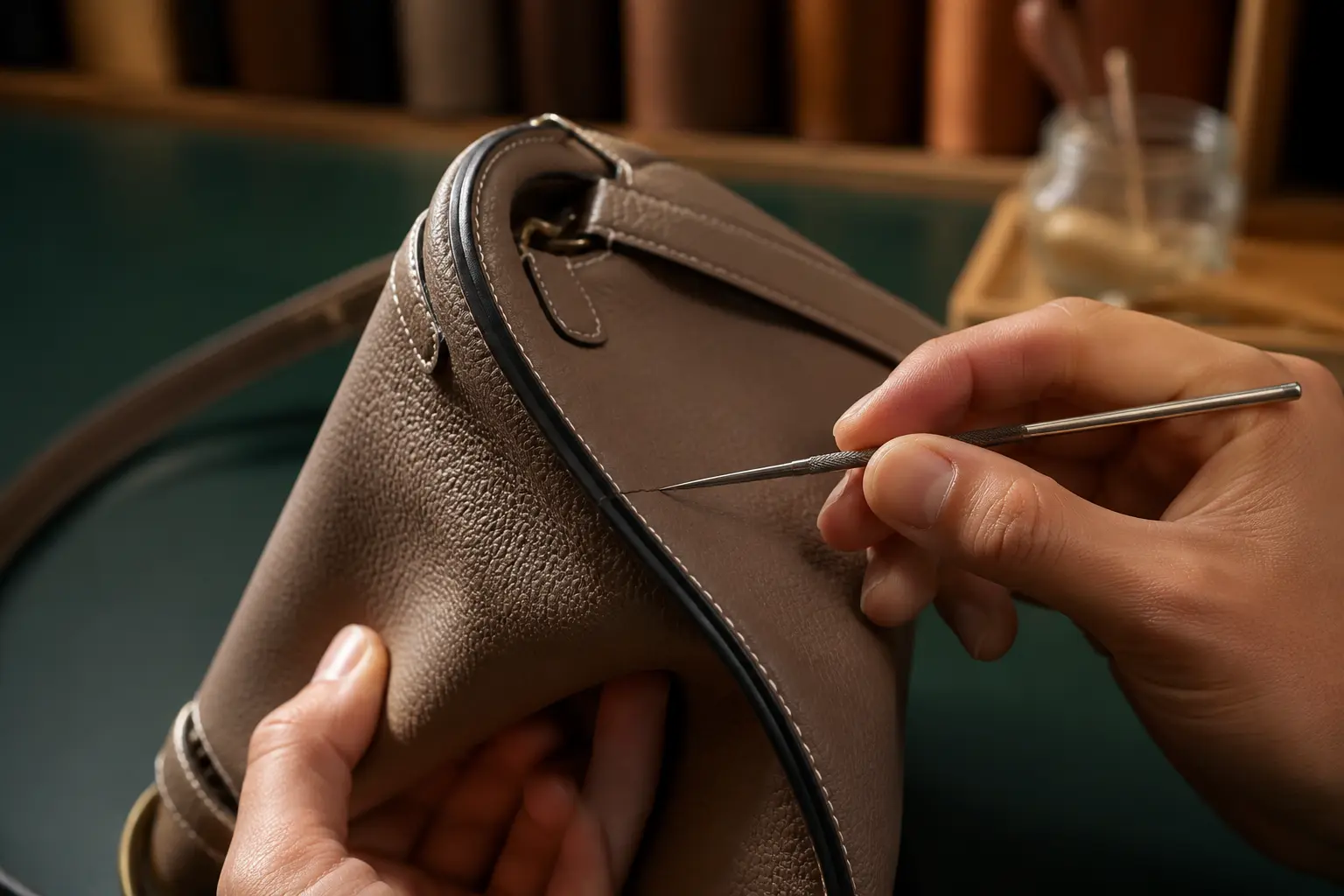
Cracked edge paint: when to repair locally and when to refinish
Local wear, continuous cracking and separation from the underlying edge require different treatment. Simply covering the surface may lead to rapid failure again.
Read article →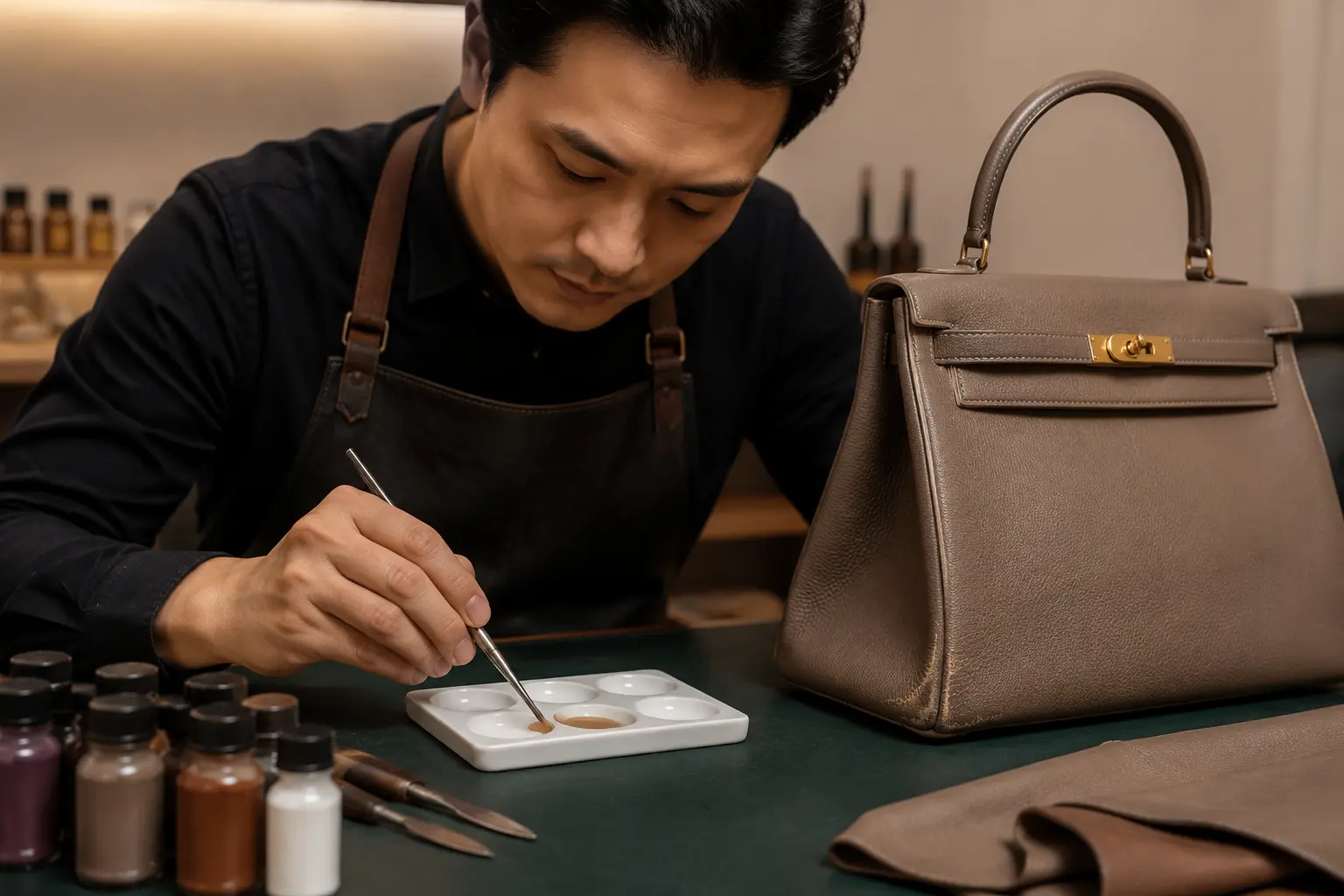
Local colour touch-up or full restoration: choosing a natural result
Treating a larger area does not automatically improve the result. Local repairs need soft transitions; full restoration must account for grain, feel and the item's history.
Read article →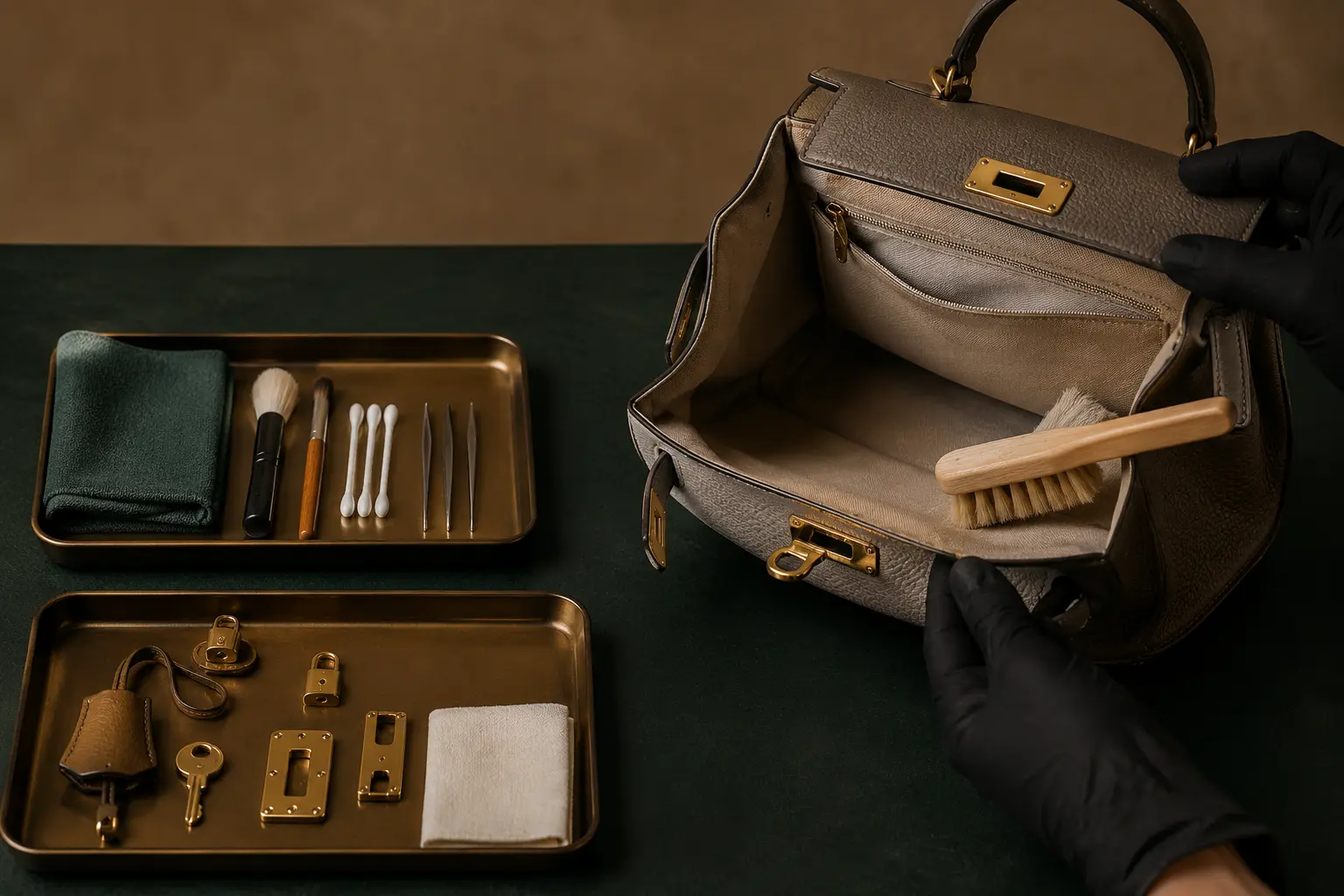
Caring for hardware and linings without cross-contamination
Use separate tools and protect adjoining materials when treating hardware, fabric linings and leather panels. Control polishing residue and dye transfer.
Read article →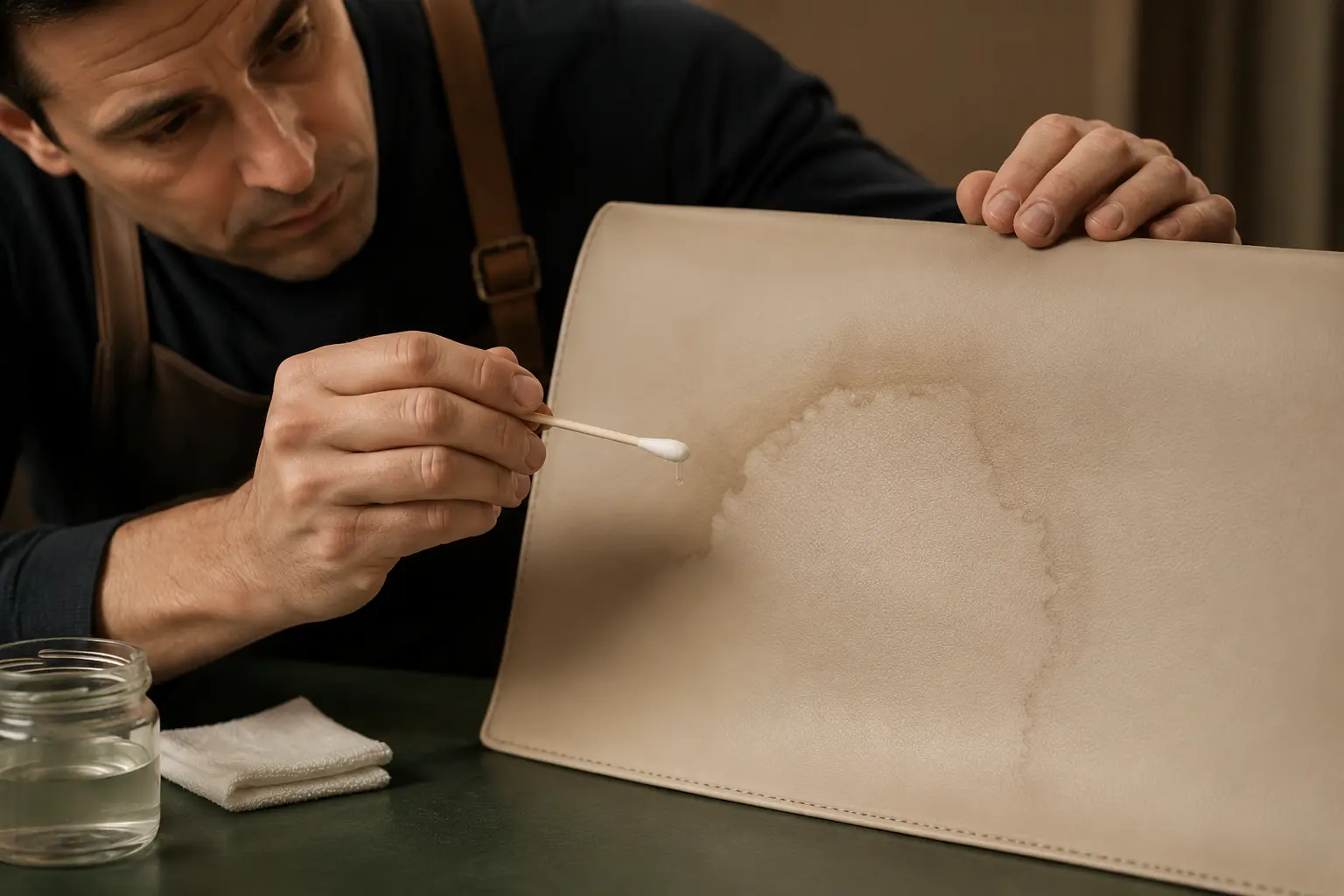
Why water marks and tide marks form, and how to reduce the risk
Moisture, cleaning products and soiling can accumulate at a drying boundary. Pale and absorbent leathers are particularly vulnerable to visible rings.
Read article →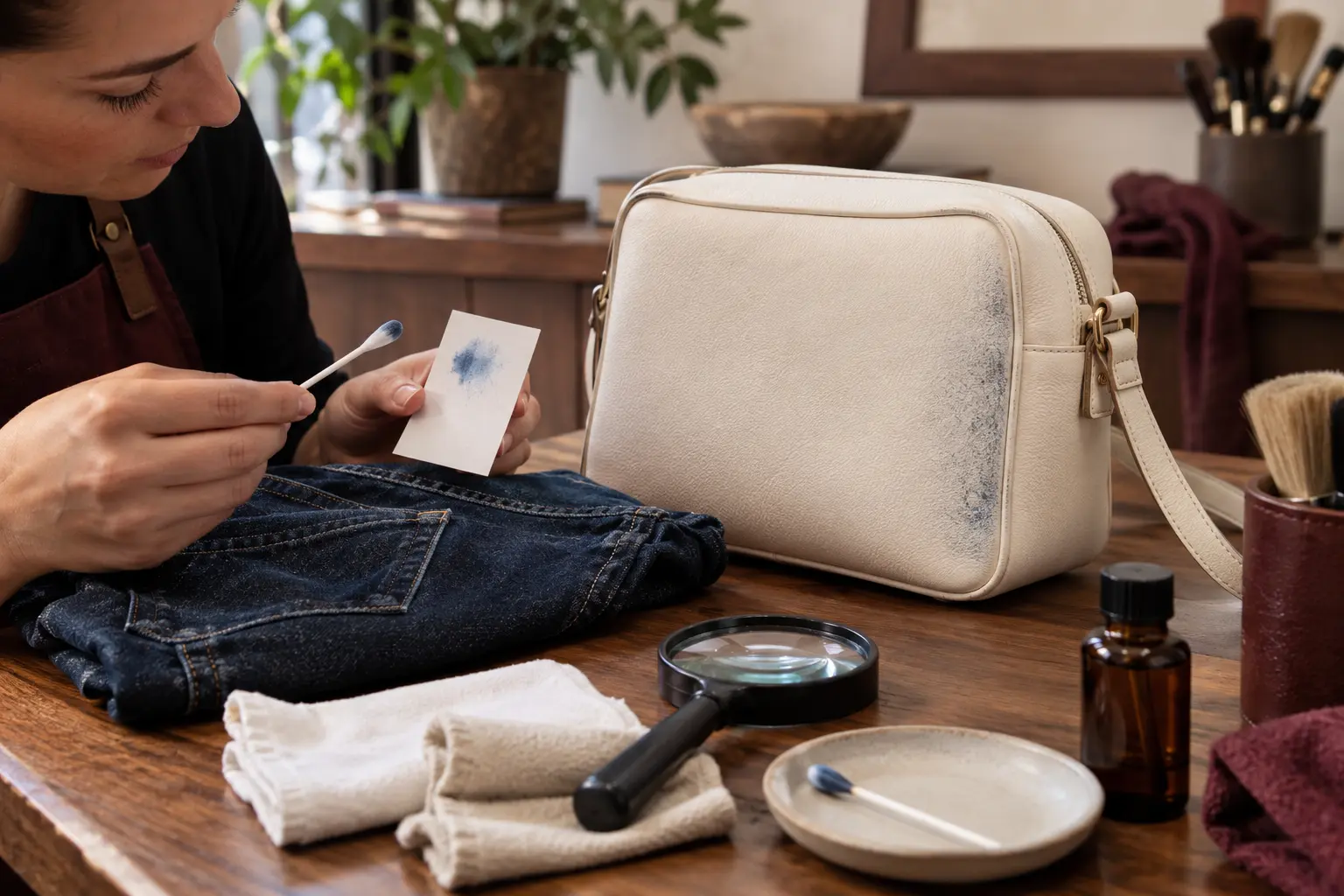
Denim dye on a white handbag: surface transfer or staining within the finish?
Dark dye may remain on the surface or migrate into the protective finish and leather fibres. Assess its depth first and stop if the original colour begins to change.
Read article →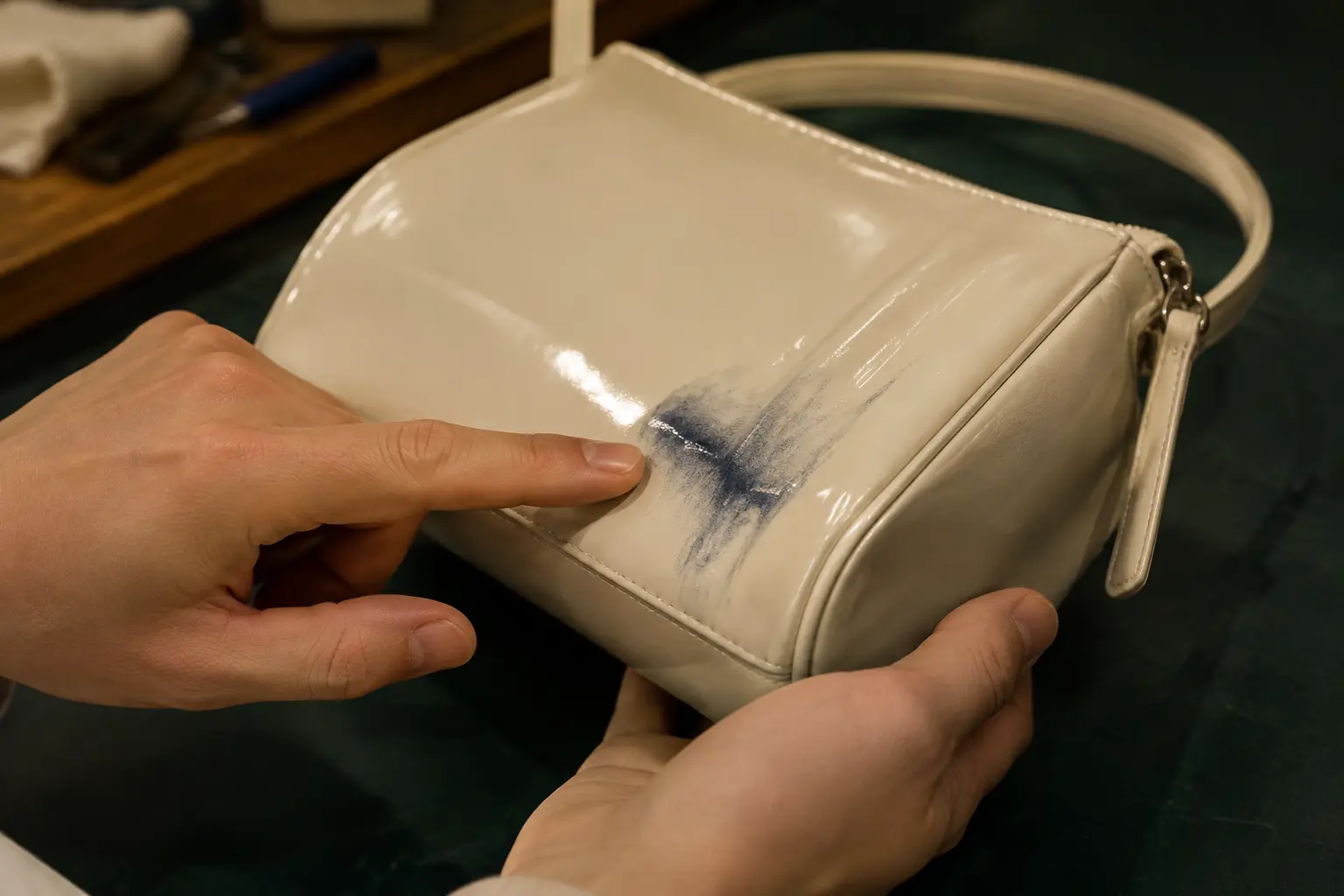
Why dye migration in patent leather is difficult to reverse
Foreign dye can migrate into the clear finish rather than remain on top. Separate the contact source early; stronger treatment does not guarantee better recovery.
Read article →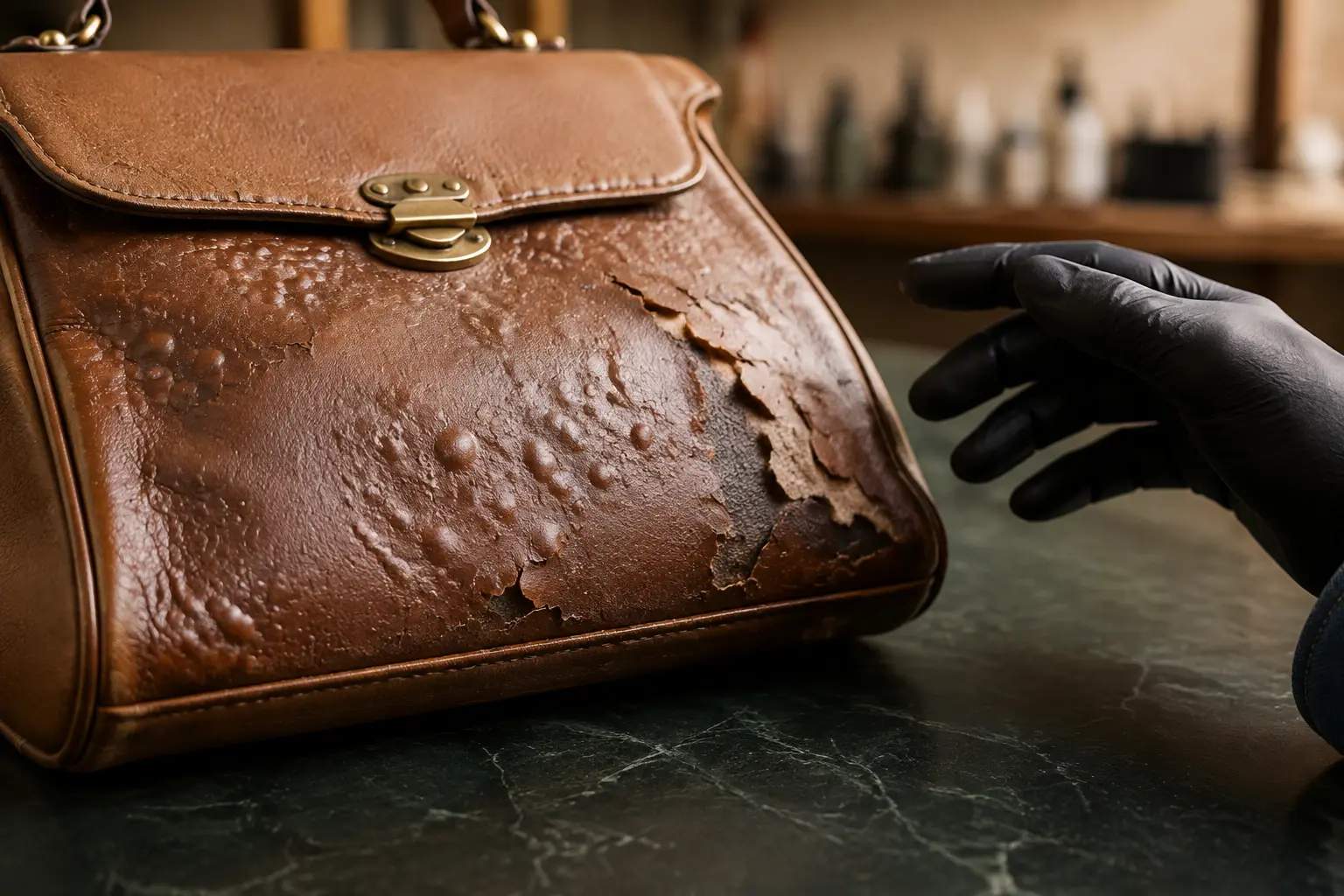
Tacky, blistering or peeling leather: why you must stop treatment
These signs often indicate an unstable finish. More rubbing, oil or heat may accelerate widespread peeling.
Read article →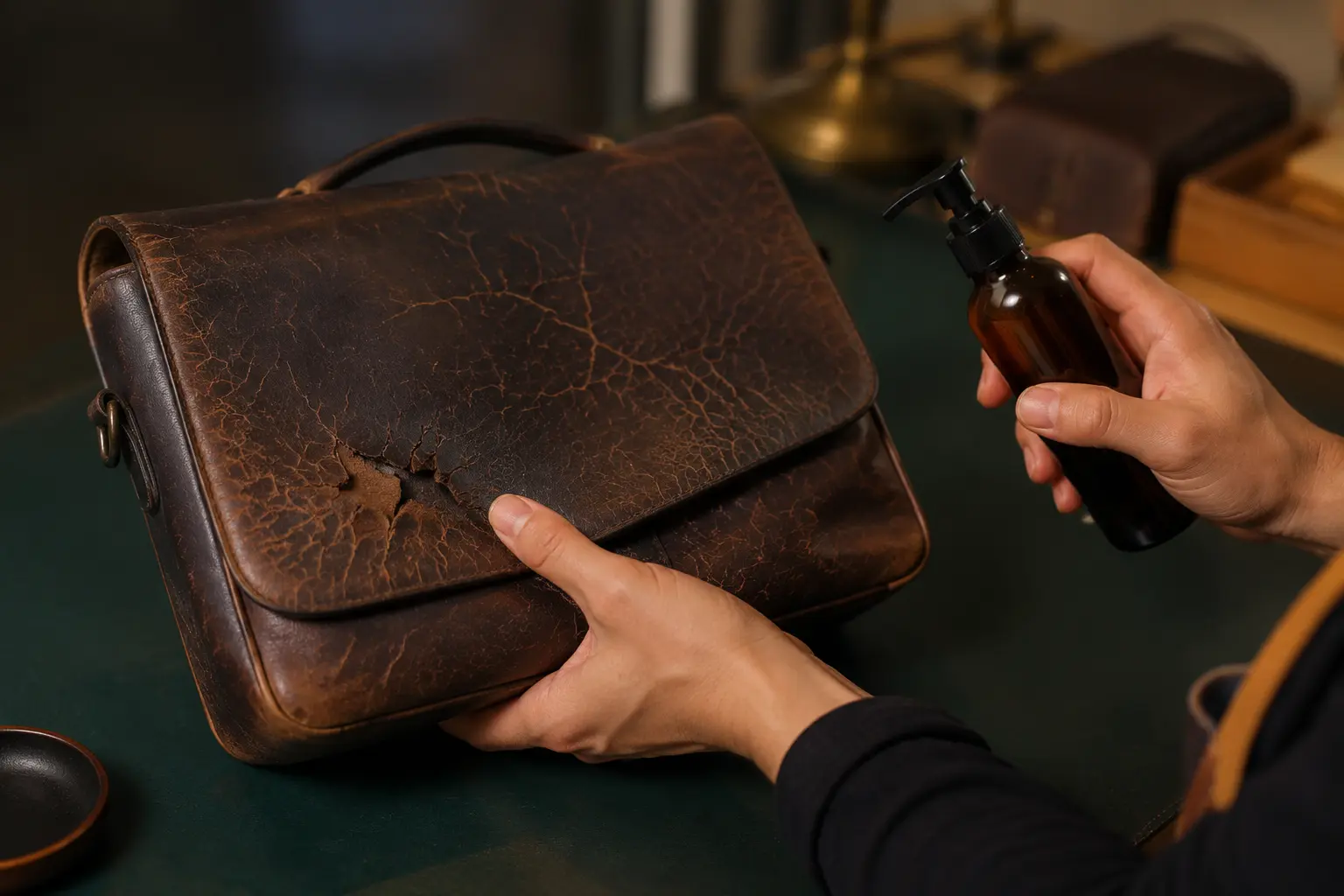
Why brittle, ageing leather should not be softened in one treatment
A softer surface does not mean weakened fibres have regained strength. Flexing and excessive conditioning can extend existing cracks.
Read article →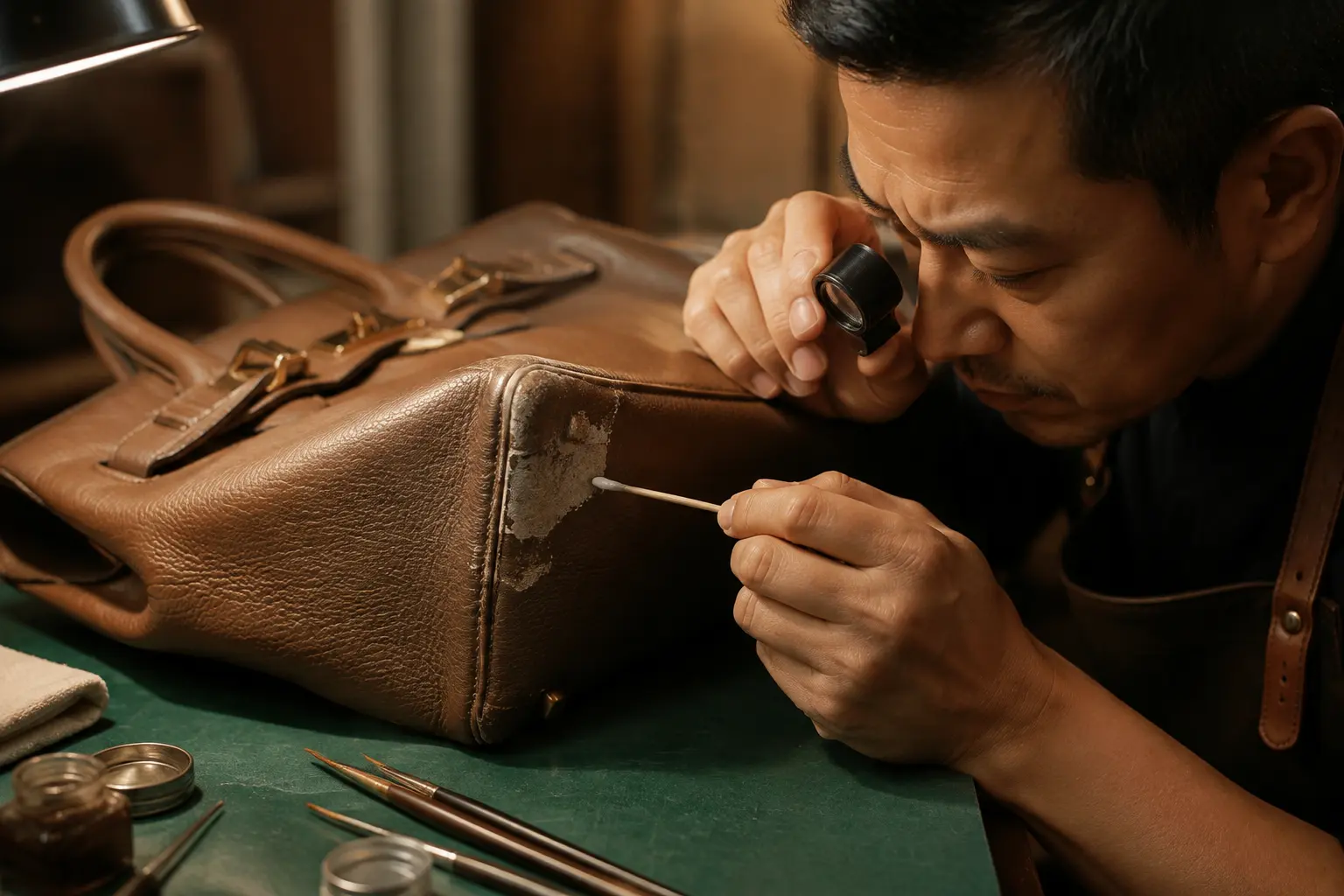
Managing the risk of an unknown previous repair layer
Unknown colour coats, finishes, adhesives and care products can change how a new treatment behaves. Include that uncertainty in the intake assessment.
Read article →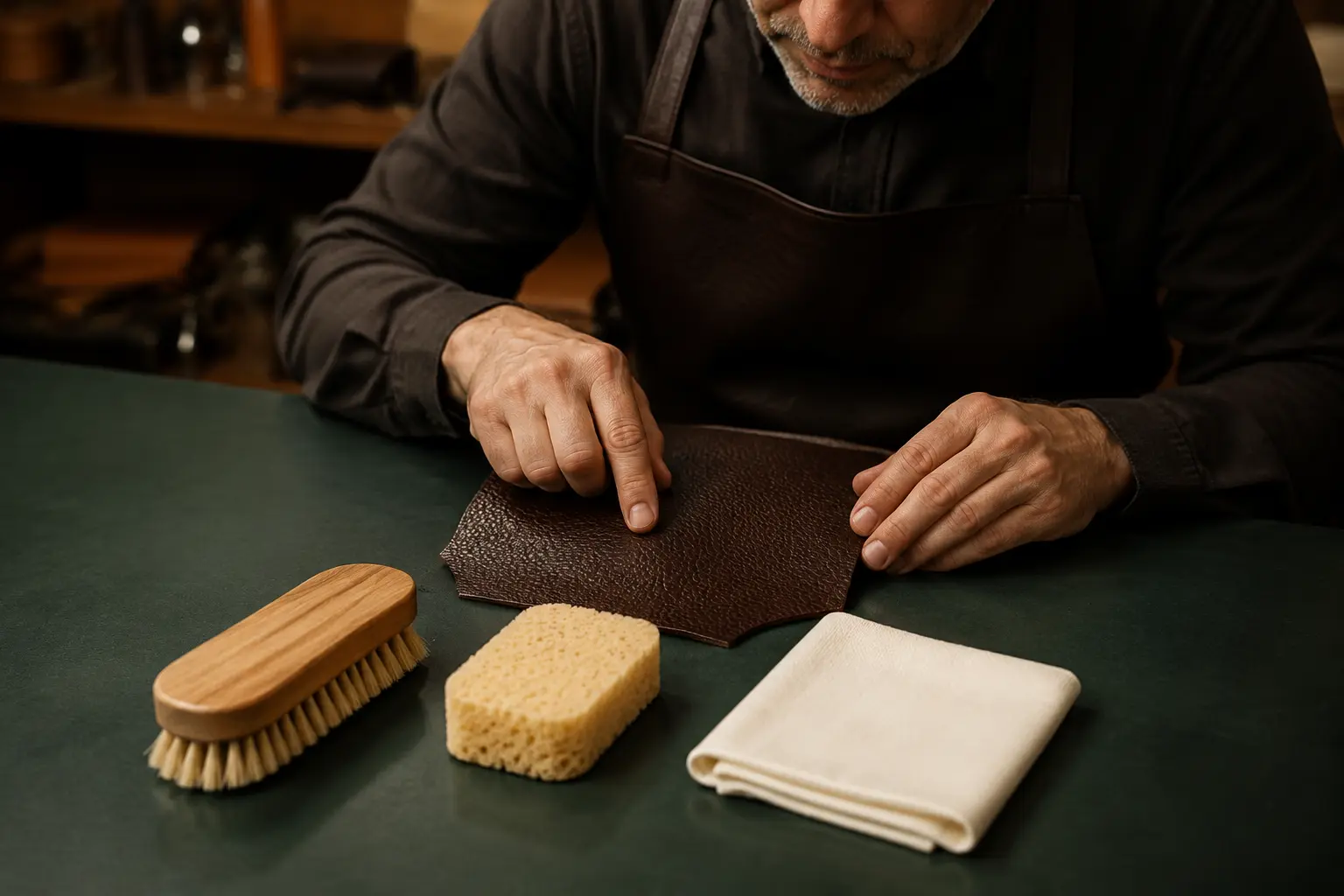
Choosing brushes, sponges and cloths for leather care
Tool firmness, absorbency and cleanliness directly affect friction and product delivery. Selecting the right tool is part of process control.
Read article →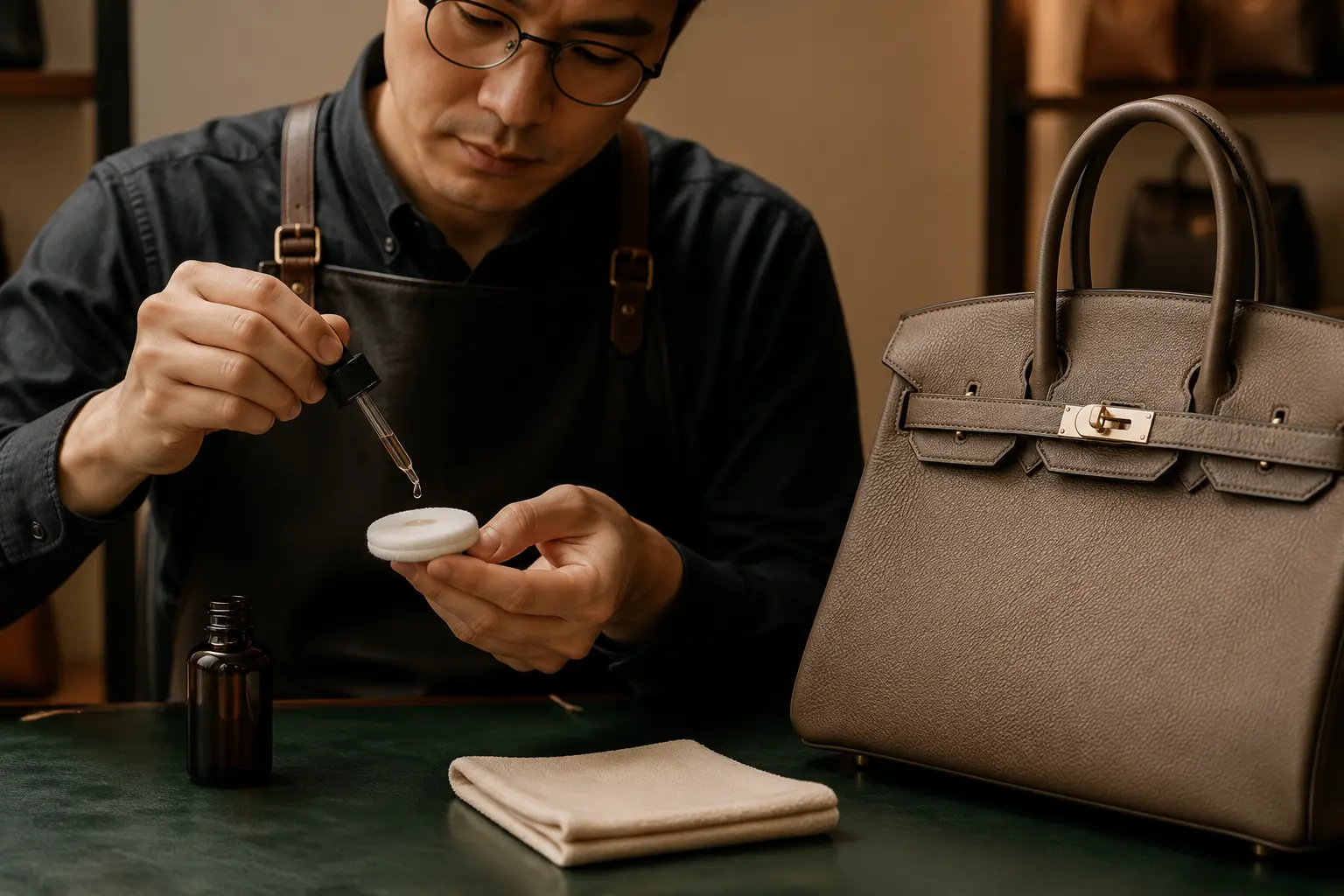
Why leather care products should be applied in small, even amounts
Too much product per area increases drying time and residue and can alter sheen and feel. Thin, even applications are easier to control.
Read article →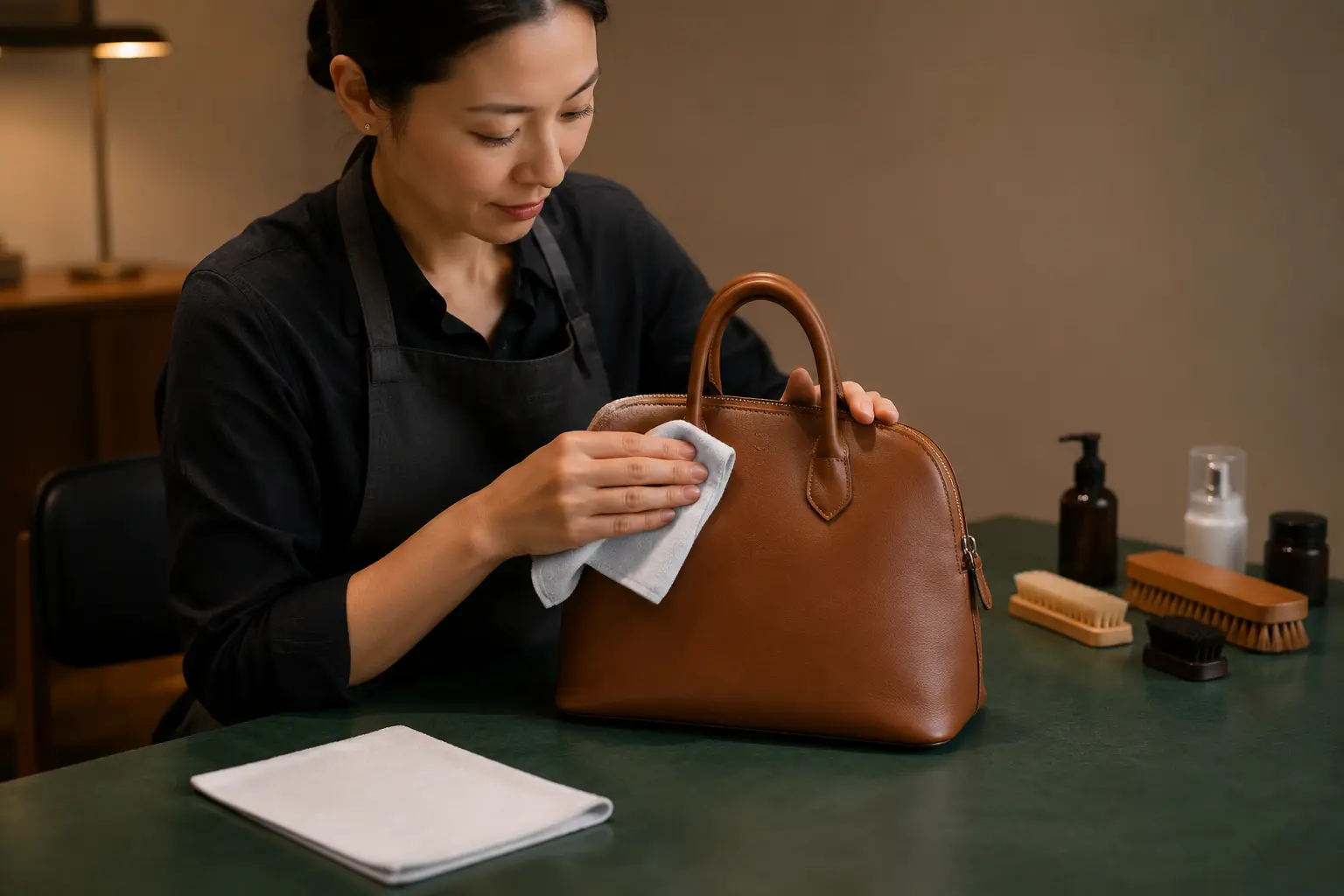
Increasing cleaning strength in controlled stages
Begin with gentle, minimally invasive methods. Consider limited escalation only when soiling remains and the underlying surface is stable.
Read article →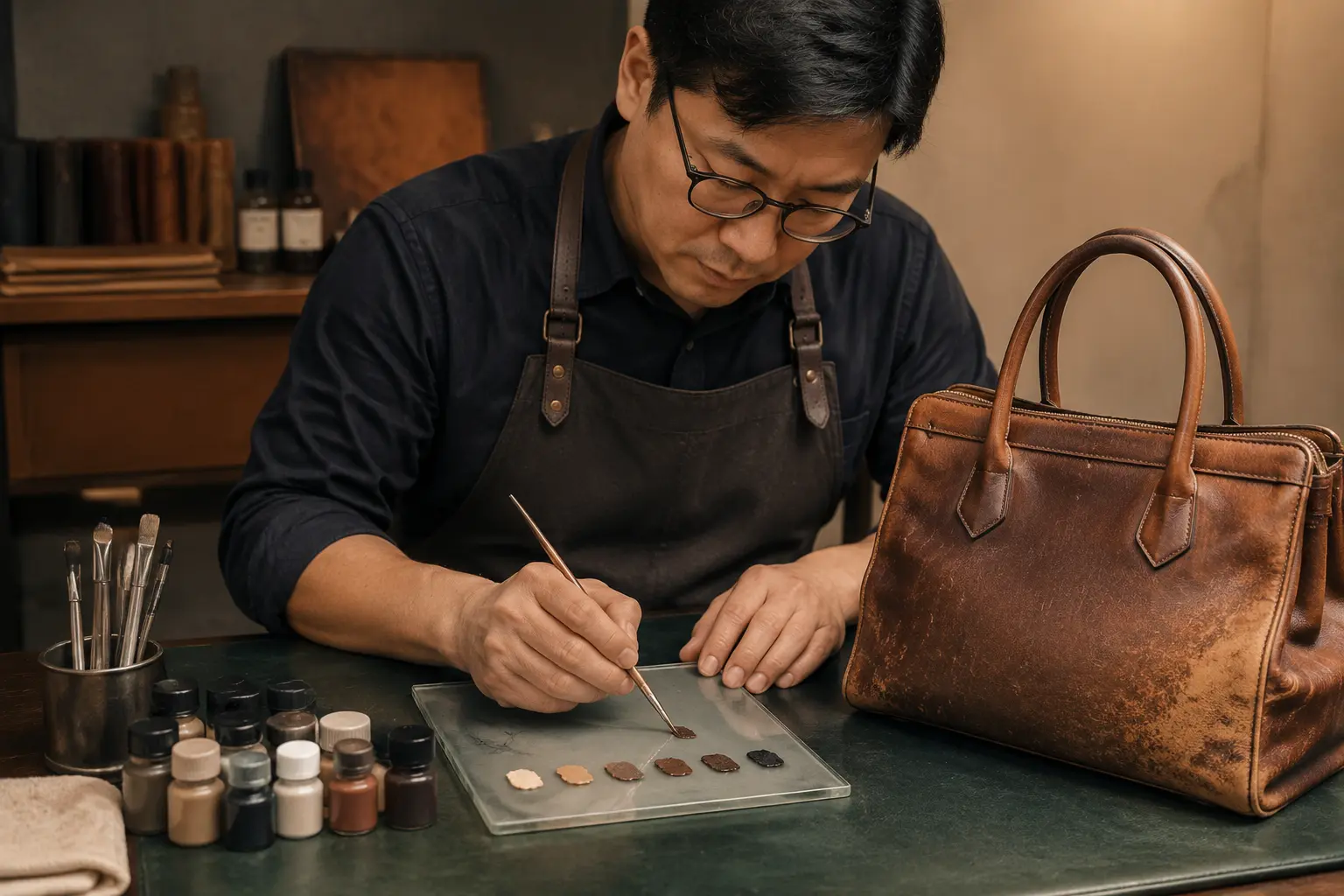
Creating a reliable colour sample before leather recolouring
Do not judge a colour only while wet, in a mixing cup or under one light. Compare its dry colour, sheen, transparency and appearance on a representative substrate.
Read article →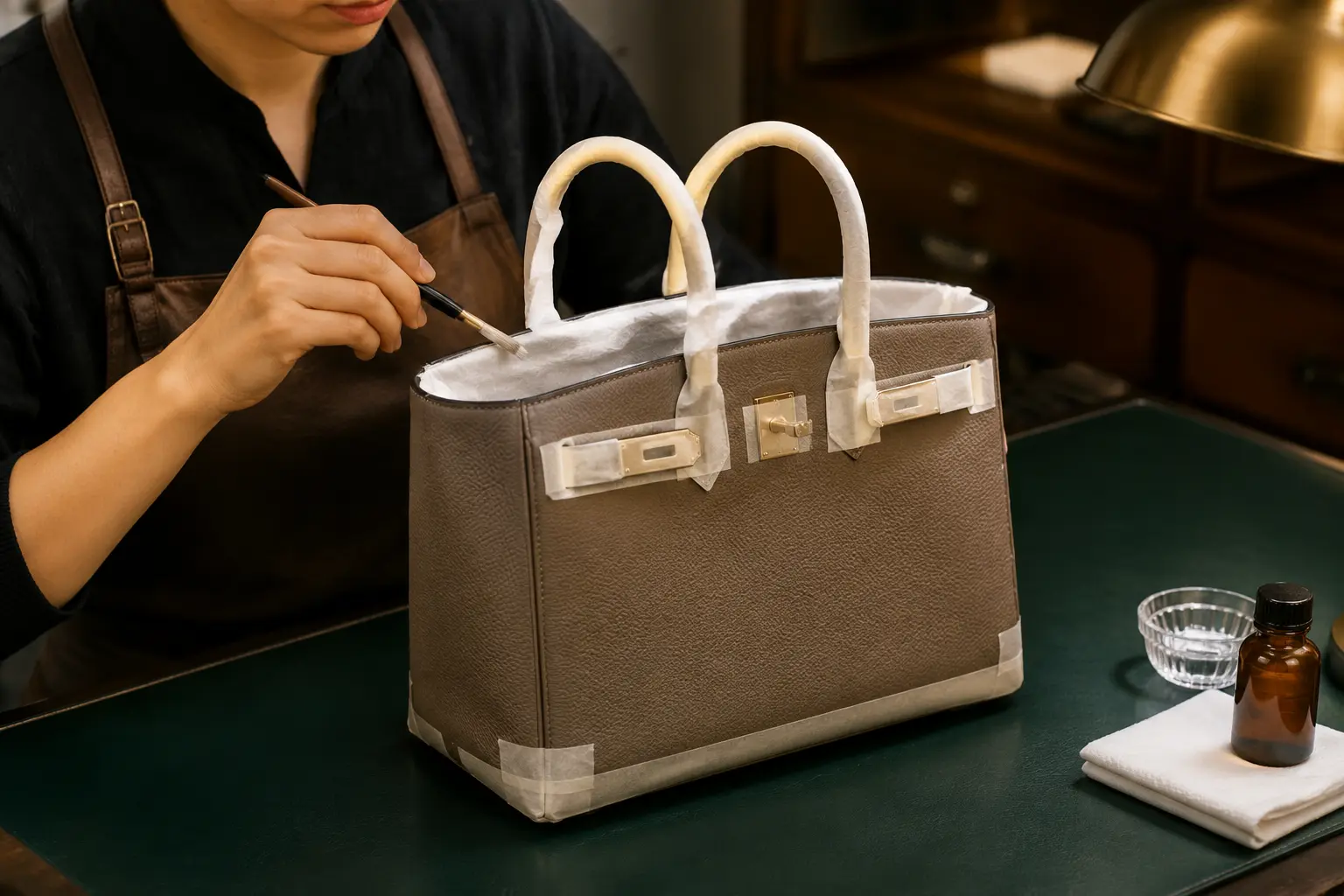
How much masking and protection does leather care require?
Effective protection accounts for neighbouring materials, gaps and liquid movement. It involves more than simply applying masking tape.
Read article →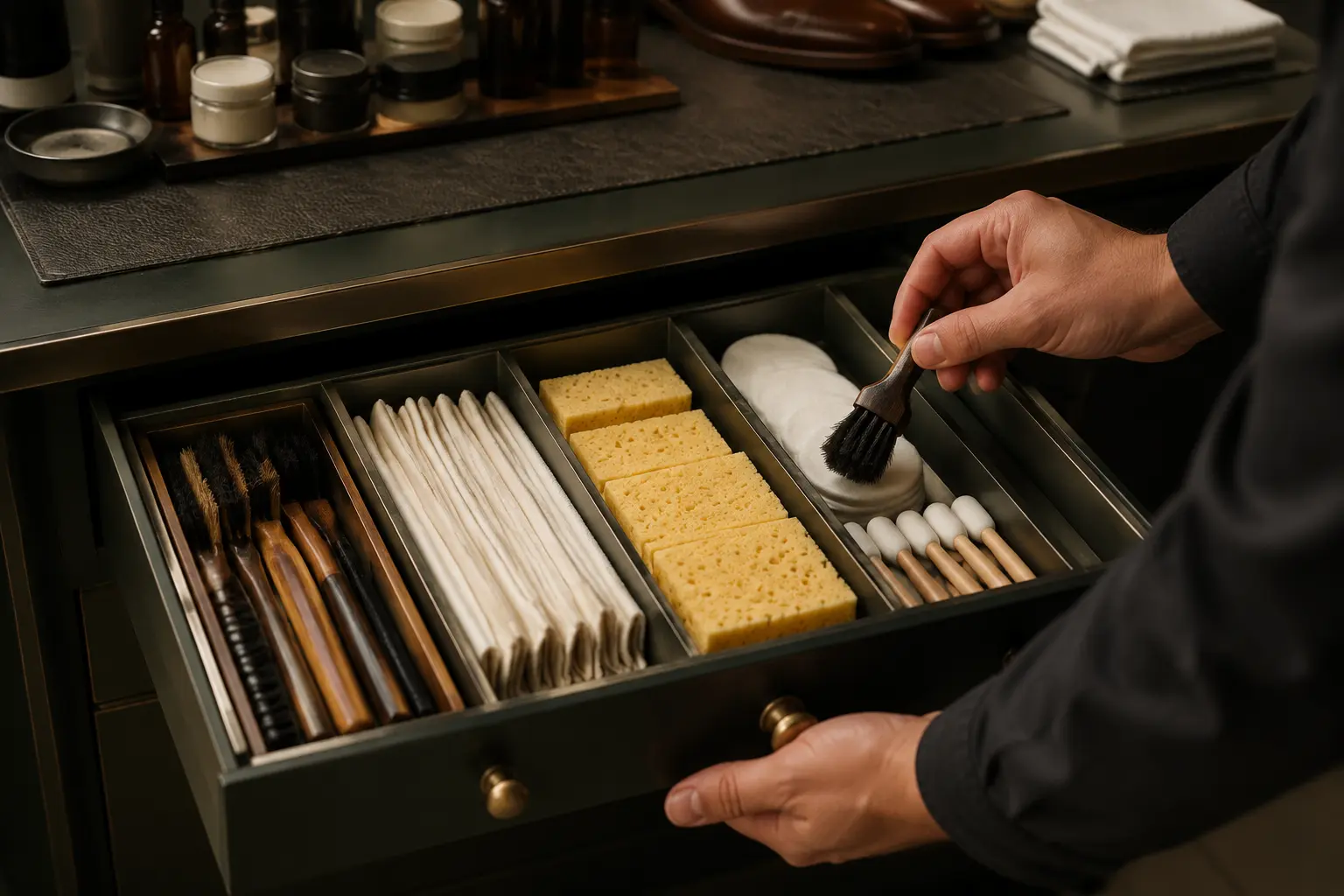
Storing leather care tools to prevent cross-contamination
Residual colour, solvent and particles can cause damage on the next job. Keep each tool's purpose and cleaning status identifiable.
Read article →
Quoting for handbag care: explain the work, risks and achievable result
A professional quotation explains what will be treated, why, the improvement being sought and which marks cannot be promised to disappear completely.
Read article →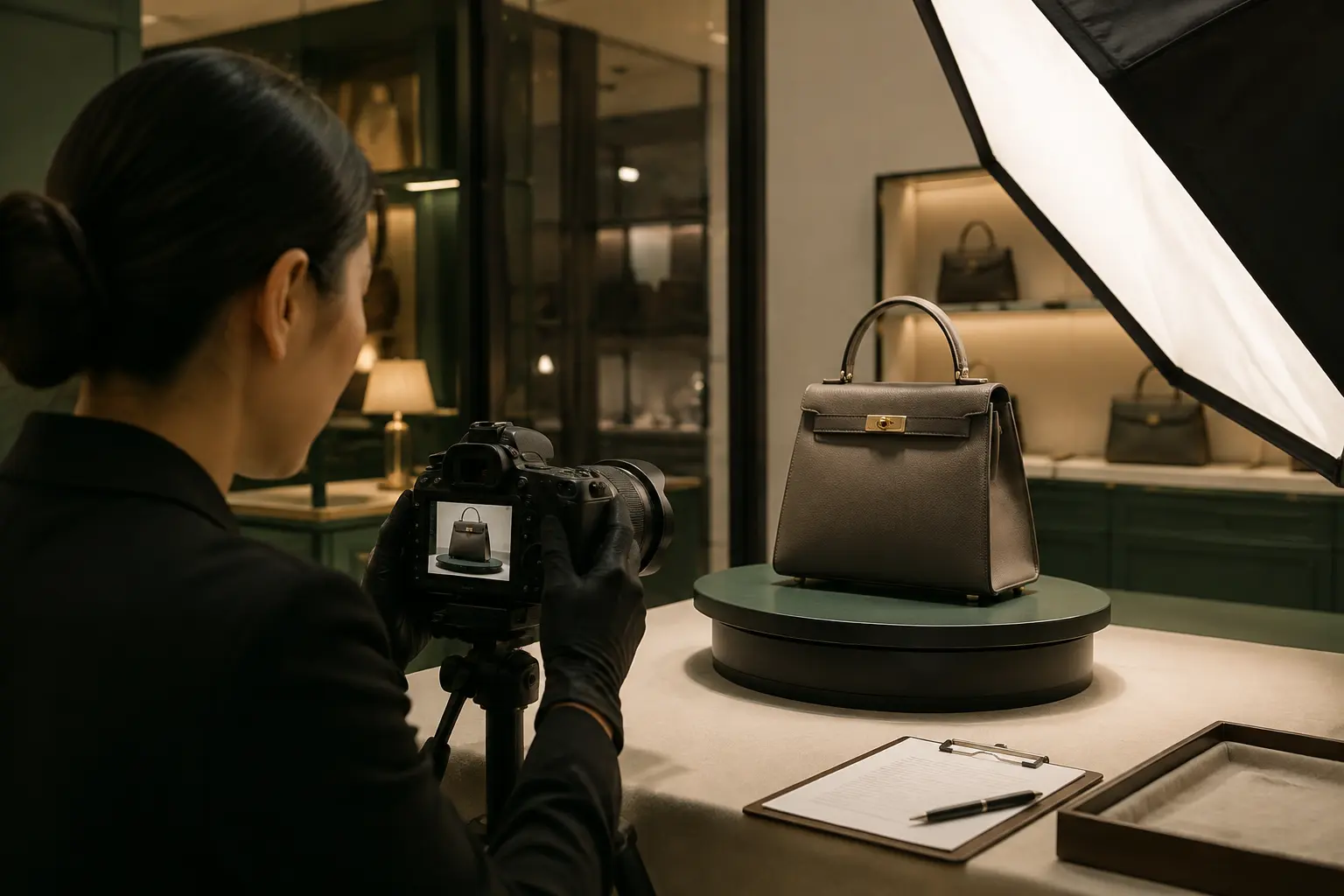
Why handbag intake needs at least six standard photo angles
Consistent photographs establish the original condition and give intake staff, technicians and handover staff a shared basis for decisions.
Read article →
Passing a leather care job from intake staff to the technician
Turn the customer's description into technical objectives, risks and priorities. Do not rely on a spoken handover alone.
Read article →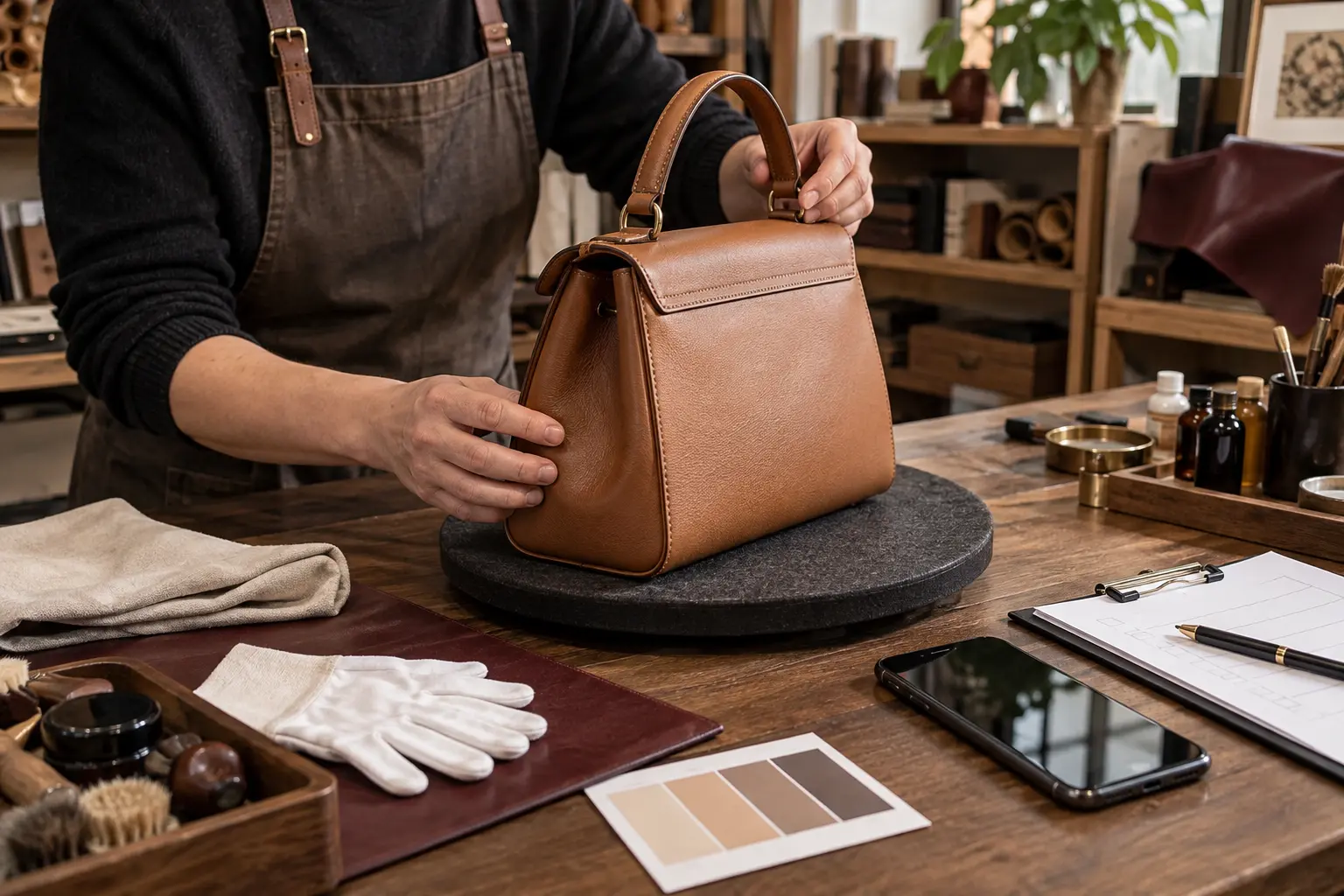
Leather care quality checks: six areas to review before handover
Check colour, sheen, feel, construction, residue and dry-state stability against the agreed result and intake record before delivery.
Read article →
Using treatment records to reduce handover disputes
Useful records make the initial condition, changes to the plan and final result verifiable. They are more than a disclaimer.
Read article →
Turning aftercare advice into ongoing professional support
Advice tailored to the treatment helps preserve the result and supports a lasting customer relationship through storage, use and review guidance.
Read article →
Choosing useful, low-risk practice materials for beginners
Practice pieces should reveal changes while allowing mistakes. Choose identifiable materials with manageable value and a condition you can document.
Read article →
Training a leather care technician to observe, not just memorise methods
Reliable technique depends on describing evidence, forming hypotheses and checking them. Learn to observe before deciding which method to use.
Read article →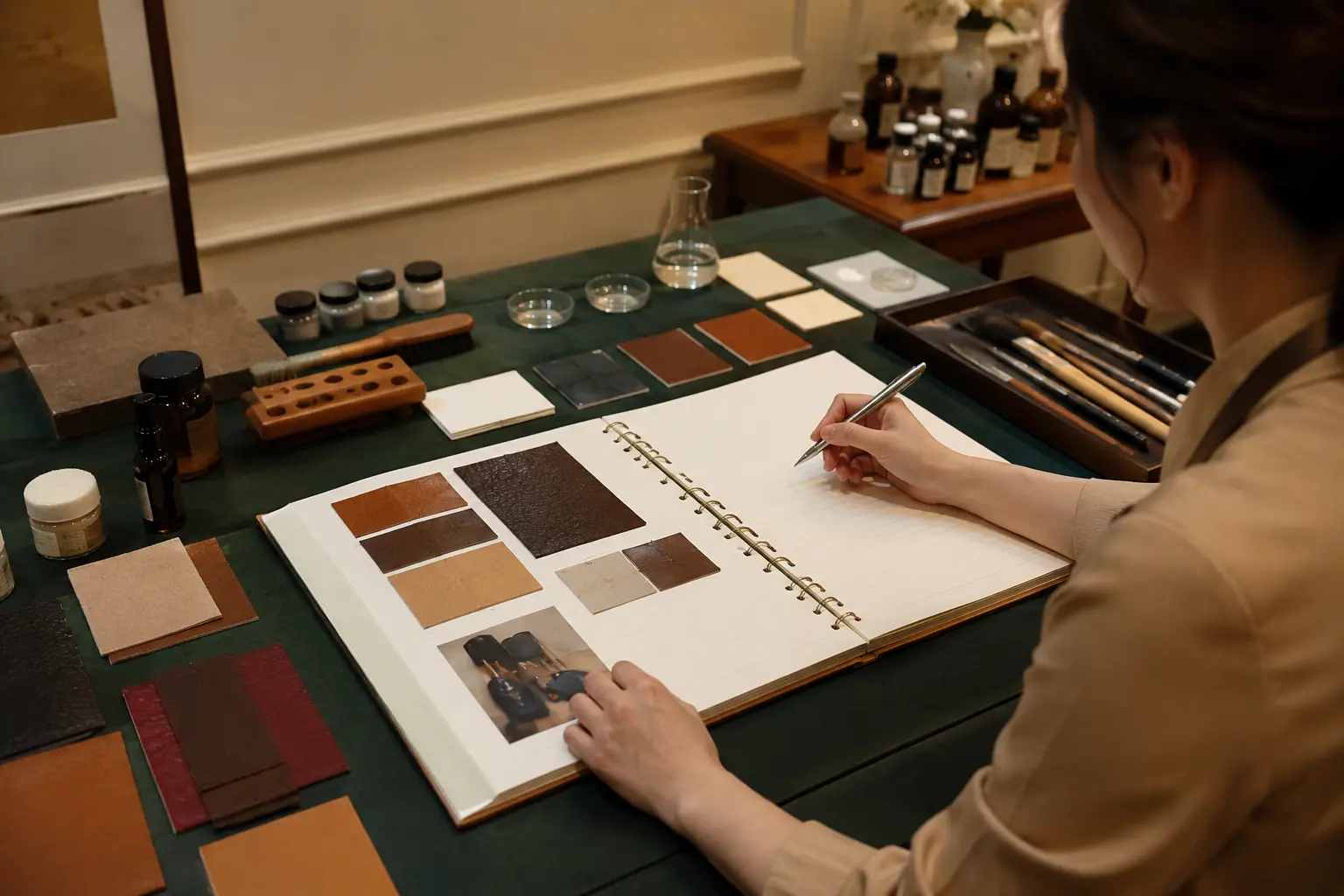
Keeping product notes that genuinely support leather care practice
Record application conditions, amounts, reactions and limits rather than copying promotional claims.
Read article →
Reviewing a leather care mistake: find the first wrong decision
Trace the earliest error in assessment, testing, product choice, technique or communication rather than focusing only on the final step.
Read article →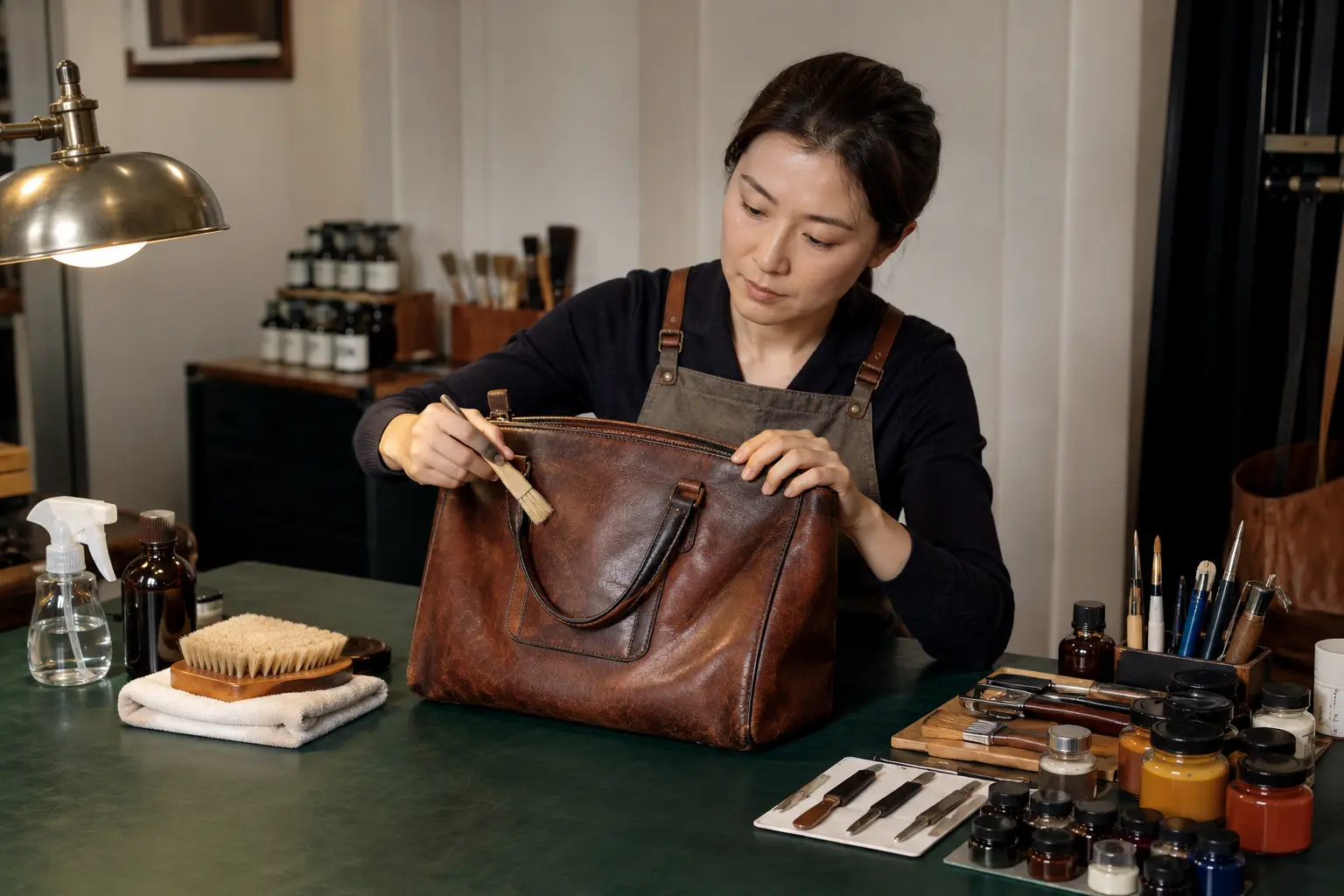
When is a technician ready to progress from routine care to restoration?
Readiness is measured by consistent risk assessment, control of variables and the ability to explain results, rather than the number of bags handled.
Read article →
Building consistent leather care standards across a shop team
Standardisation gives assessment, records, escalation and acceptance checks a shared language. It should not force every item through identical steps.
Read article →
Writing a pre-owned luxury condition report that buyers can verify
Describe specific areas, defect severity, treatment history and effects on use. Match each description to clear photographs under consistent lighting.
Read article →
Should pre-owned luxury items be treated before listing?
Pre-listing care should improve presentation and usability while preserving truthful, verifiable information. Some marks should remain, and more restoration does not always add value.
Read article →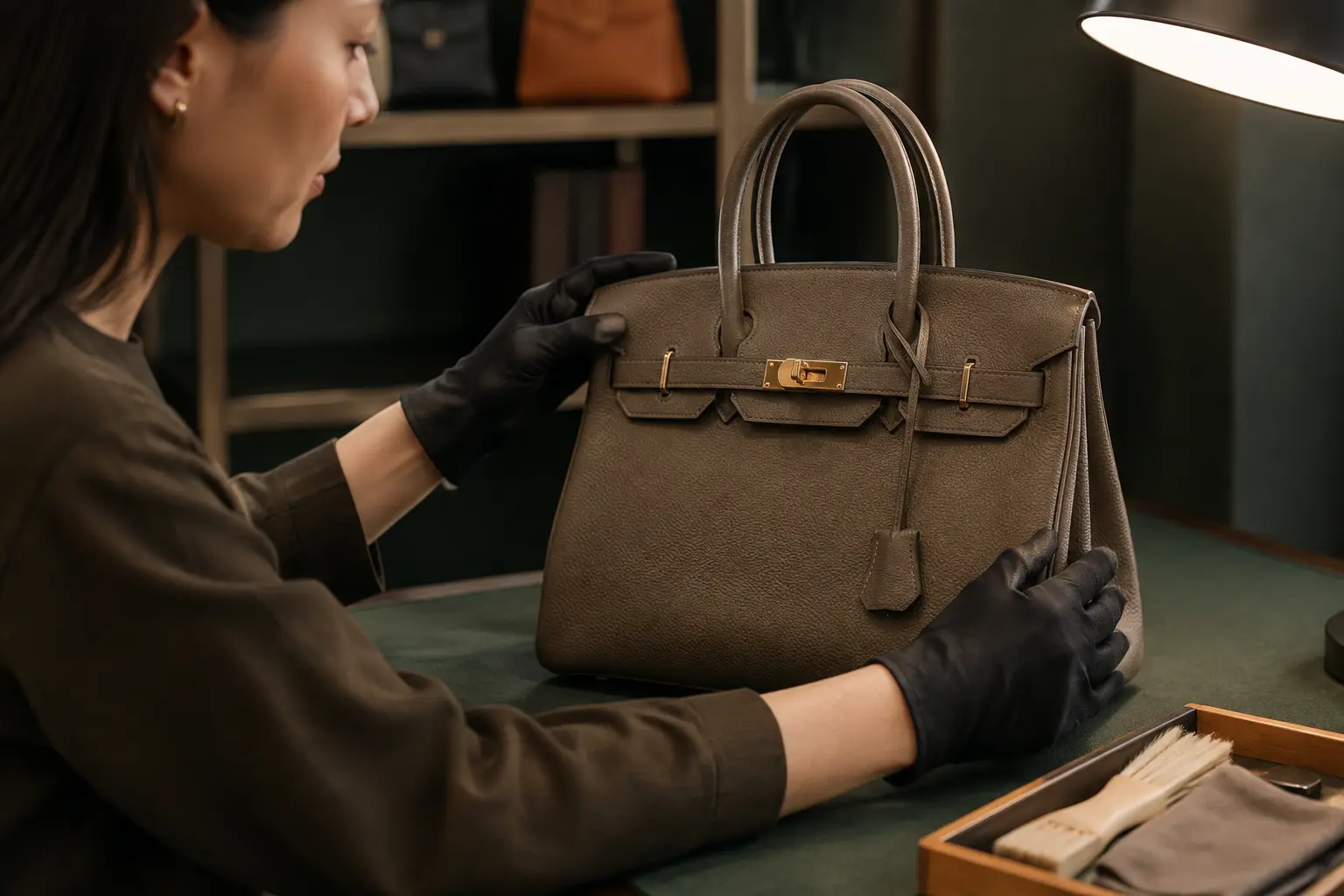
Which care improvements help a resale listing, and which undermine trust?
Cleanliness, controlled odour and a stable outline improve presentation. Heavy recolouring, an oily sheen and unclear treatment history can reduce confidence.
Read article →
Disclosing recolouring, replacement edge paint and repair history
State the treated area, extent, approximate timing and visible effects so buyers can form realistic expectations.
Read article →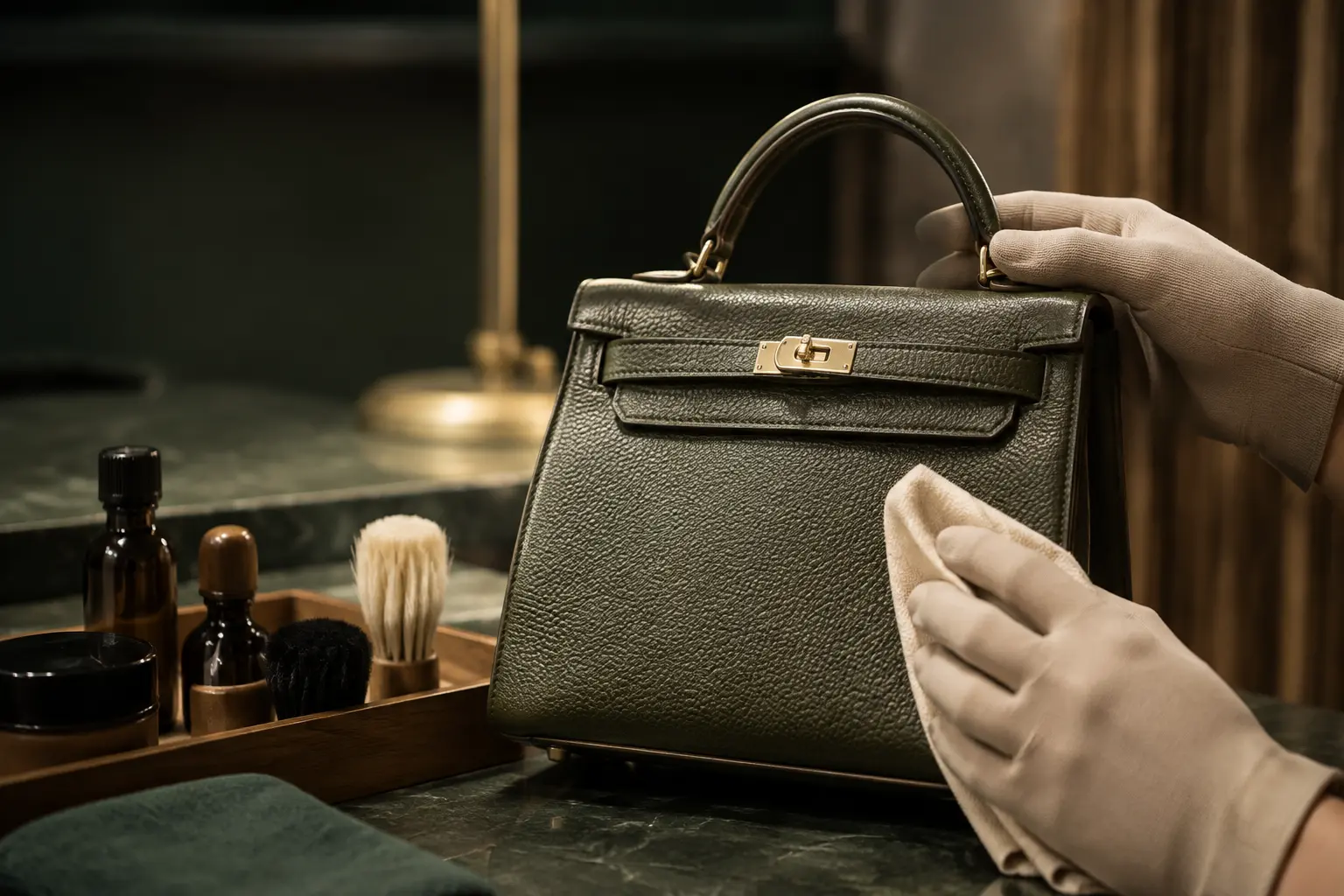
Photographing pre-owned luxury condition and the value of care
Show the true outline, colour, wear and stable treatment result. Atmosphere alone does not give buyers the information they need.
Read article →
Why a leather care inspection does not replace authentication
Care technicians examine materials, workmanship and condition to plan treatment. Authentication is a separate task with a separate conclusion.
Read article →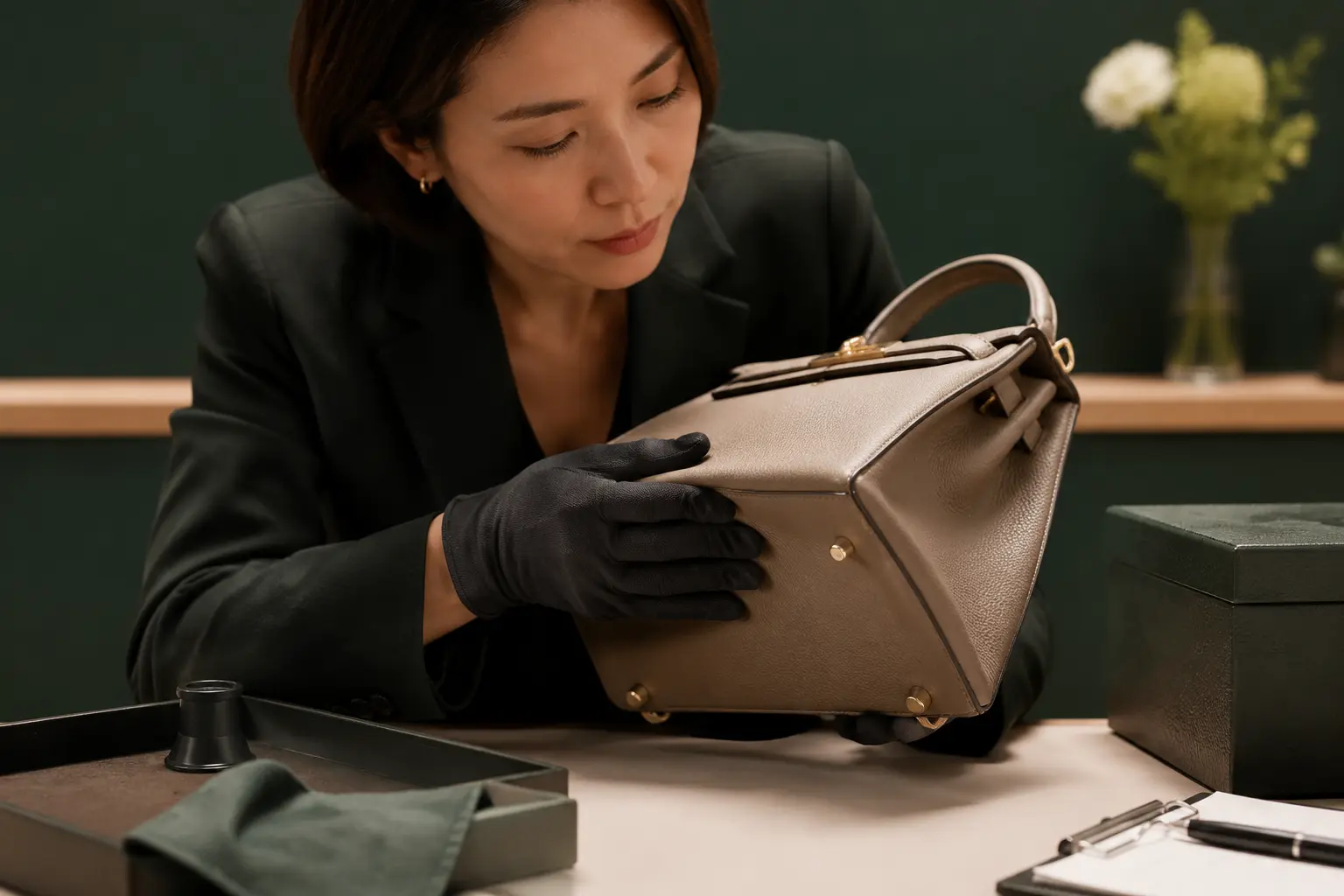
Which condition details matter most in pre-owned luxury sales?
Buyer priorities vary, but handles, corners, hardware, closures and linings often have the clearest effect on use and price discussions.
Read article →
Prioritising care work across pre-owned luxury stock
Rank items by value, sale prospects, likely improvement and treatment cost rather than restoring all stock to the same extent.
Read article →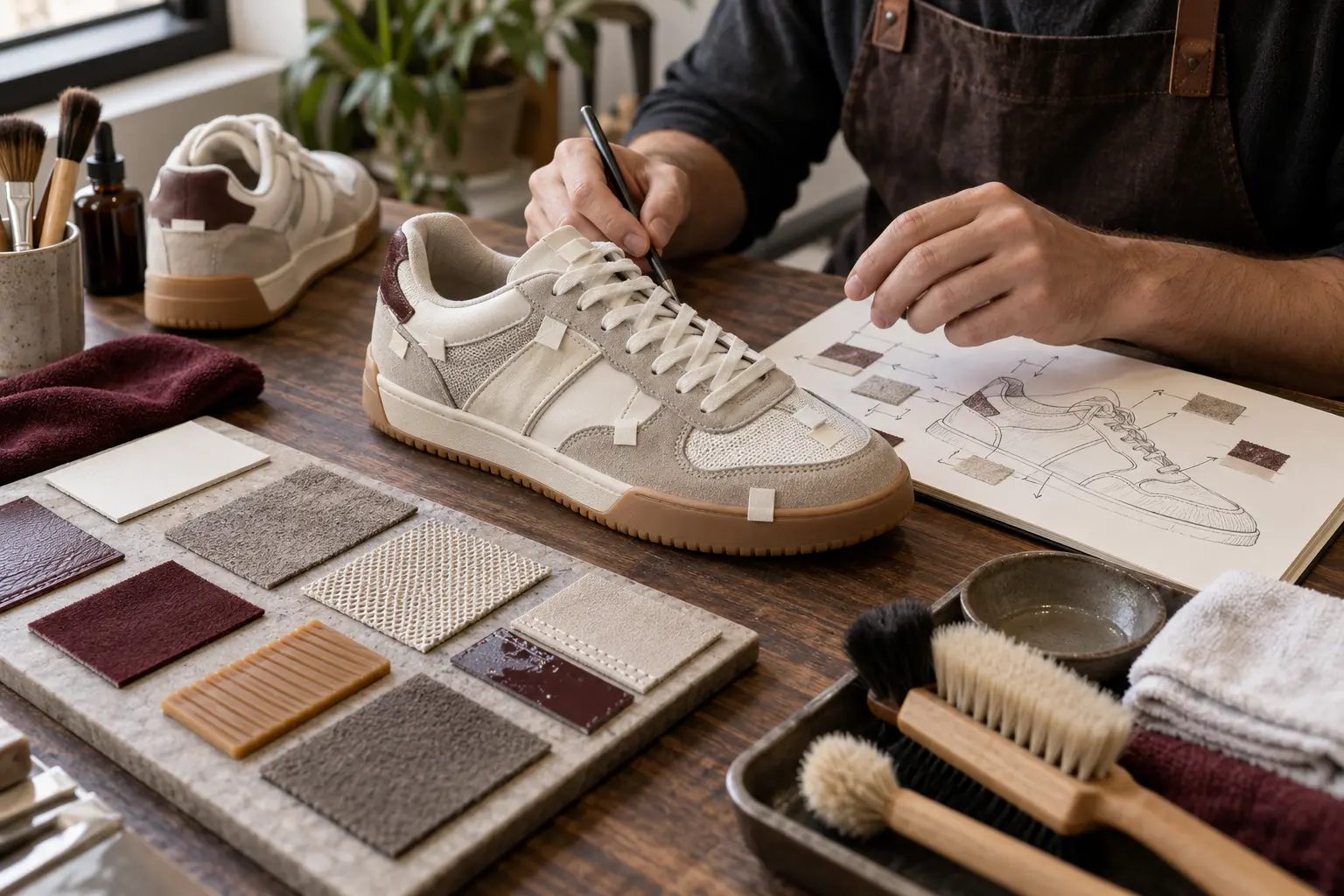
Cleaning mixed-material sneakers: start with a whole-shoe material map
Map mesh, leather, suede, films, prints and foam before cleaning. Assign tests, tools and treatment strength to each area.
Read article →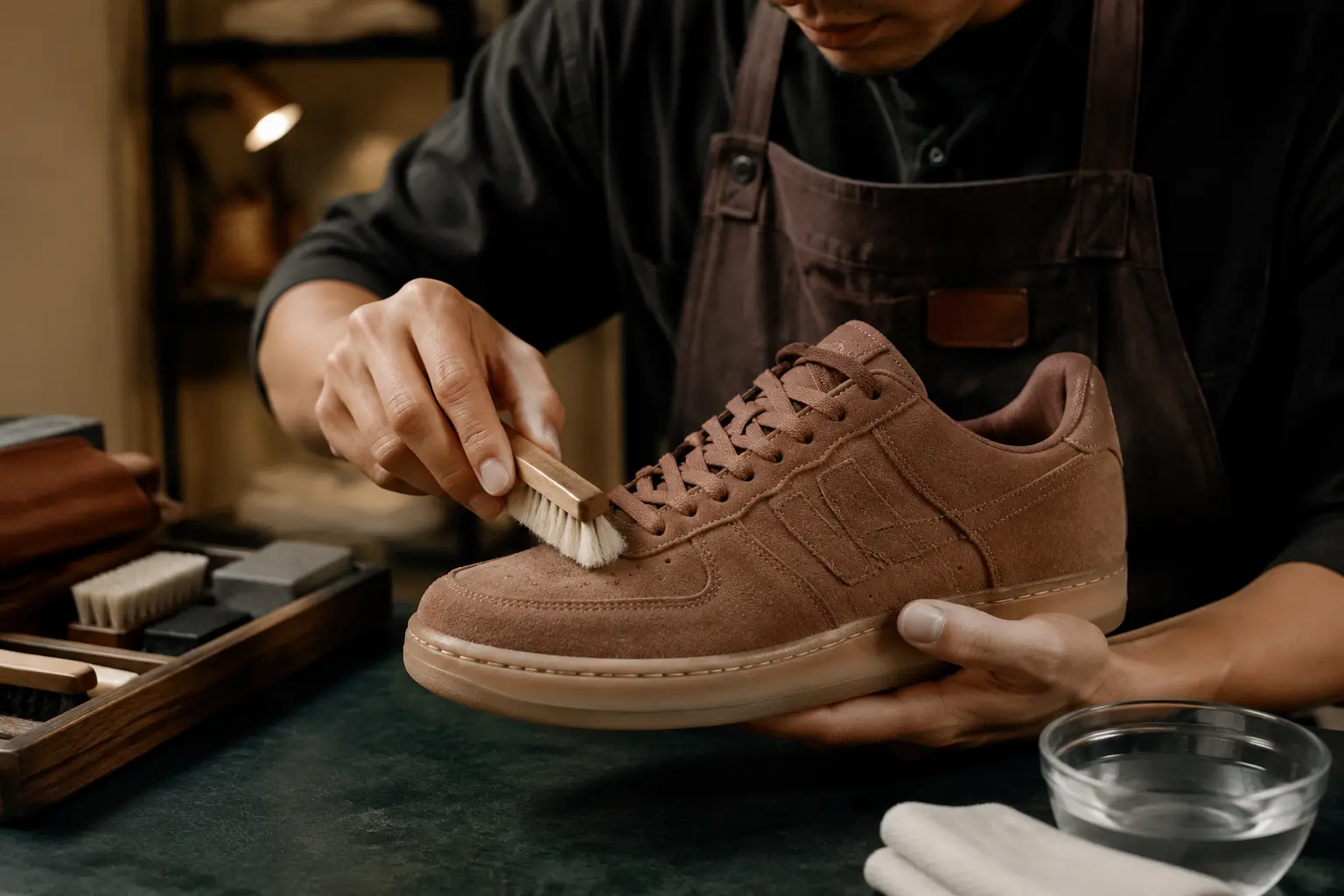
Cleaning suede sneakers while limiting stiffness and colour differences
Control moisture and treatment boundaries, allow complete drying and groom the nap last. Covering the whole upper in foam is not the goal.
Read article →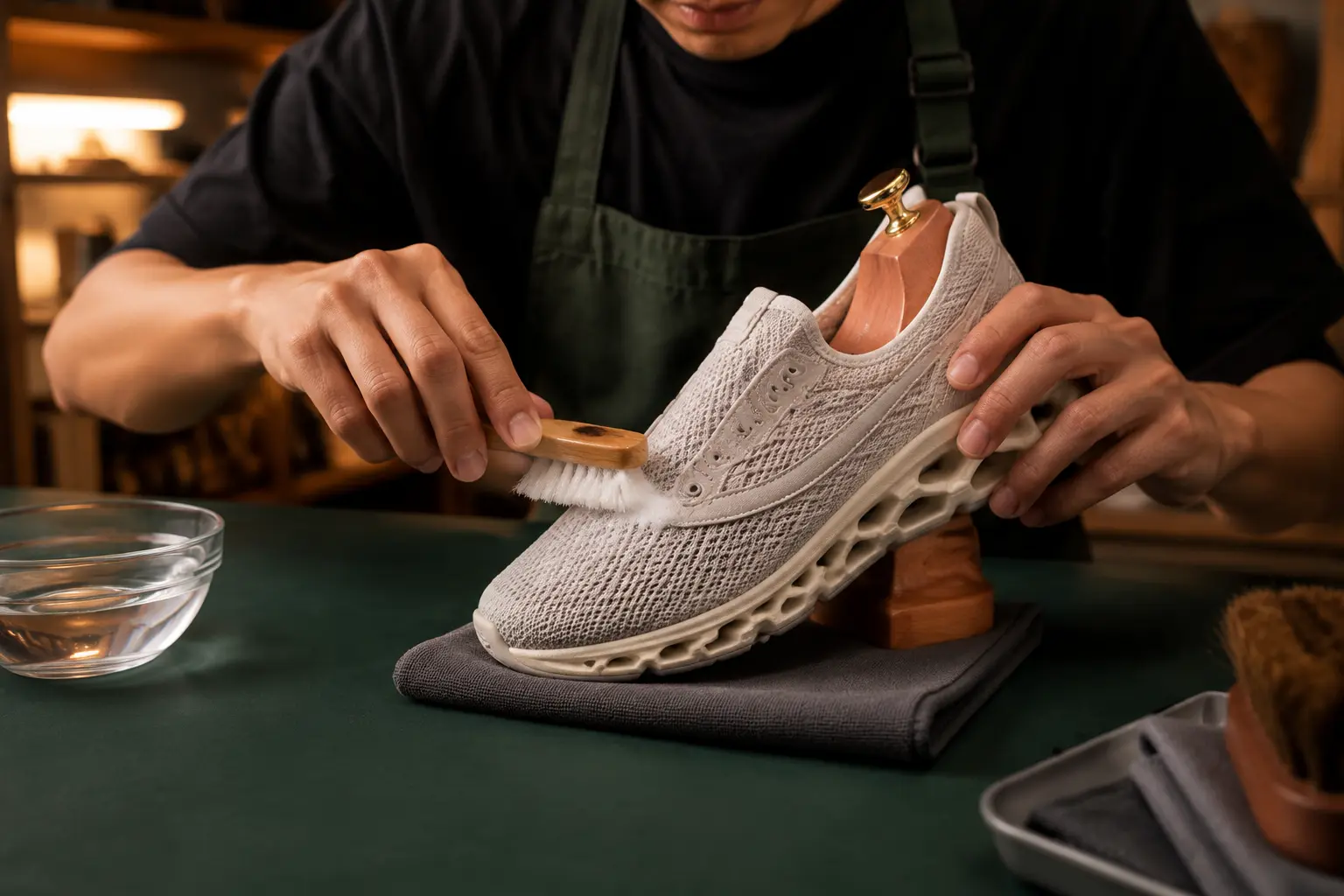
Cleaning mesh sneakers with fewer tide marks and less distortion
Mesh can carry soiling and cleaner into hidden layers. Control foam, recover dirty liquid and support the shoe's shape during drying.
Read article →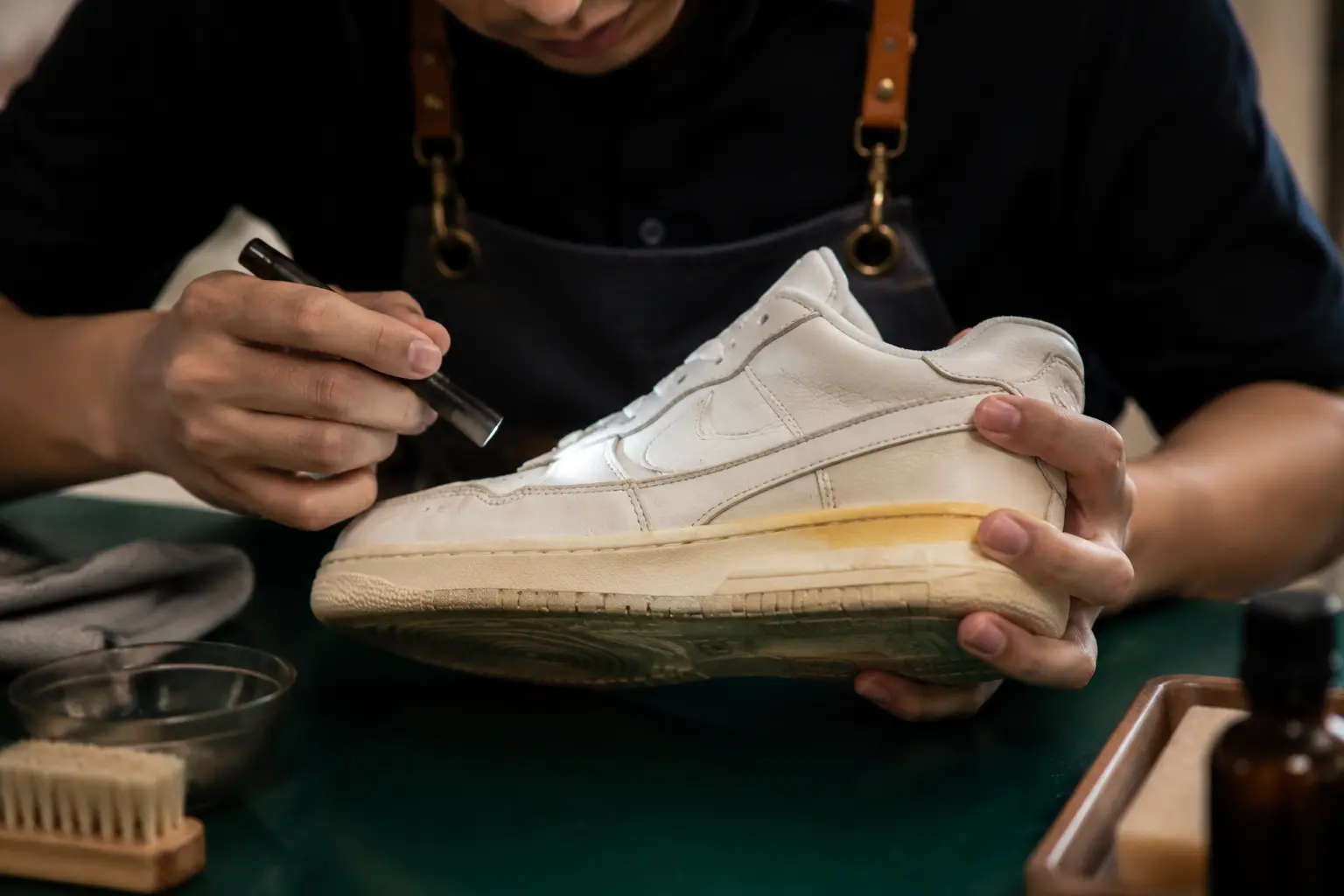
Yellow soles: surface dirt or material oxidation?
Surface soiling can be cleaned, while oxidation and light ageing are changes in the material. Explain achievable results and their likely durability.
Read article →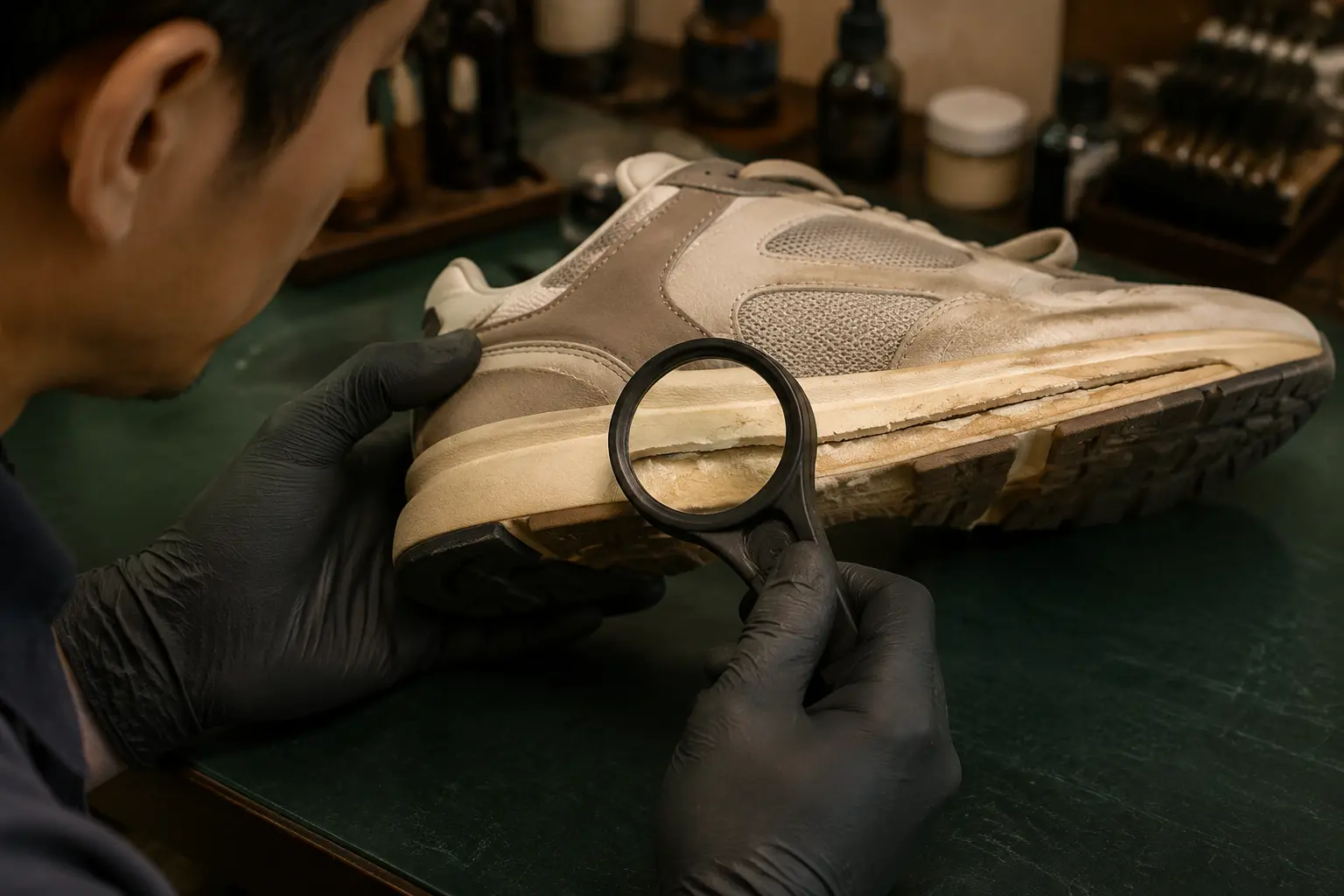
Why sole separation and midsole ageing must be checked before cleaning
Water, heat and flexing can worsen ageing bonds. Structural inspection determines whether wet treatment is suitable.
Read article →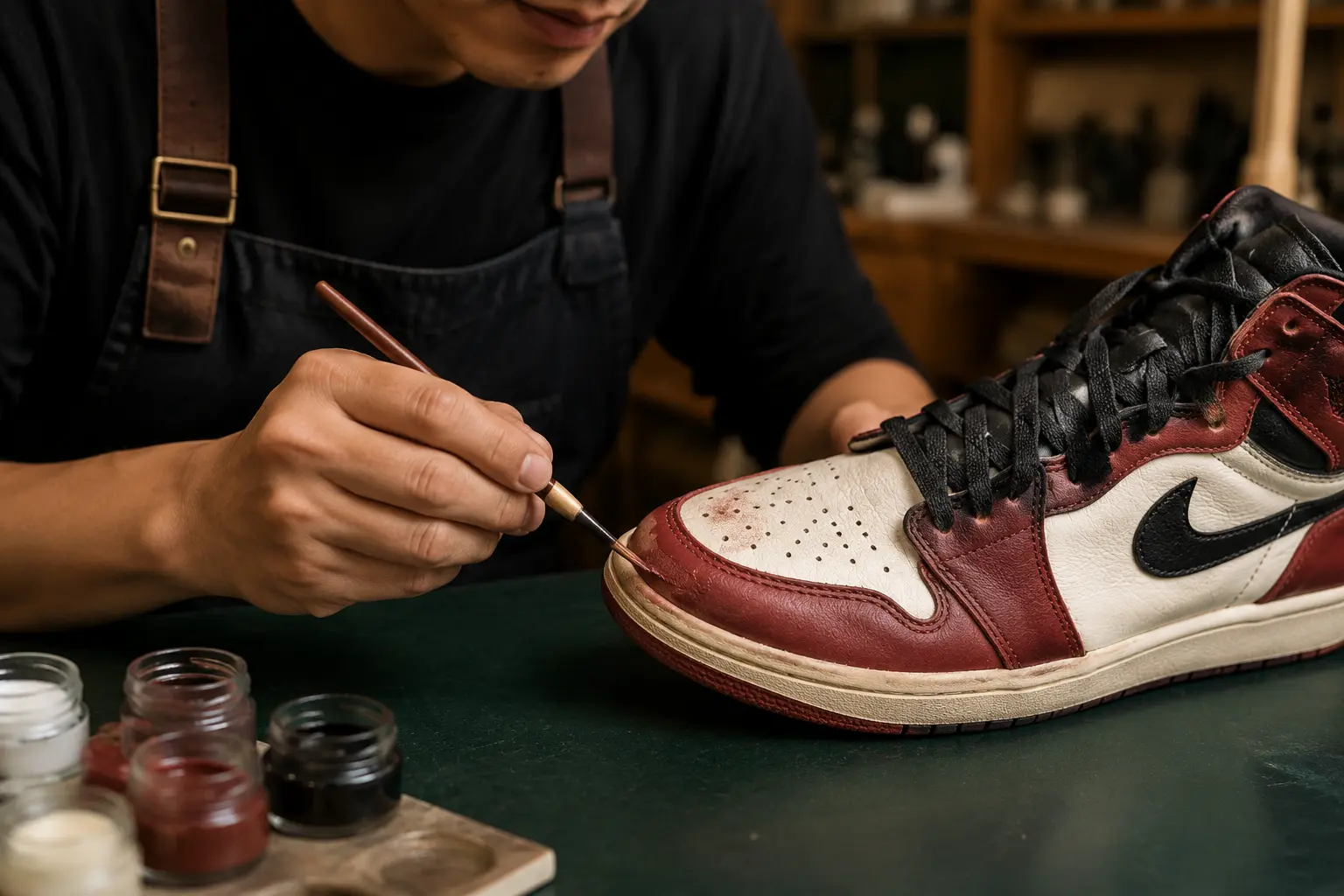
Recolouring sneakers without a heavy painted look
Respect the original material's flexibility, texture and sheen. Thin layers and soft transitions matter more than maximum coverage.
Read article →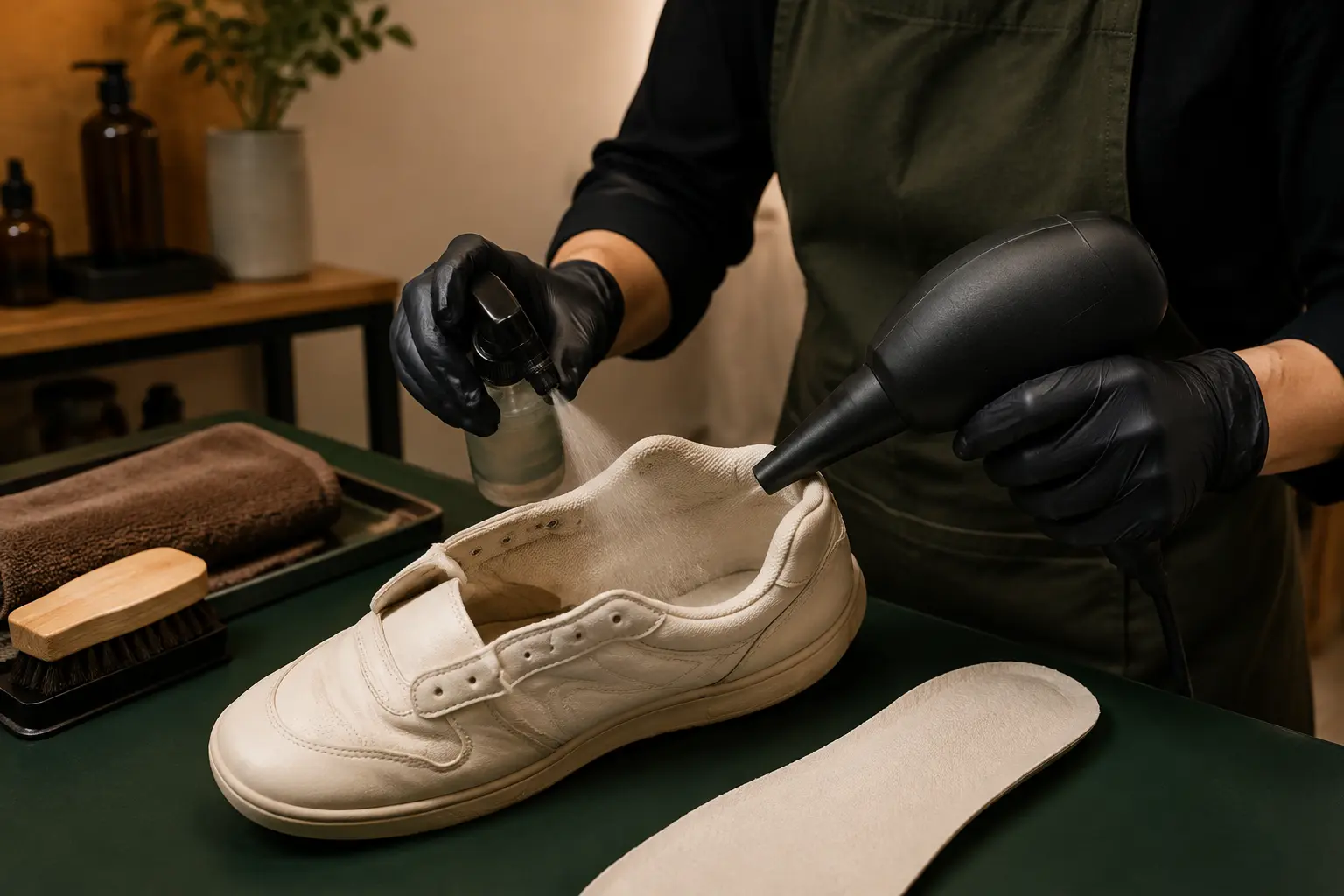
Managing insole and lining odour through cleaning and drying
Remove particles and sources of soiling, control moisture and dry thoroughly. Fragrance alone does not resolve odour.
Read article →
Tiering sneaker care services by material, work and risk
Separate routine cleaning, material-specific care, repair and high-value risk assessment to make scope, price, timing and result limits clear.
Read article →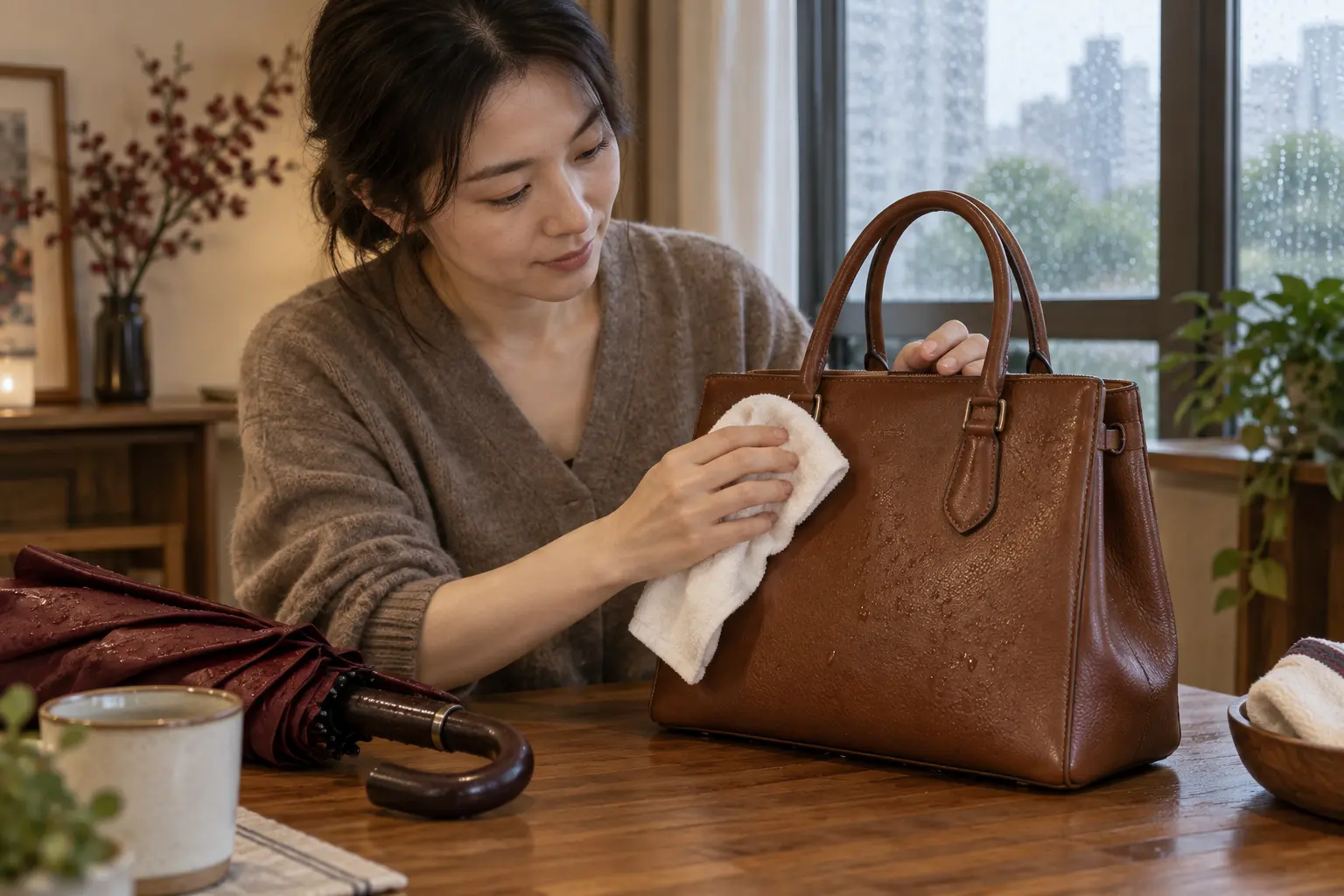
A rain-soaked handbag: what to do in the first 30 minutes and as it dries
Blot, support and dry in the shade before assessing watermarks, colour and structure. Follow checks for the first 30 minutes, the next 24 hours and complete drying.
Read article →
Oil on a handbag: assess the timing, material and colour before treating it
Distinguish fresh surface oil from absorbed or older staining. Blot, observe and recognise when to stop so that a small mark does not spread.
Read article →
Mould on a handbag: isolate it, assess the material and address the storage conditions
Wiping the surface alone may not prevent recurrence. Assess the bag, lining and storage environment, with isolation and controlled drying first.
Read article →
Storing handbags: moisture control, gentle support and regular checks
Prepare the bag, support its natural shape and check storage conditions to reduce mould, compression, sticking and hardware marks.
Read article →
A misshapen handbag: distinguish temporary compression from structural damage
Assess an empty bag before trying to reshape it. Gentle support may help mild compression, but damaged boards, seams and bonded layers need a different approach.
Read article →
Sending a handbag for care: photographs, accessories and protective packing
Record the condition and accessories, support the shape and cushion all sides before shipping. Confirm the service and receiving address first.
Read article →
Nine photographs for a useful online leather-care consultation
Combine overall views, close-ups and side lighting with treatment history so that the material, issue and extent can be assessed remotely.
Read article →
Using a leather-care product for the first time: test, measure and recheck
Check suitability, test a hidden area with the smallest amount and assess it after complete drying before treating a larger area.
Read article →
An eight-week plan for turning online luxury-care learning into practical skills
Build material assessment, risk awareness, process practice and case review into a repeatable working method, with weekly exercises and checks.
Read article →
High-risk luxury-care orders: when to accept, pause or refer
Use a traffic-light assessment, documented evidence, controlled tests and clear responsibility to manage high-risk work consistently.
Read article →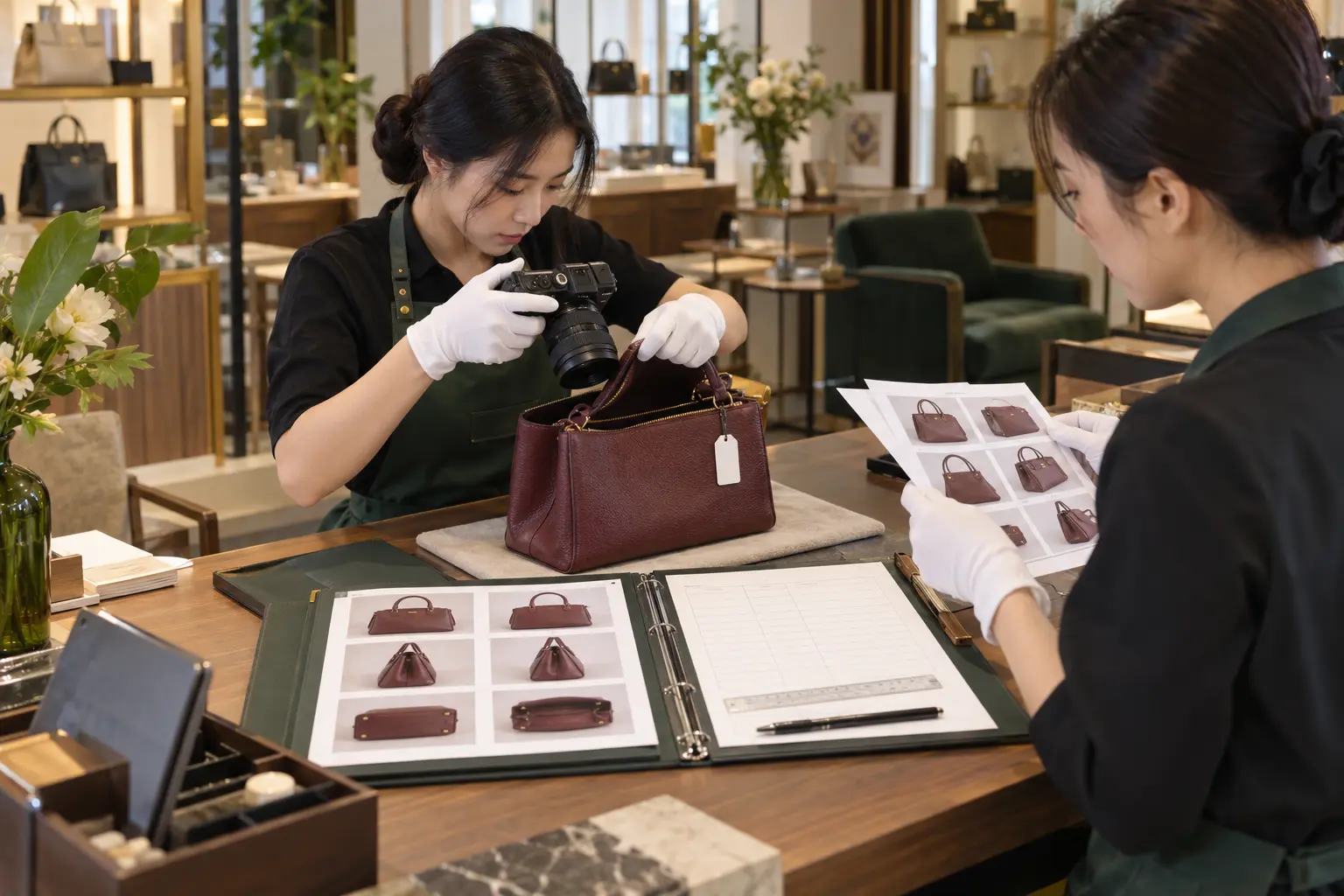
One item, one record: documenting pre-owned luxury goods from intake to disclosure
Connect identity, condition, accessories, treatment history and sales disclosure in a traceable record that every team member can use.
Read article →
Yellowing or stains returning after sneaker cleaning: trace moisture, residue and oxidation
Use timing, location and stain boundaries to distinguish soiling migrating from inner layers, cleaner residue, uneven drying and material ageing.
Read article →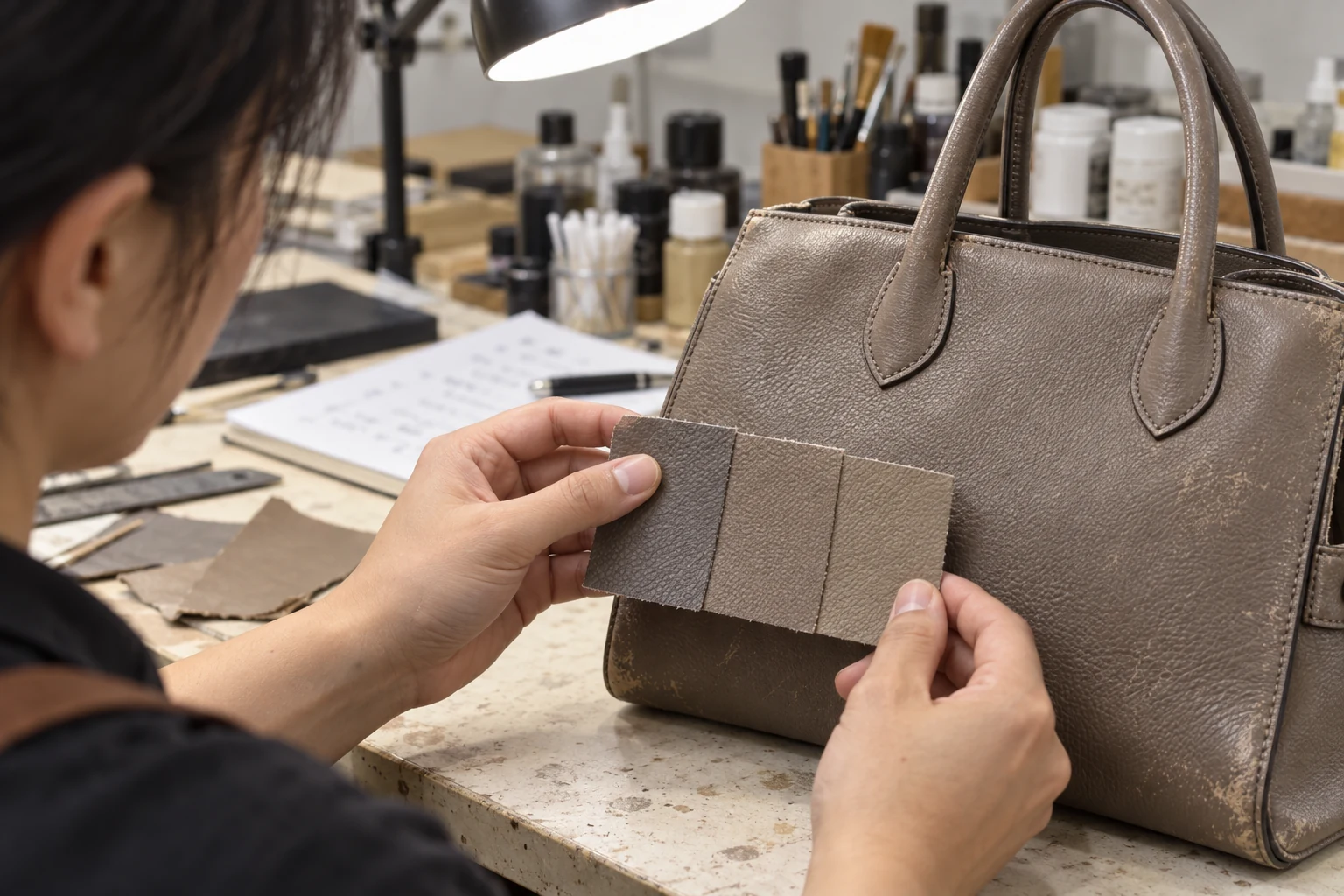
Leather colour matching: why a good wet match can dry grey
Build a repeatable comparison using dry samples and the complete coating system instead of relying on a colour recipe.
Read article →
Why a leather repair looks like a patch: check height, edges and texture before colour
Separate colour loss, surface loss and structural damage, then assess the repair's contour before adjusting its colour.
Read article →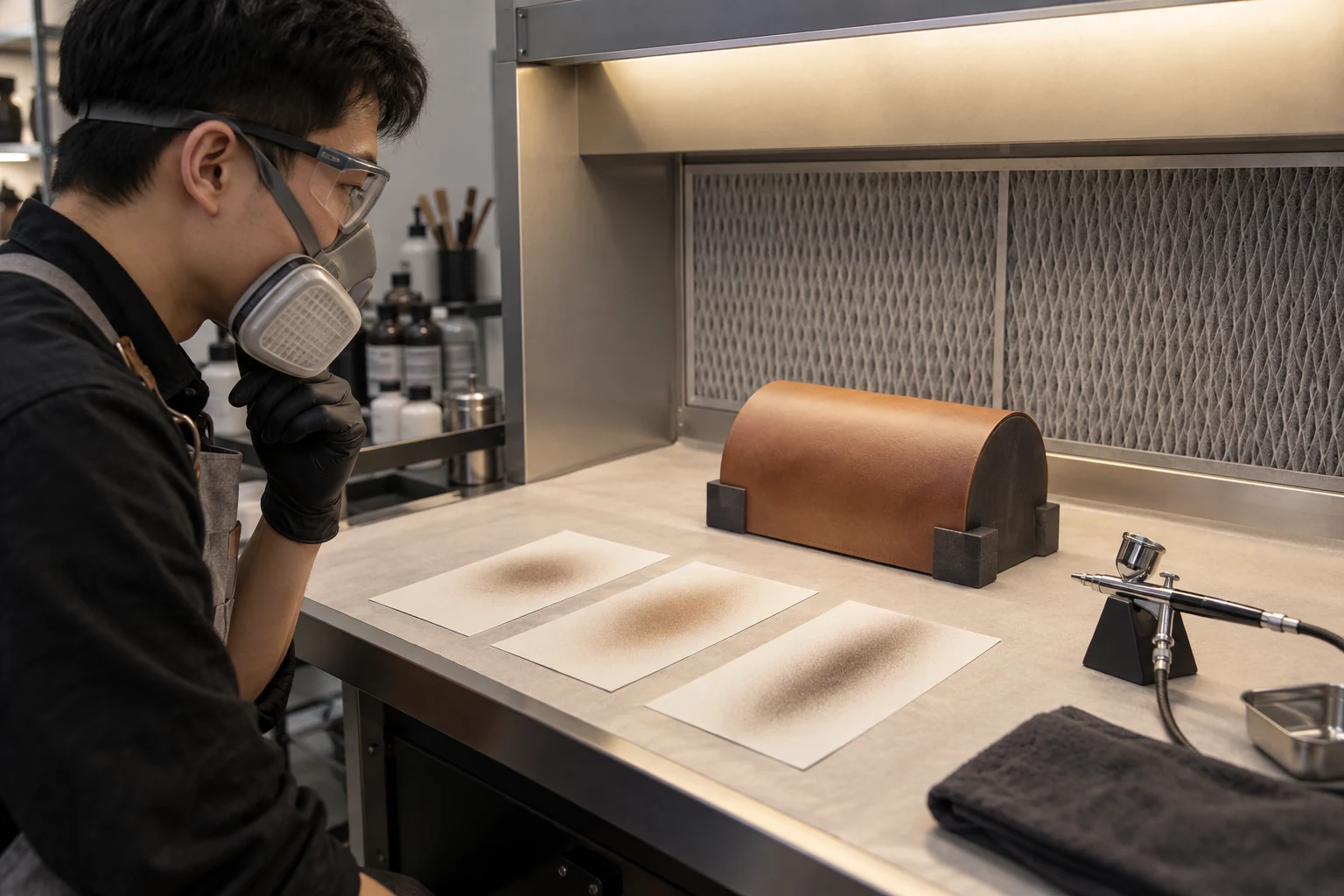
Blotchy spray work, coarse texture or runs: diagnose on a test panel first
Use flat and rounded practice pieces to separate equipment, material and technique problems before spraying a bag.
Read article →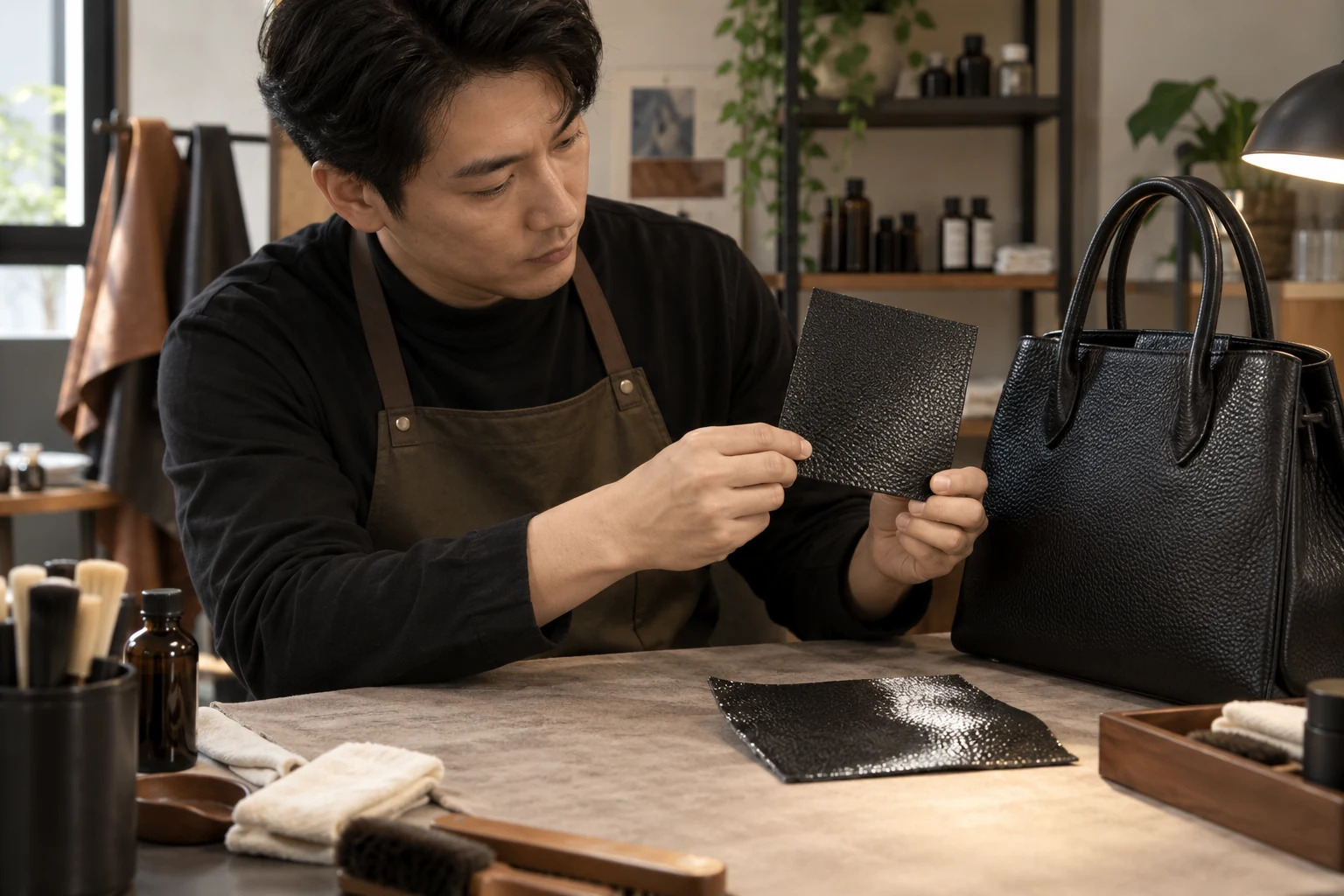
Why recoloured black leather can look painted: assess more than the shade
Set separate references for black tone, gloss and texture instead of hiding differences under thicker coverage.
Read article →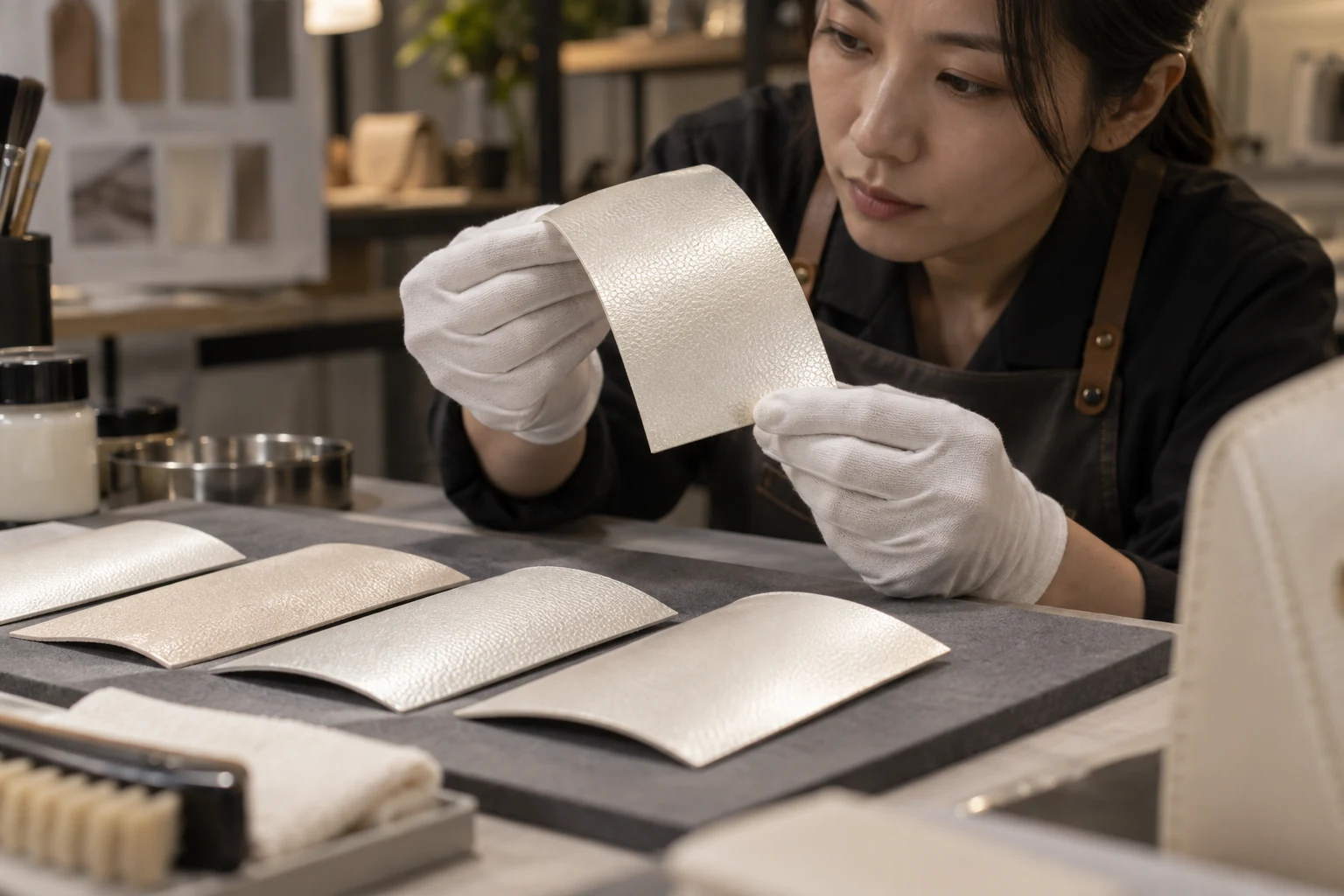
Pearlescent leather that matches head-on but not at an angle
Compare samples from several angles and separate base colour, effect layers and gloss when ordinary solid-colour matching is insufficient.
Read article →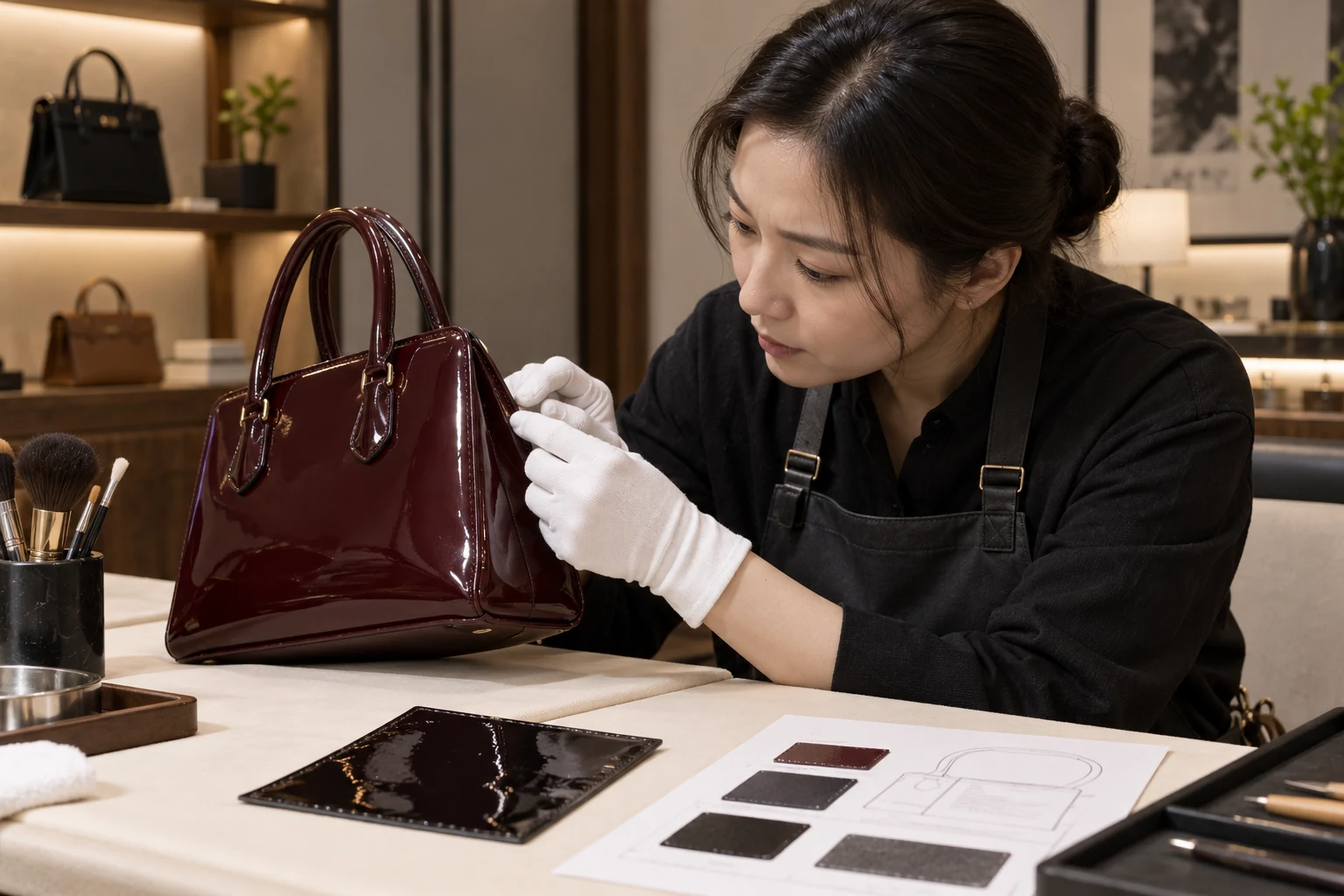
Changing a pale bag to black: list what colour cannot fix first
Map each part and test the complete finish to distinguish what a colour change can achieve from unresolved structural and appearance issues.
Read article →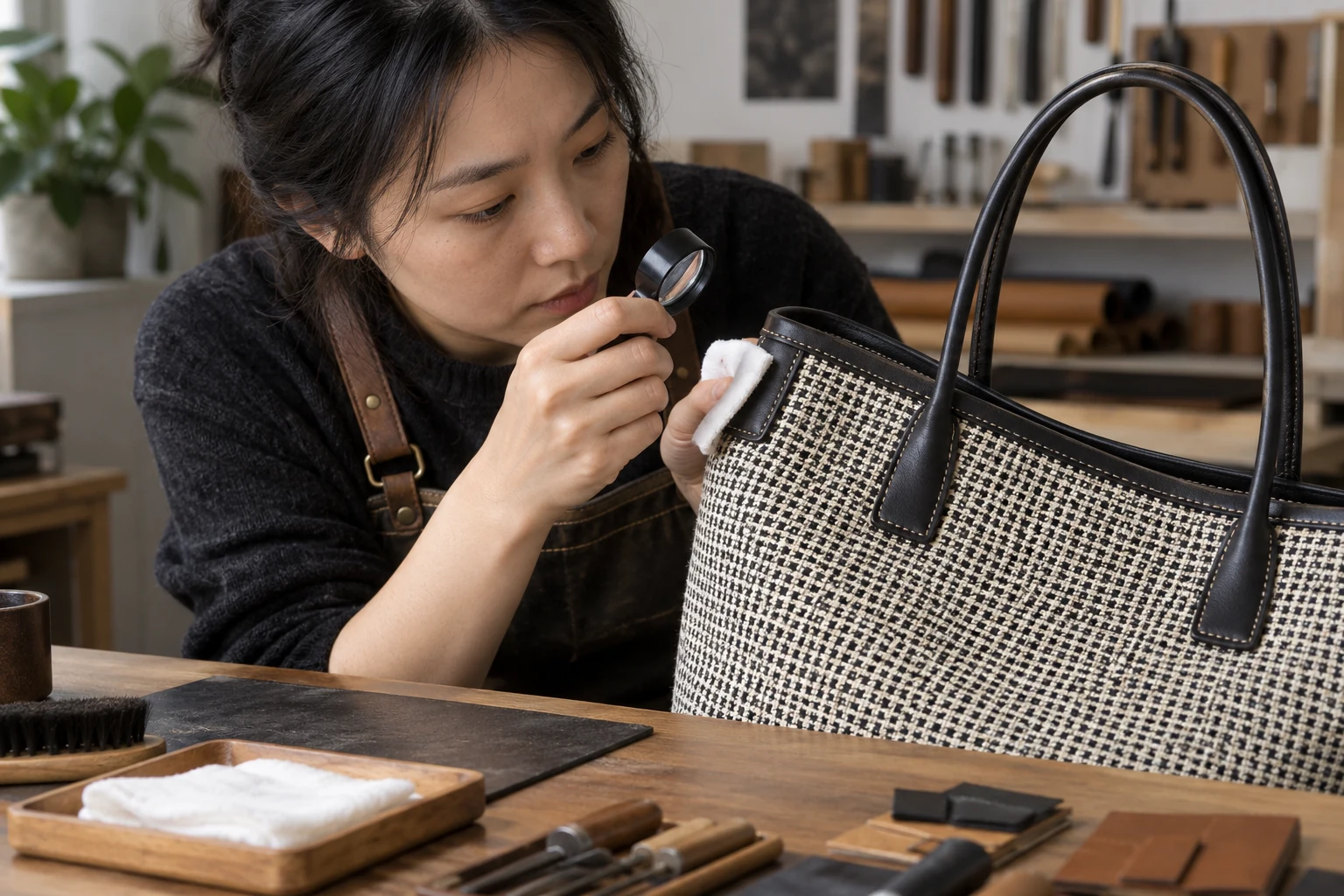
Cleaning black-and-white canvas bags: map where colour could migrate
Map material contact and colour-transfer pathways, and assess both wet and fully dry results before expanding treatment.
Read article →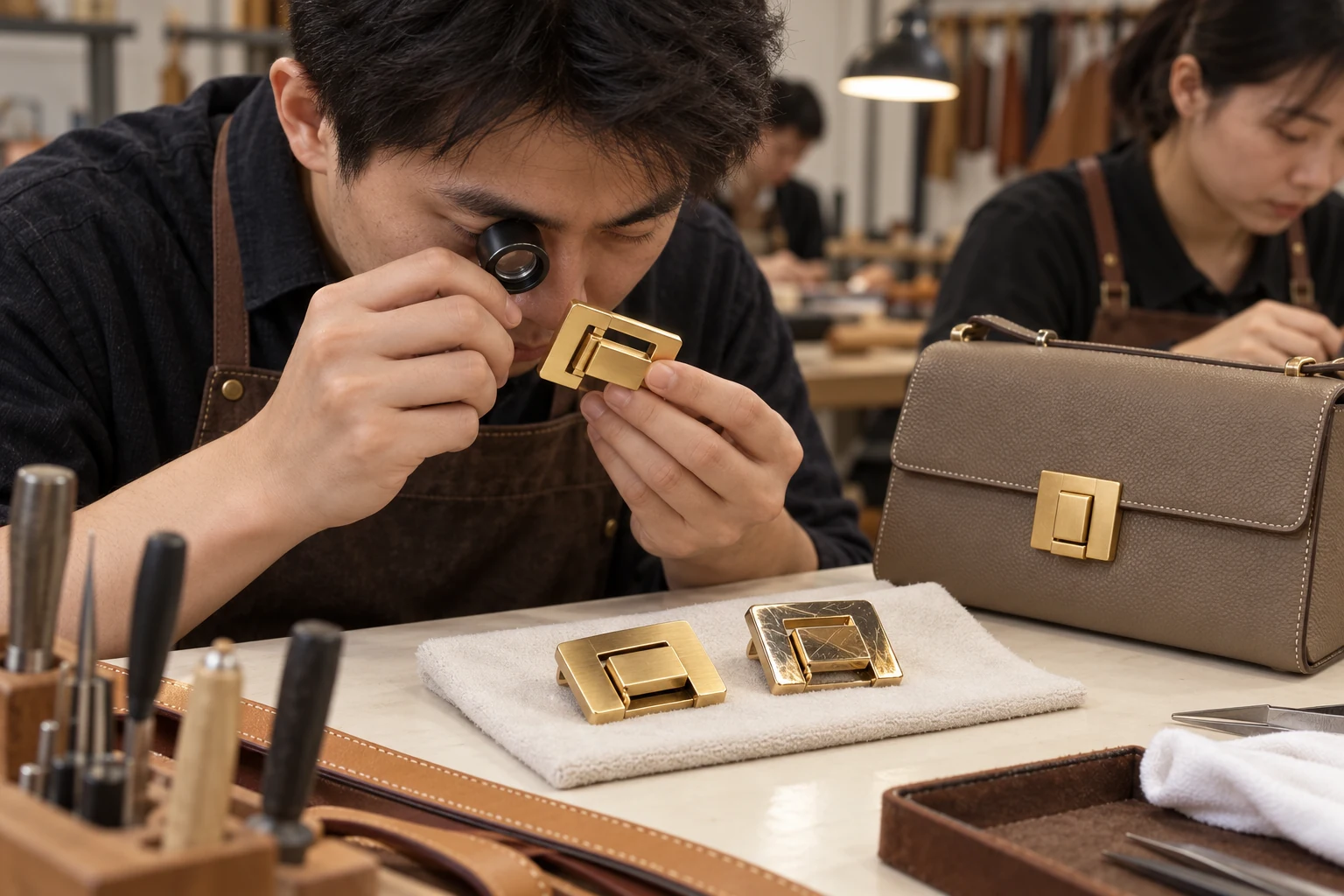
Scratched hardware: distinguish mirror polish, brushed texture and plating
Agree the finish to preserve, then separate deposits, texture, plating wear and mechanical damage before choosing treatment.
Read article →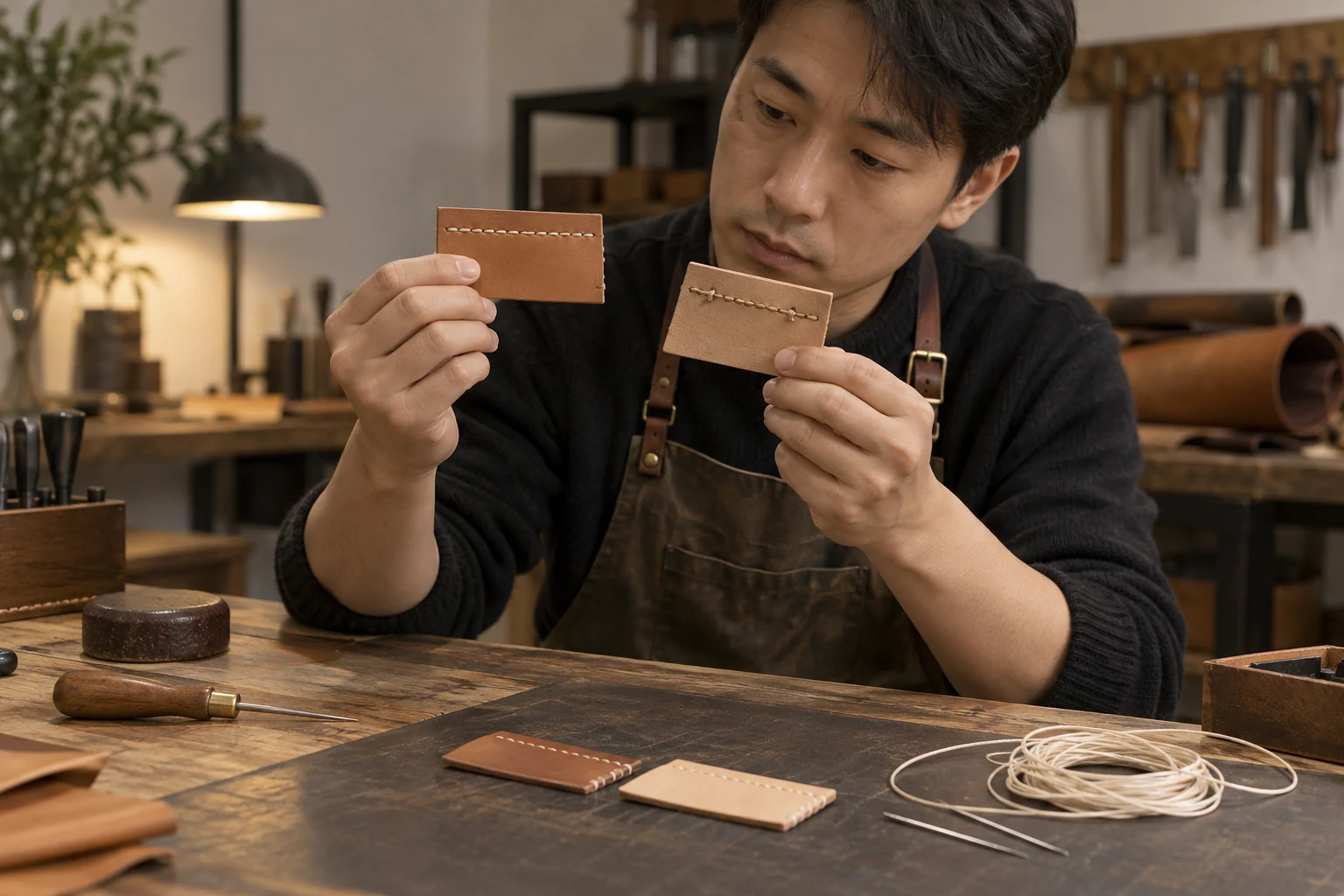
Hand stitching neat on the front but uneven on the back? Check holes before tension
Practise short seams with consistent holes, needle entry and thread tension, keeping evidence from both sides.
Read article →
Skipped stitches and broken thread when sewing leather: a sample-based diagnostic sequence
Check material, needle, threading and machine condition in order, and recognise faults that require a repair technician.
Read article →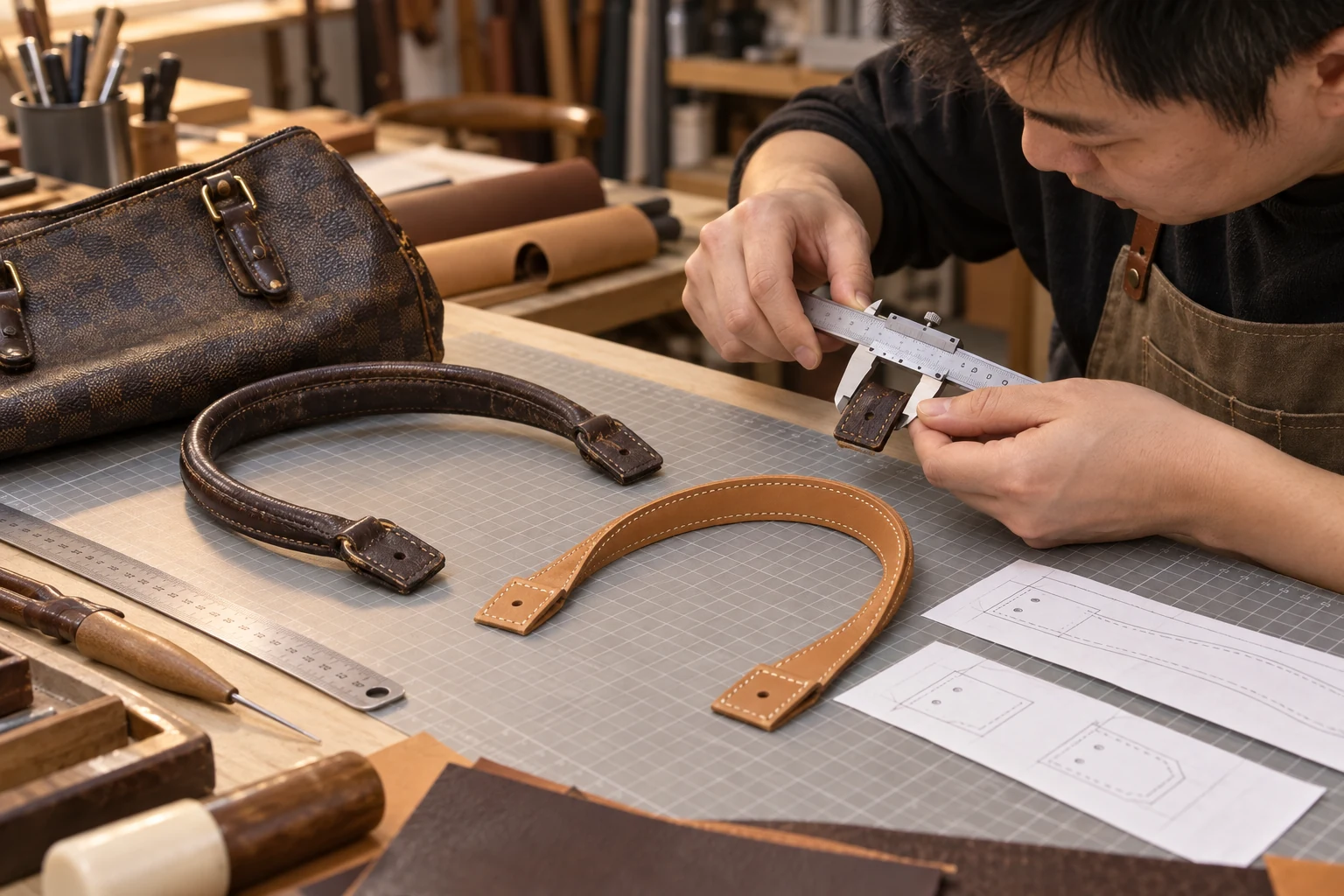
A replacement handle that feels wrong: length, curve and connections come before colour
Record the original geometry and structure, then verify handling with a low-cost sample before making the final replacement.
Read article →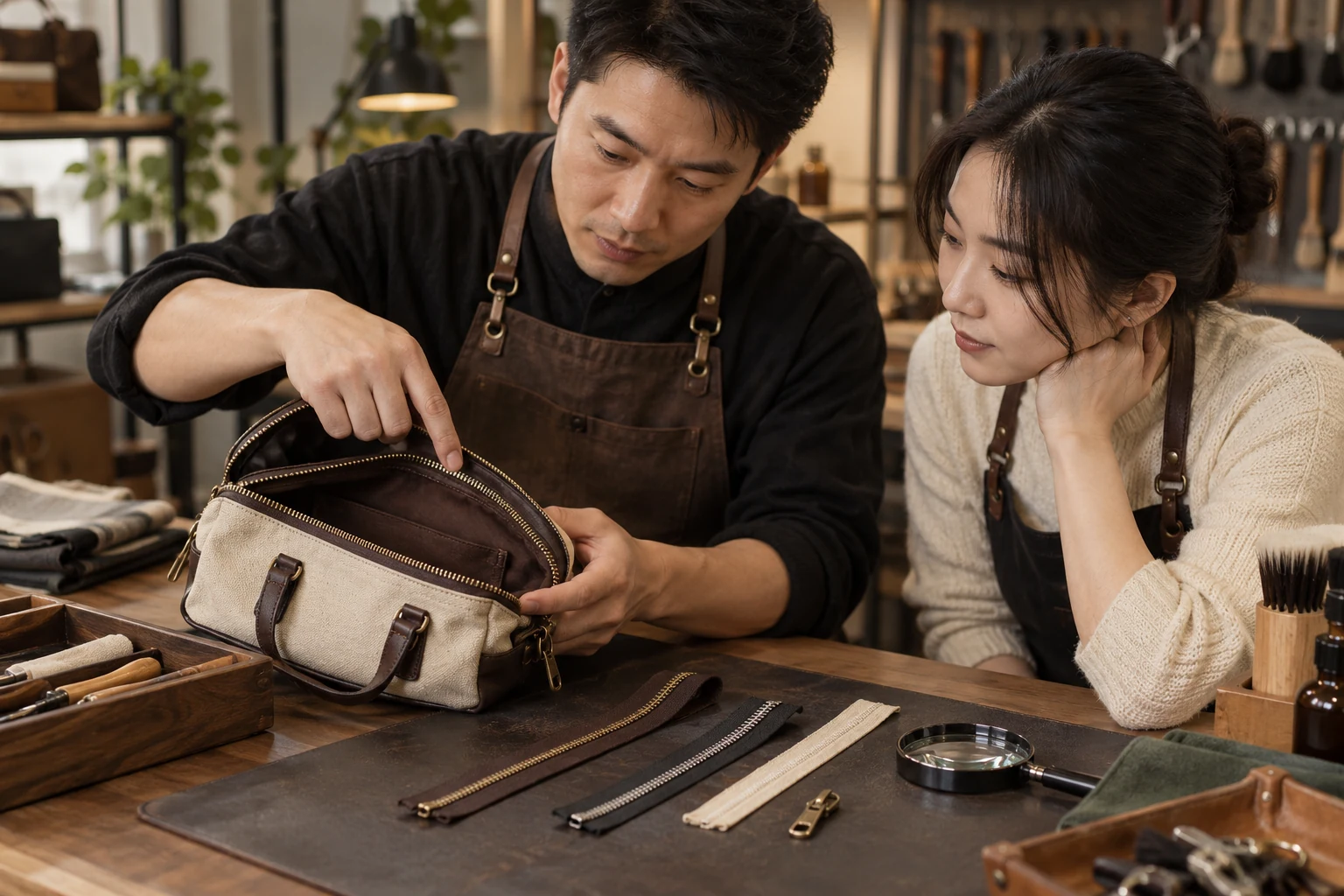
A new zip that still catches: distinguish slider, teeth, tape and installation problems
Locate the fault before replacement and record the original installation path, clearances and orientation.
Read article →
Uneven leather skiving: decide where thinning is needed before changing the feed
Map folds, bonds and load-bearing areas, measure practice samples and assess the assembled result.
Read article →
Raised leatherwork that feels like a hard lump: check the pattern, core and transitions
Use a cross-section and staged checks to distinguish pattern, padding and edge-transition problems.
Read article →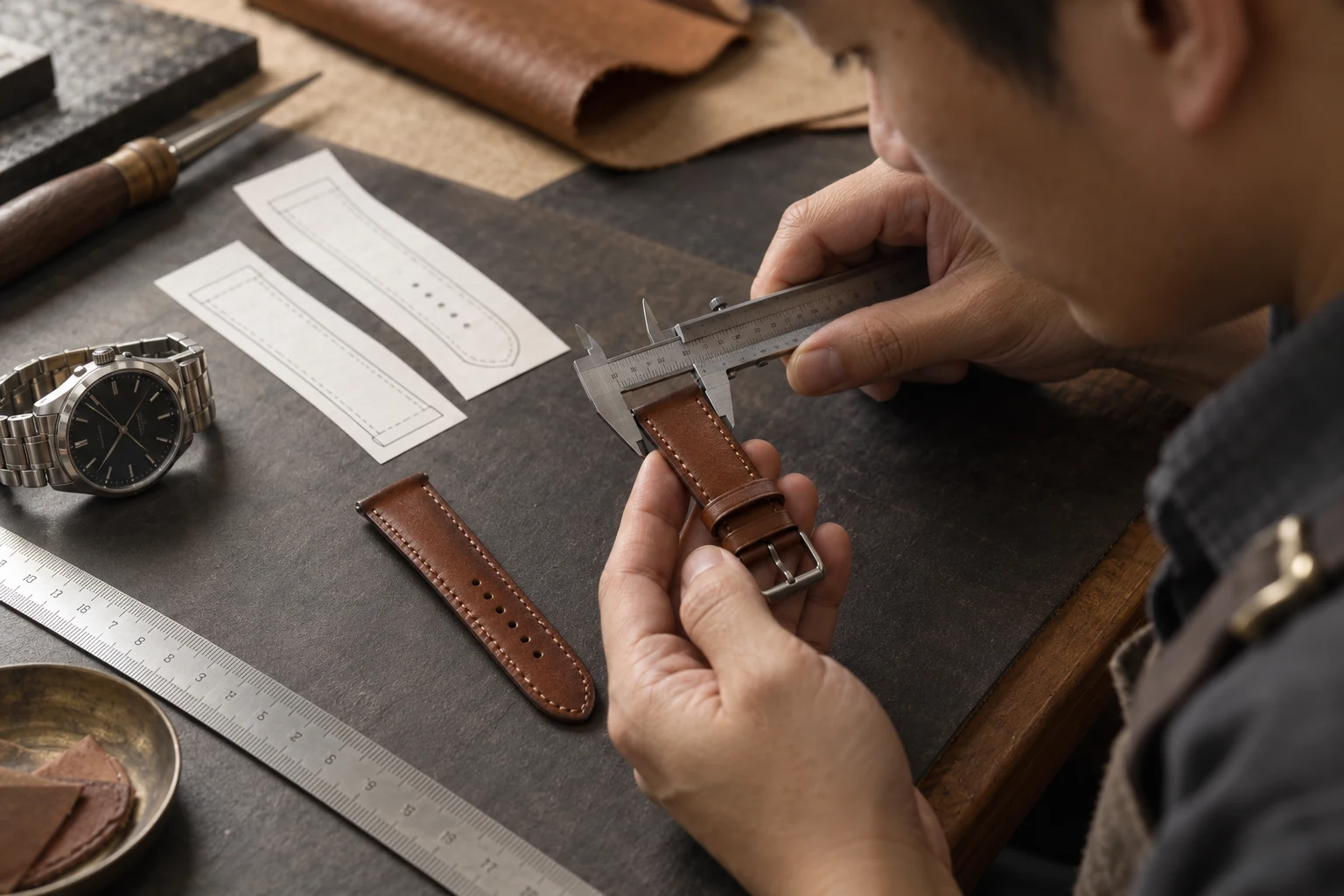
An uncomfortable custom watch strap may start with the pattern
Use a paper strip and ordinary leather sample to verify connection geometry, fastening position and wearing function before final materials.
Read article →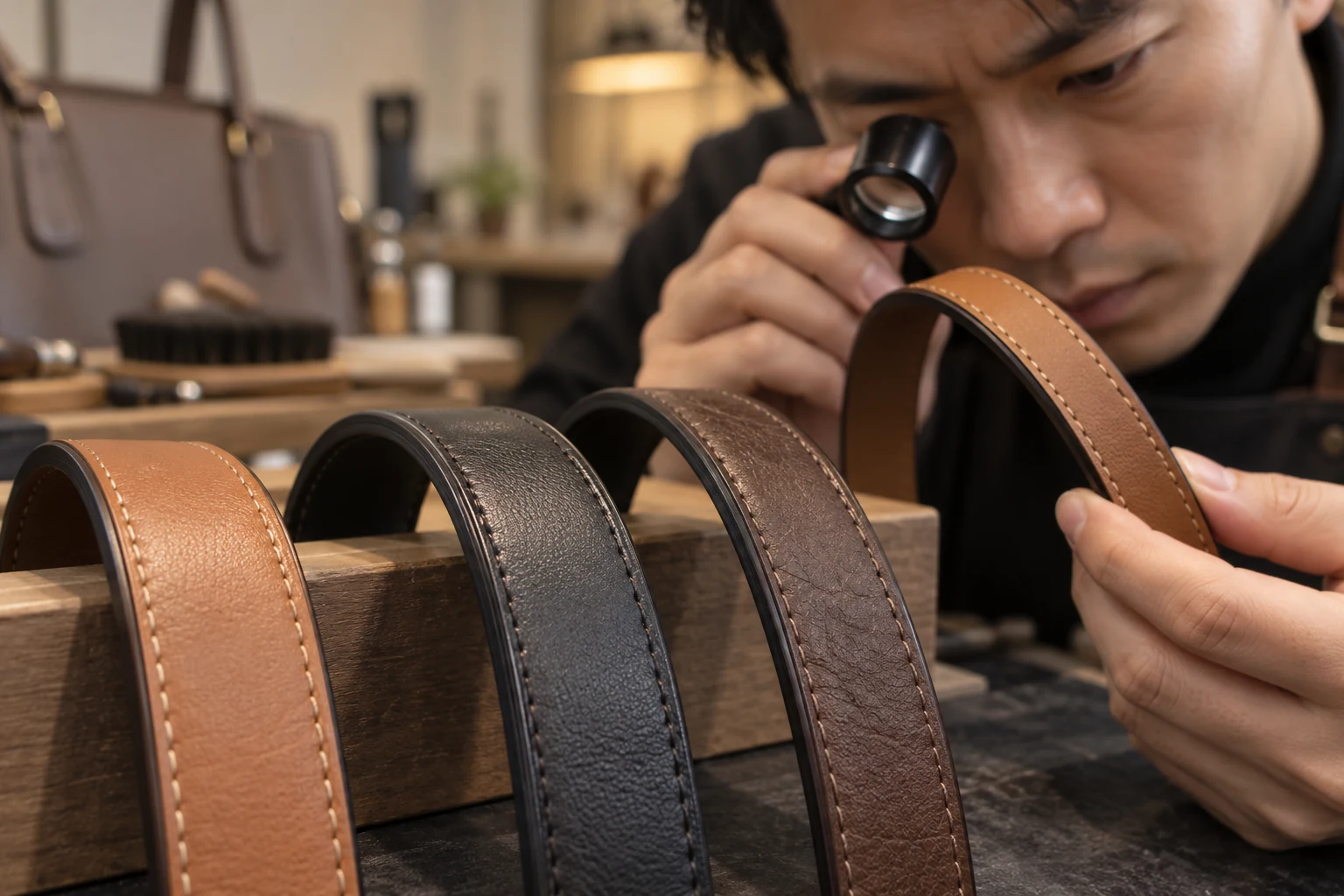
Edge paint cracking or sticking after completion: review four stages before recoating
Trace the failure location back to edge structure, layer thickness, compatibility and curing instead of repeatedly adding paint.
Read article →
Repairing worn coated-canvas patterns: establish a stable base before drawing
Use references for the base, colour and pattern position, and agree which existing marks will remain.
Read article →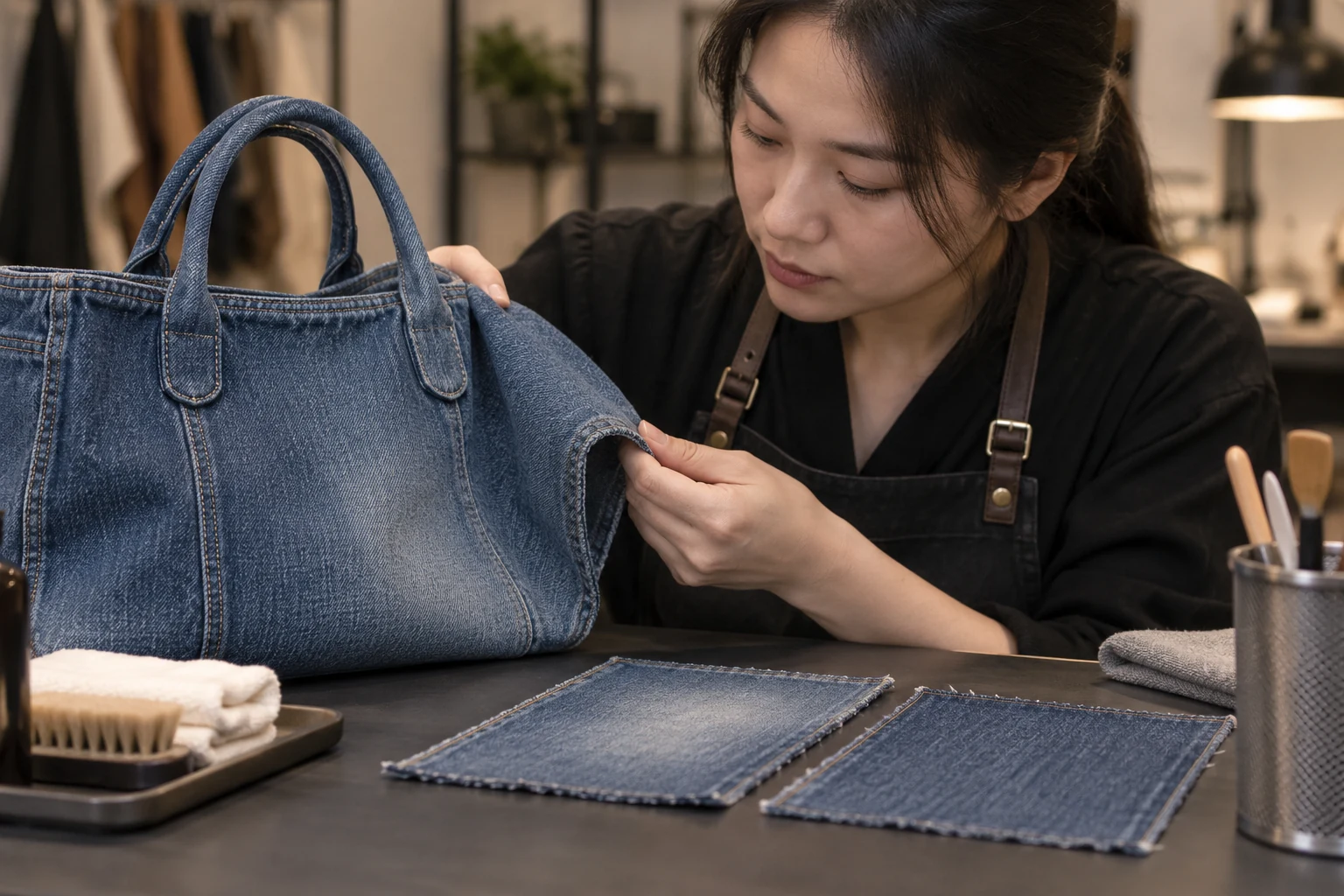
Denim recolouring that turns stiff and flat: preserve the weave as well as the colour
Score colour, visible weave and feel separately so that improved coverage does not turn fabric into a rigid colour film.
Read article →
Watched the repair video but cannot apply it to another bag? Make a decision card
Turn a lesson into six decision fields and use changed examples to check whether you understand its conditions and limits.
Read article →
Adding luxury care to a dry-cleaning or shoe-repair shop: build a reliable service scope
Use real enquiries, four capability checks and sample assessments to decide which services your shop is ready to offer.
Read article →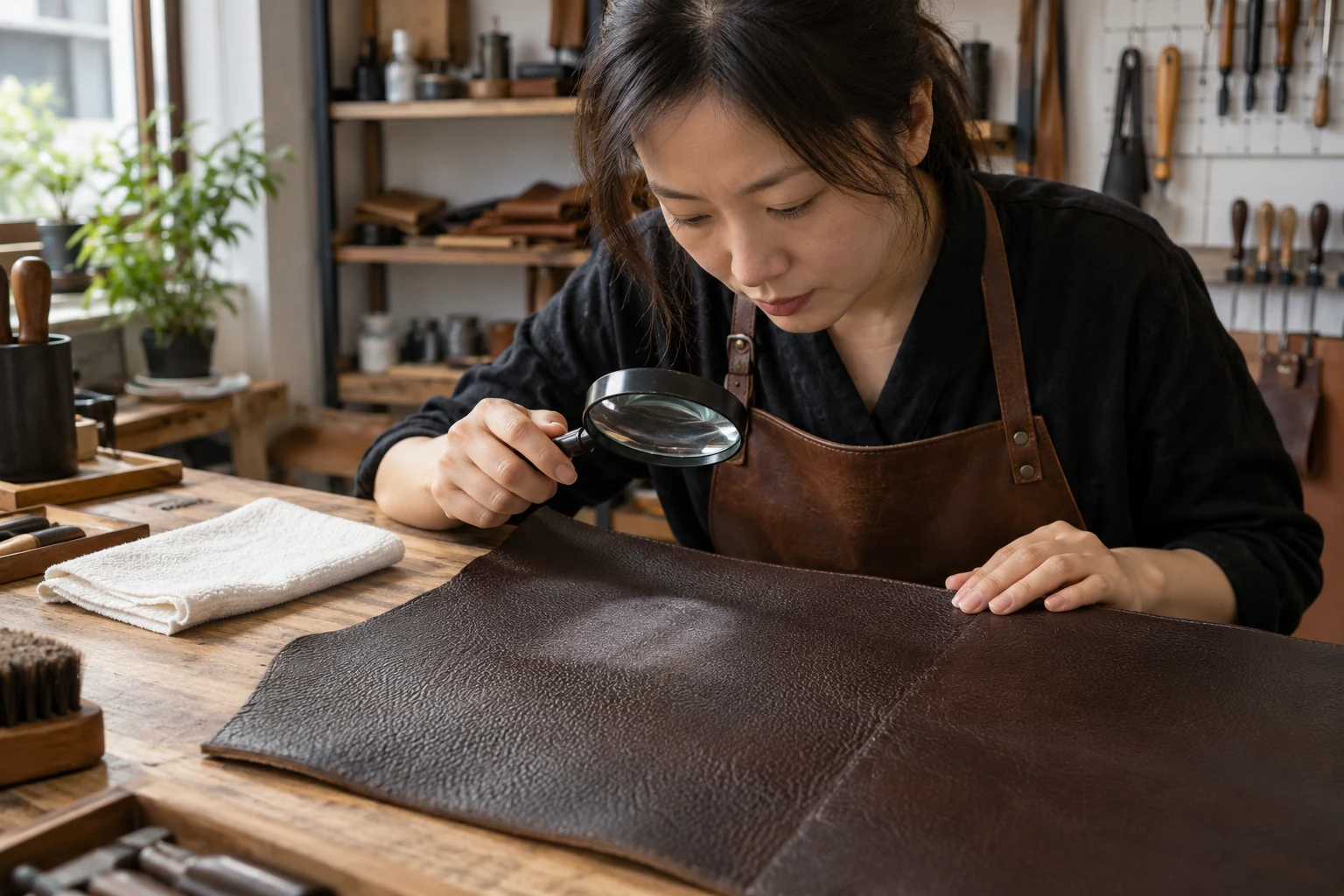
A white haze after leather cleaning: distinguish residue, lost gloss and surface damage
Compare stable dry surfaces, test evidence of residue and inspect reflections before repeating cleaning.
Read article →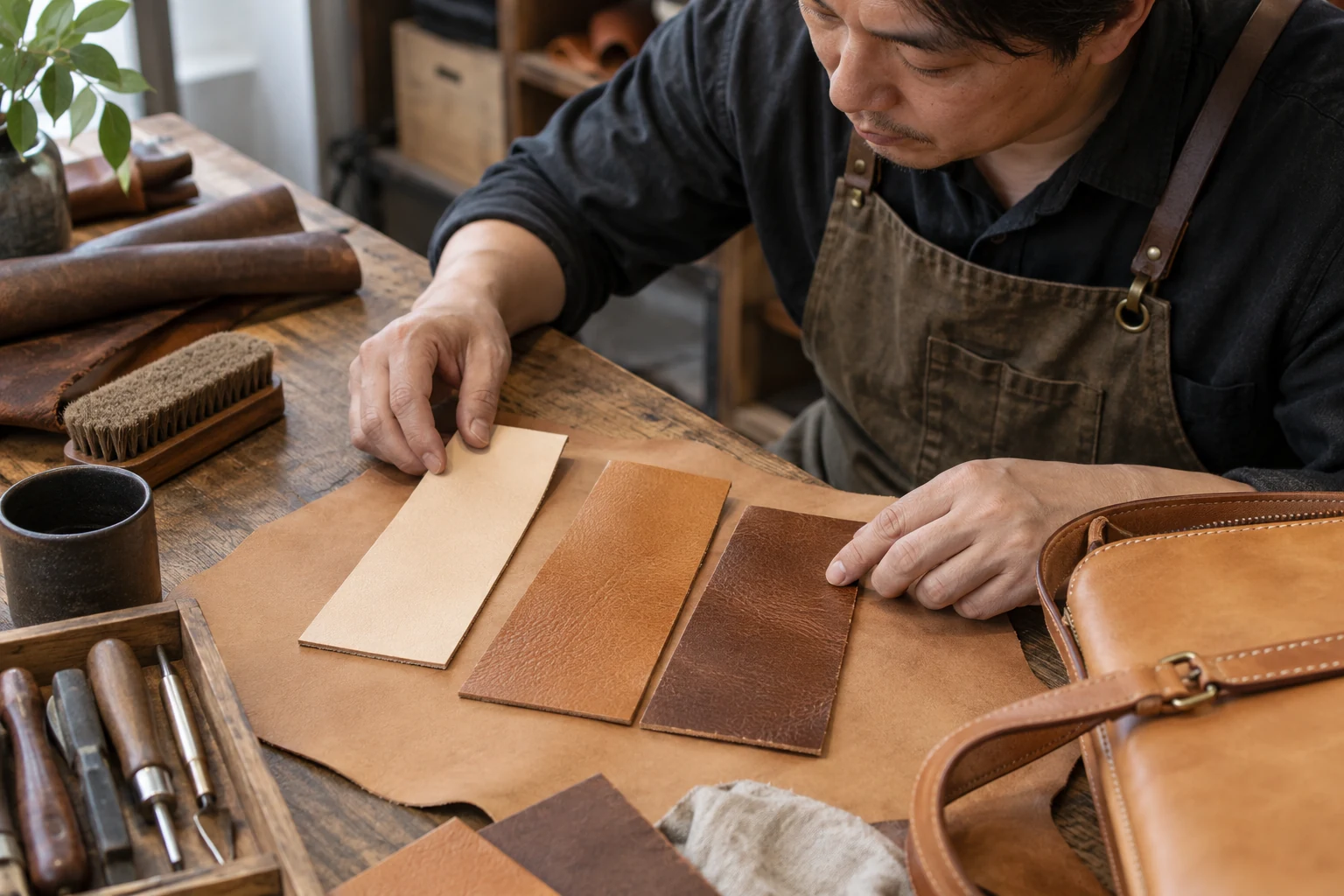
Ageing the look of replacement vegetable-tanned leather: match character, not maximum darkness
Use stable reference areas, translucency and junction checks to make new and existing leather work together naturally.
Read article →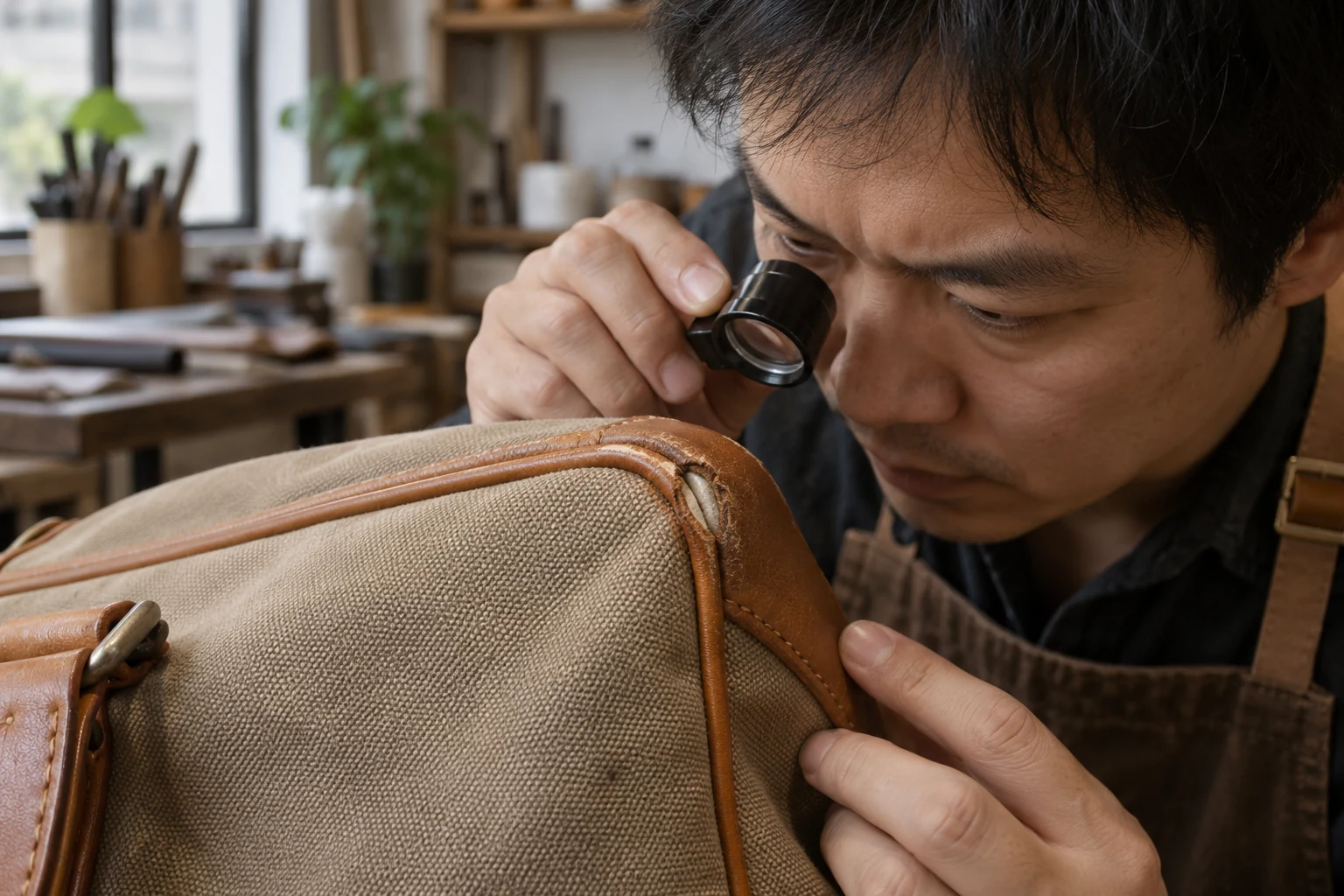
Worn piping with an exposed core: why recolouring cannot restore the shape
Inspect the leather covering, core and seam separately to distinguish colour work, local replacement and structural repair.
Read article →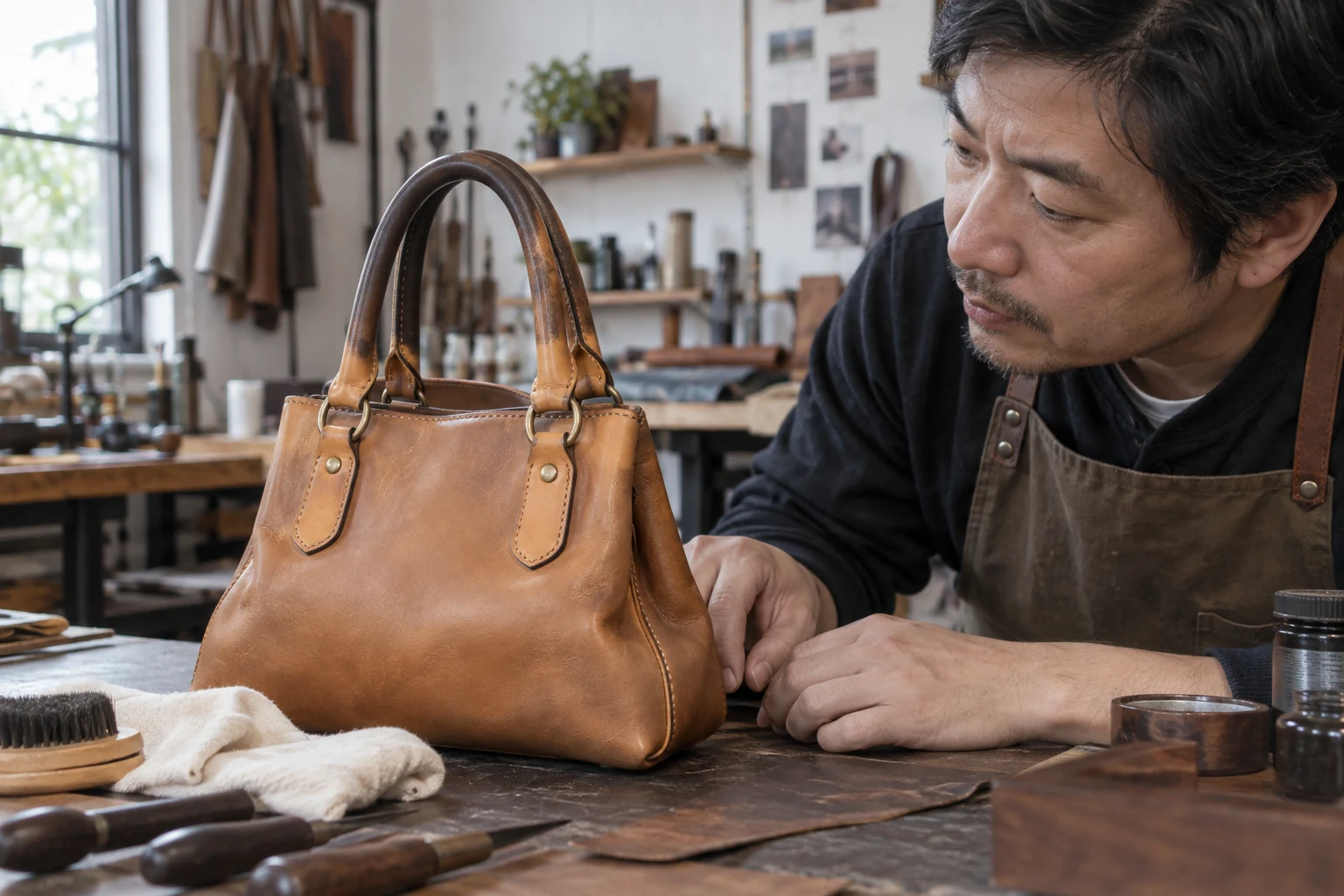
Dark vegetable-tanned handles with pale ends: agree what to preserve before restoration
Inspect grip, transition and attachment areas separately and set a realistic reference and stopping boundary.
Read article →
Aniline-style colour work that loses depth: three checks beyond a close colour match
Assess base colour, translucency and transitions across the item so that colour correction preserves natural depth.
Read article →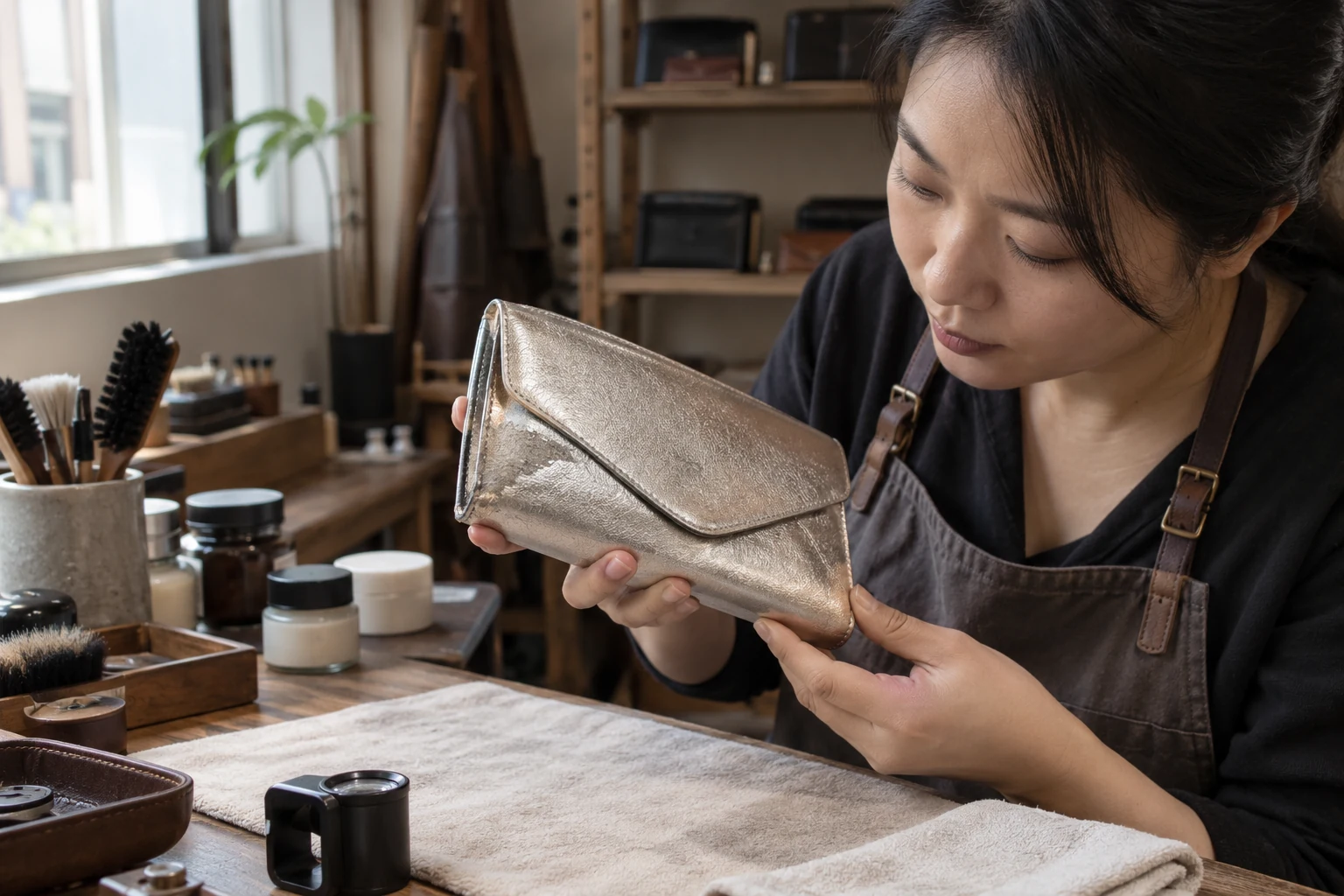
Metallic leather getting duller with wiping: do not treat finish wear as metal oxidation
Distinguish metallic-effect leather from hardware and compare tone, reflection and texture during local finish assessment.
Read article →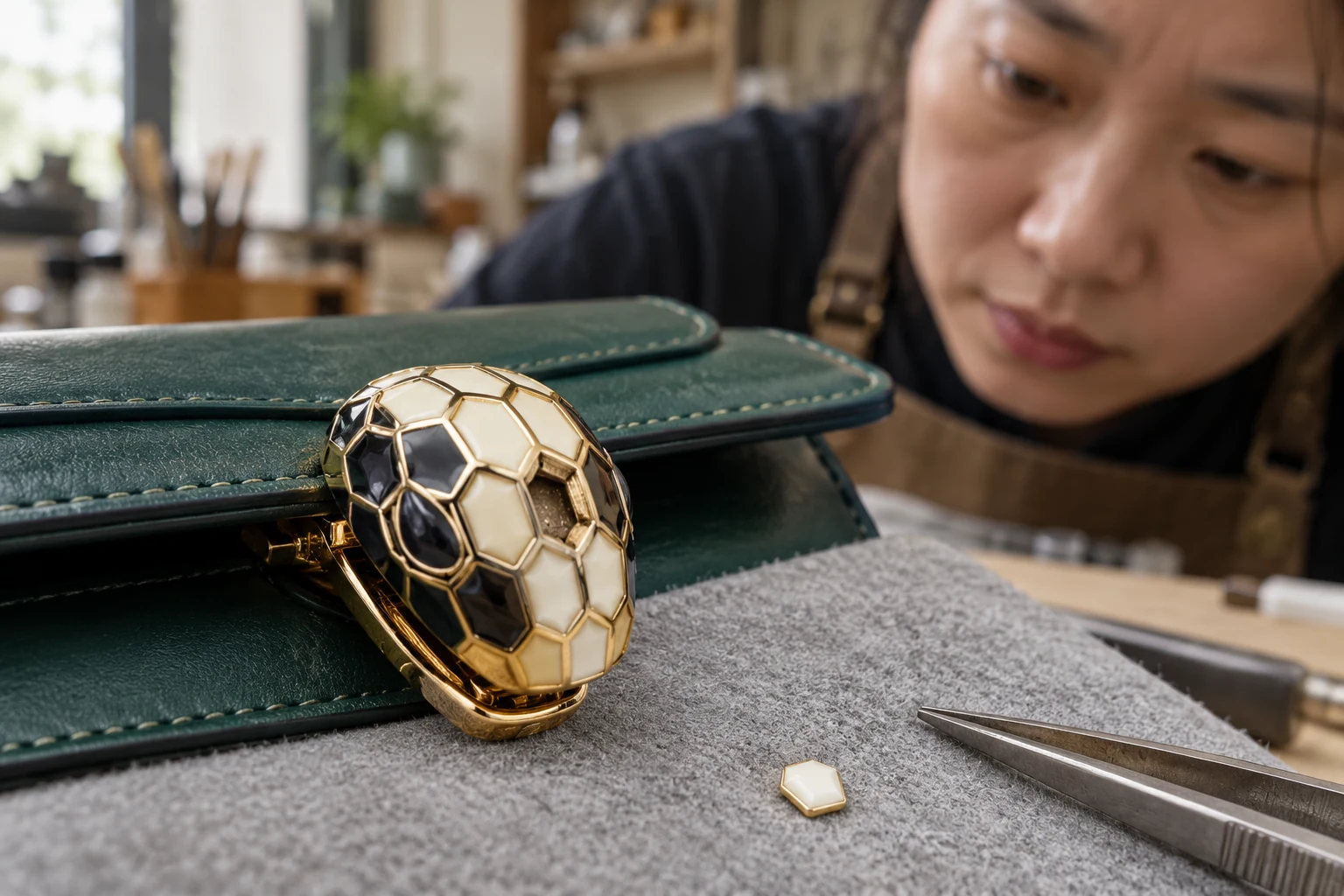
A missing decorative insert on a serpent-head clasp: inspect the recess and mechanism first
Assess the insert, support and clasp movement before deciding on refitting, replacement or reconstruction.
Read article →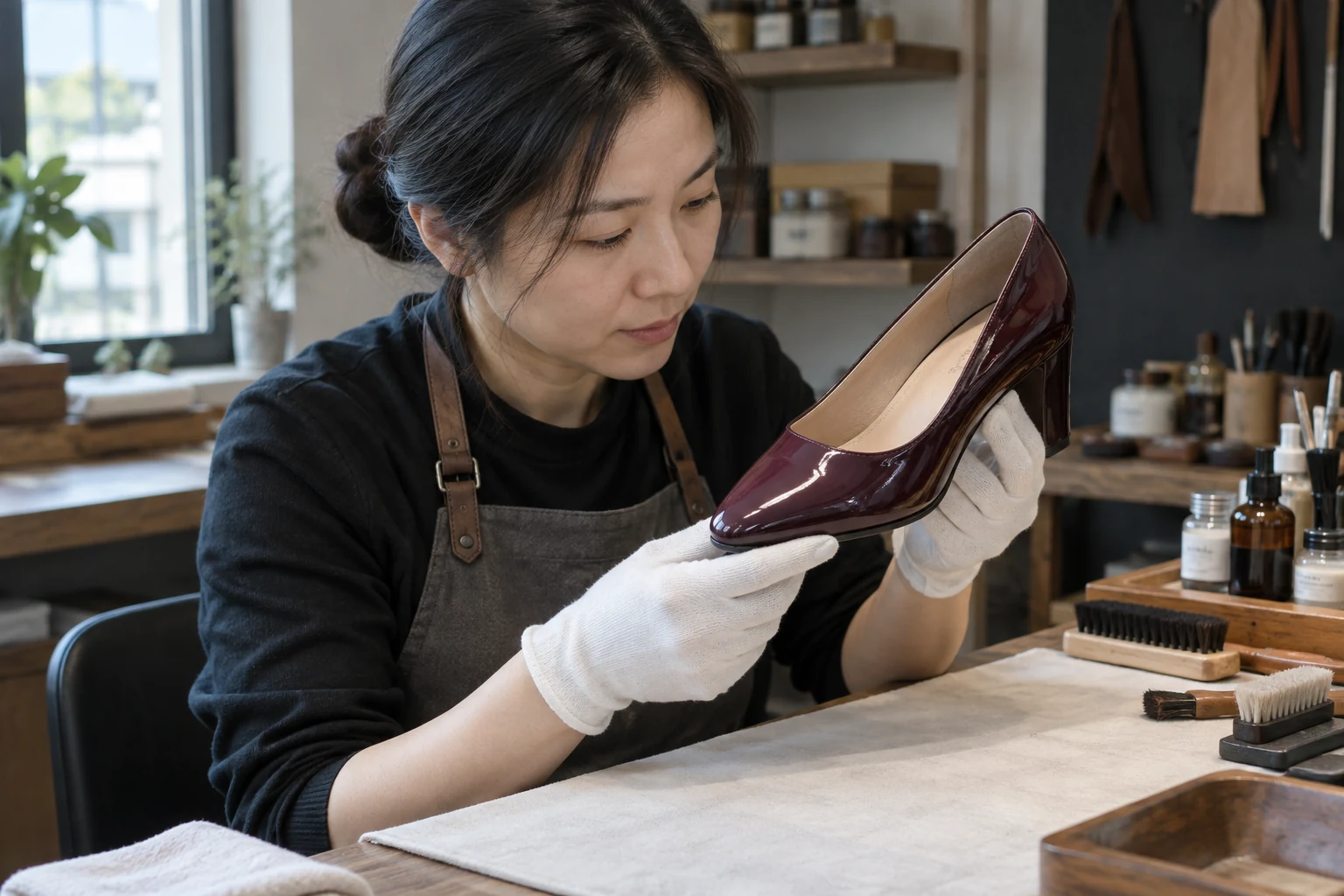
Patent leather still looks old despite matching colour: inspect the reflection line
Separate original colour from gloss and use a repeatable reflection to assess surface stability and normal flexing.
Read article →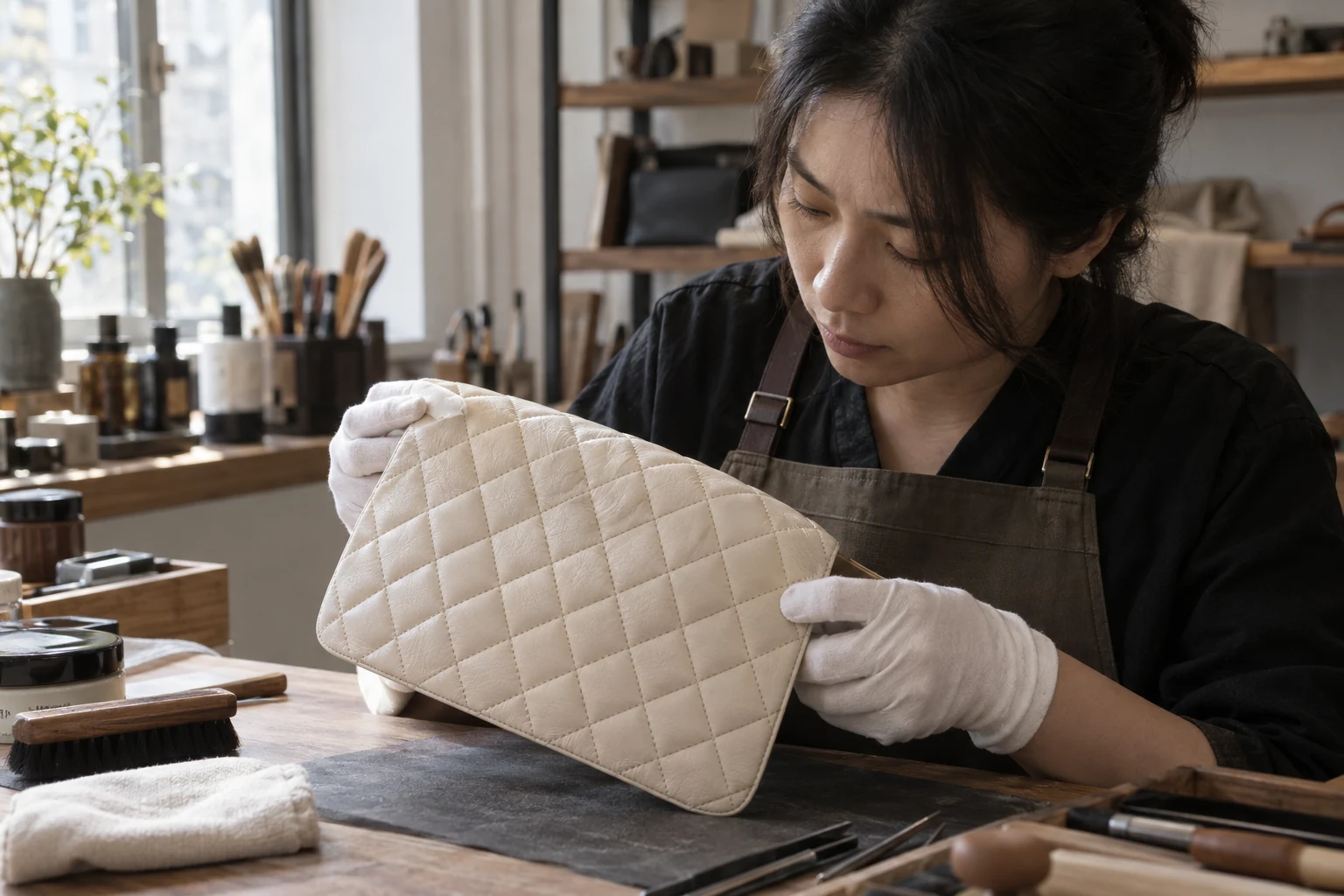
Quilted lambskin looking flat after repair: preserve the intended contours
Locate wear on raised areas, stitch channels and intersections before filling, preserving quilting depth and softness.
Read article →
A yellowed pale quilted bag: find the right undertone before making it whiter
Compare the whole bag, stitching and edges to avoid pure-white coverage that makes neighbouring areas look more yellow.
Read article →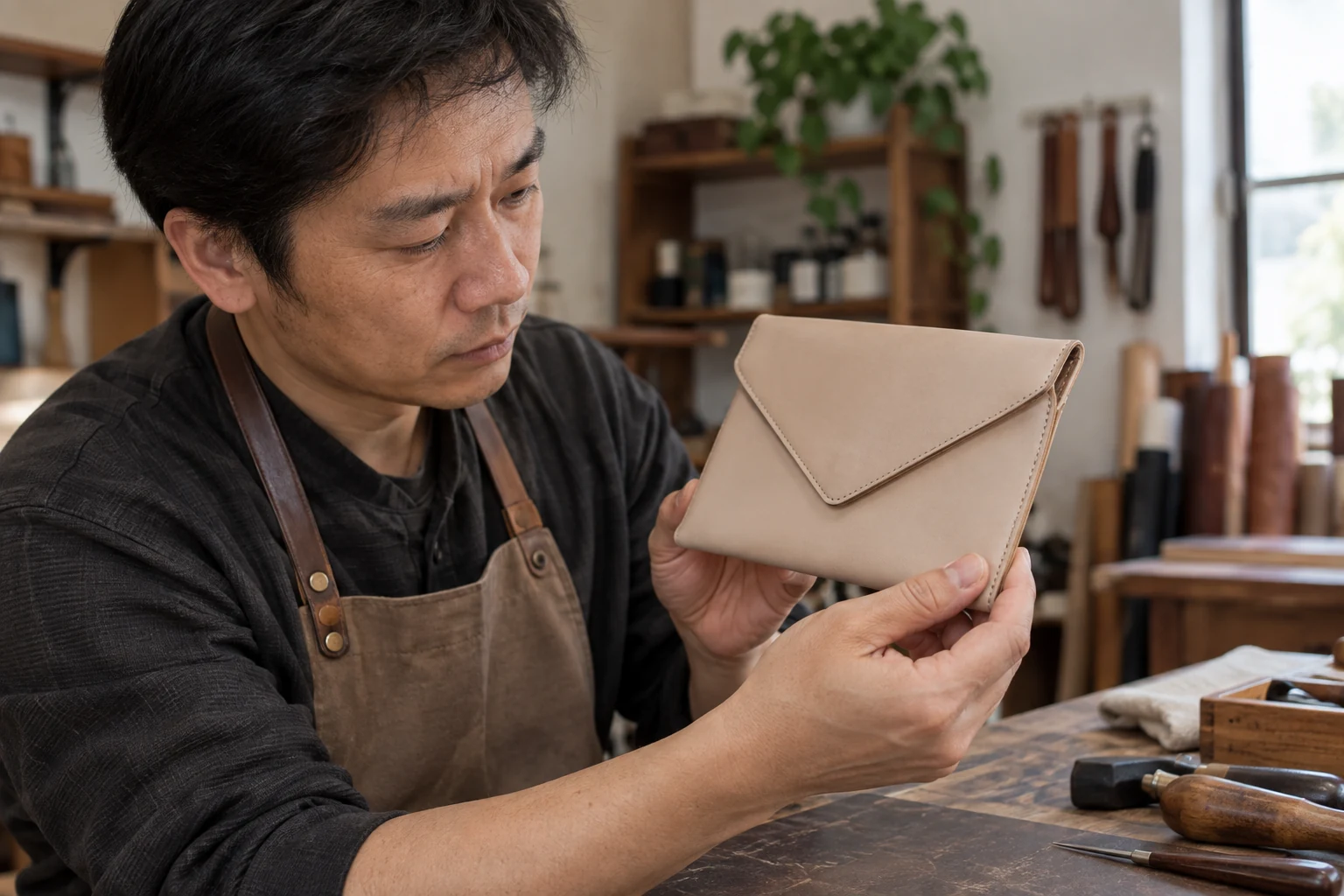
A tiny worn envelope-bag point that looks worse after repair: contour and transition matter
Include the point's outline, thickness and closed-flap fit in local restoration so a small worn area does not become a visible patch.
Read article →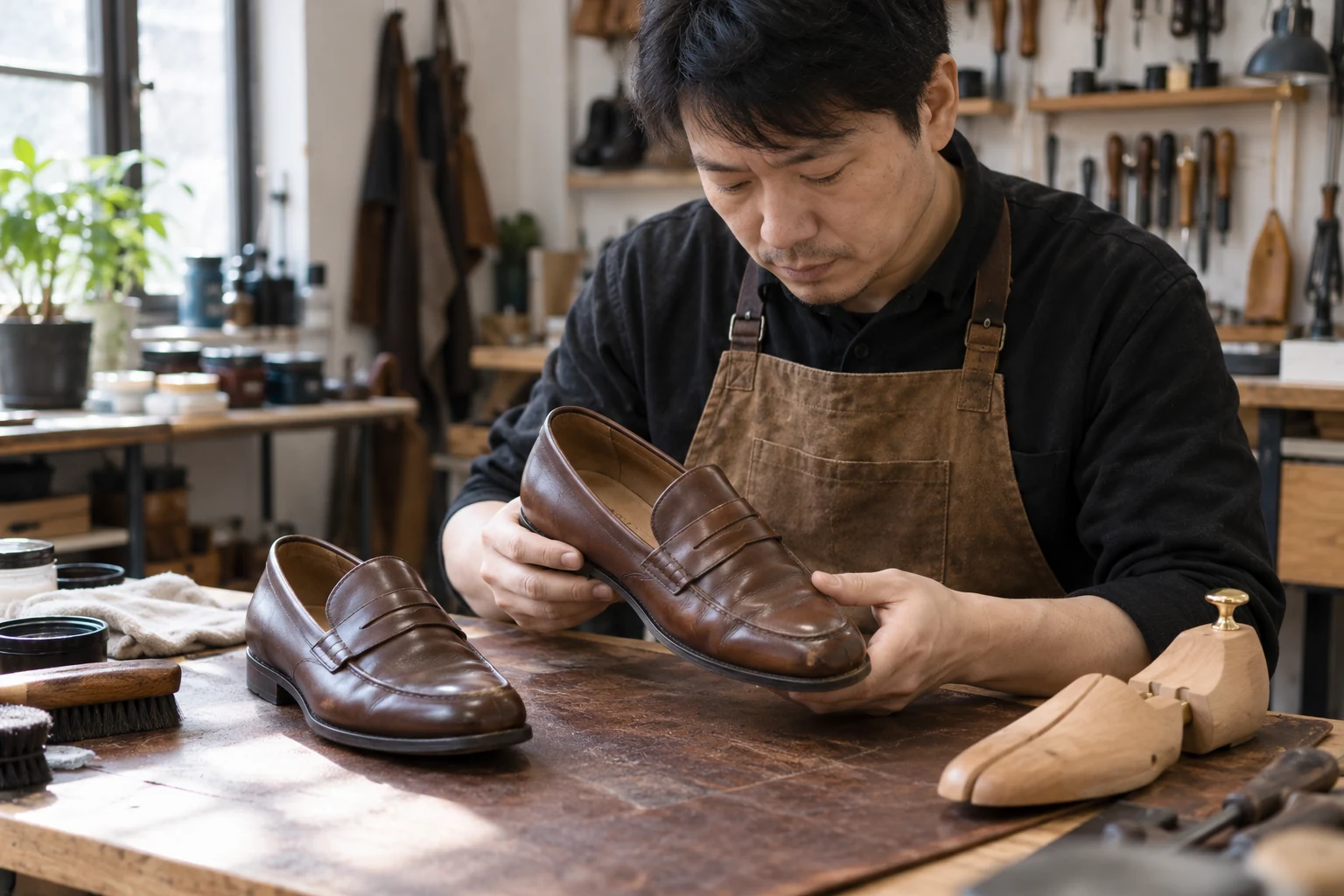
Leather-shoe restoration is not bag-panel recolouring: assess toes and flex areas separately
Set different goals for toe wear and natural walking creases, with a zoned review for both shoes.
Read article →
Dust trapped in an embroidered tote: let stitch direction guide the cleaning
Follow embroidery structure when removing dust, preserving pattern definition and checking for snagged threads.
Read article →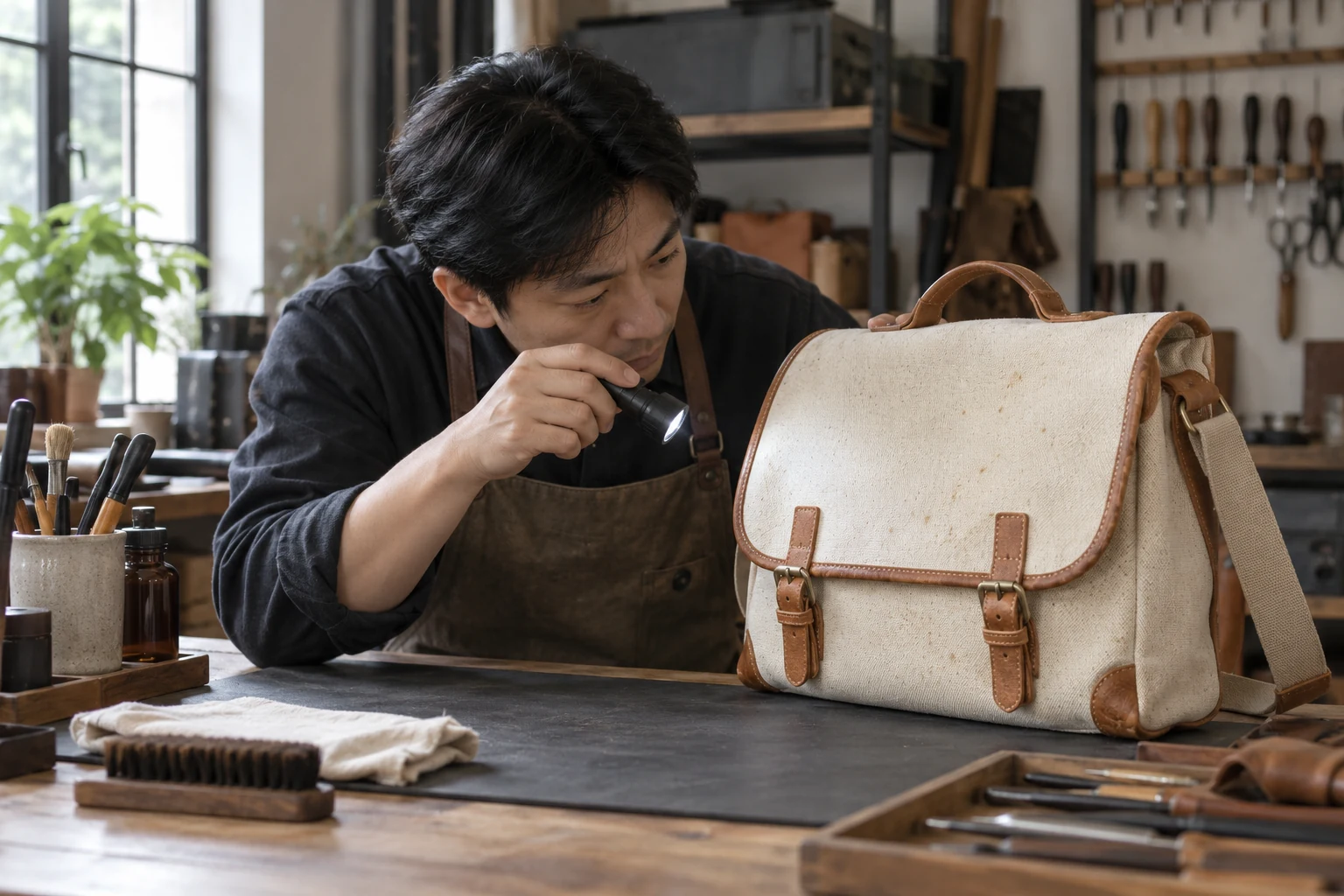
Yellow marks left after treating mould on Herbag canvas: when to stop stain removal
Record deposits, residual colour and fibre condition separately to weigh further improvement against material damage.
Read article →
A structured bag still leaning after reshaping: check the base before the walls and handles
Assess the base, walls, opening and handle loading in sequence, including the shape after temporary support is removed.
Read article →
A sagging CF or Le Boy flap: why extra support can misalign the fastening
Assess the fold line, front panel and fastening together so improved fullness does not compromise natural closure.
Read article →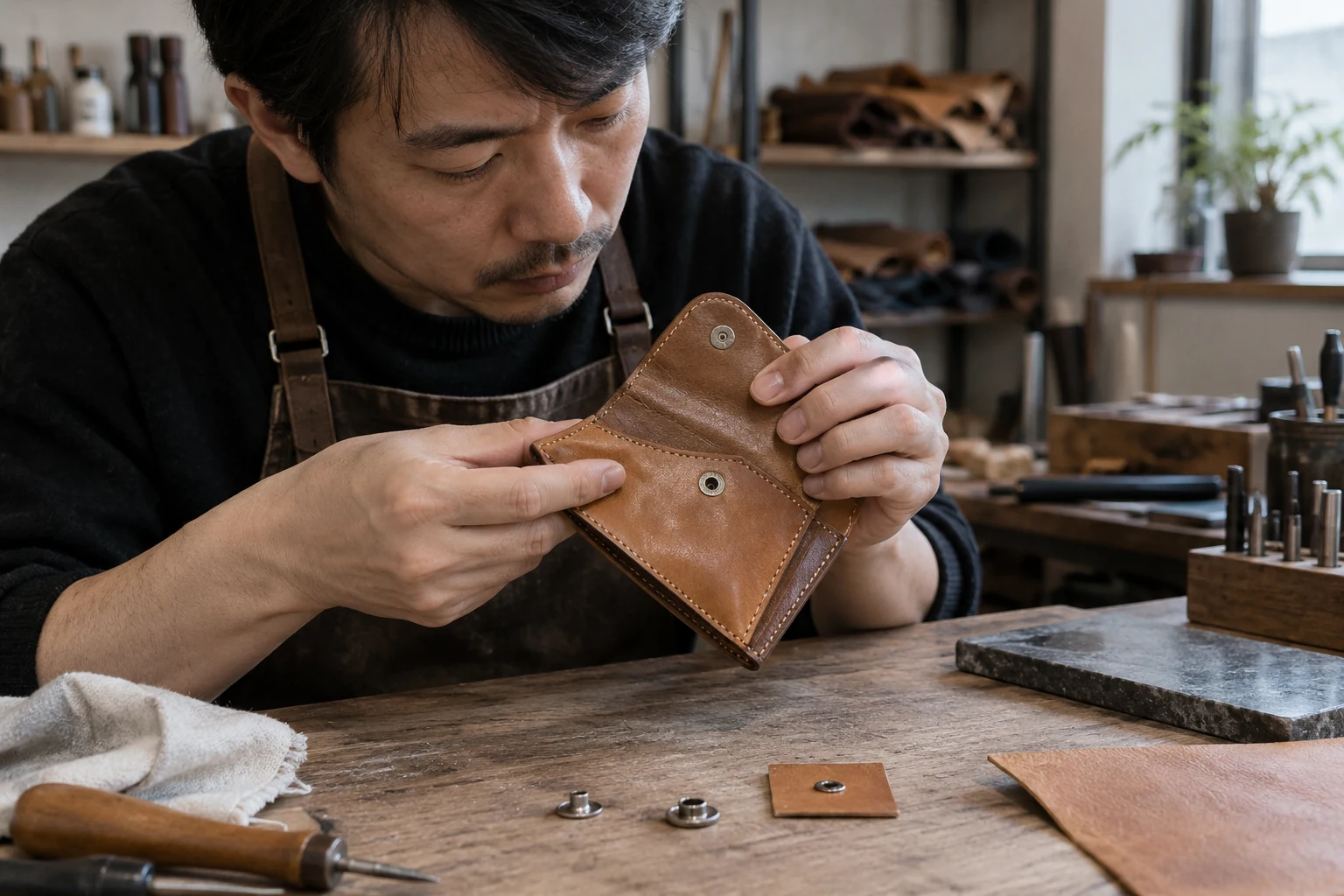
A loose wallet press stud: inspect the hole and supporting leather before pressing harder
Follow the opening movement to distinguish component wear, weak leather support and poor alignment.
Read article →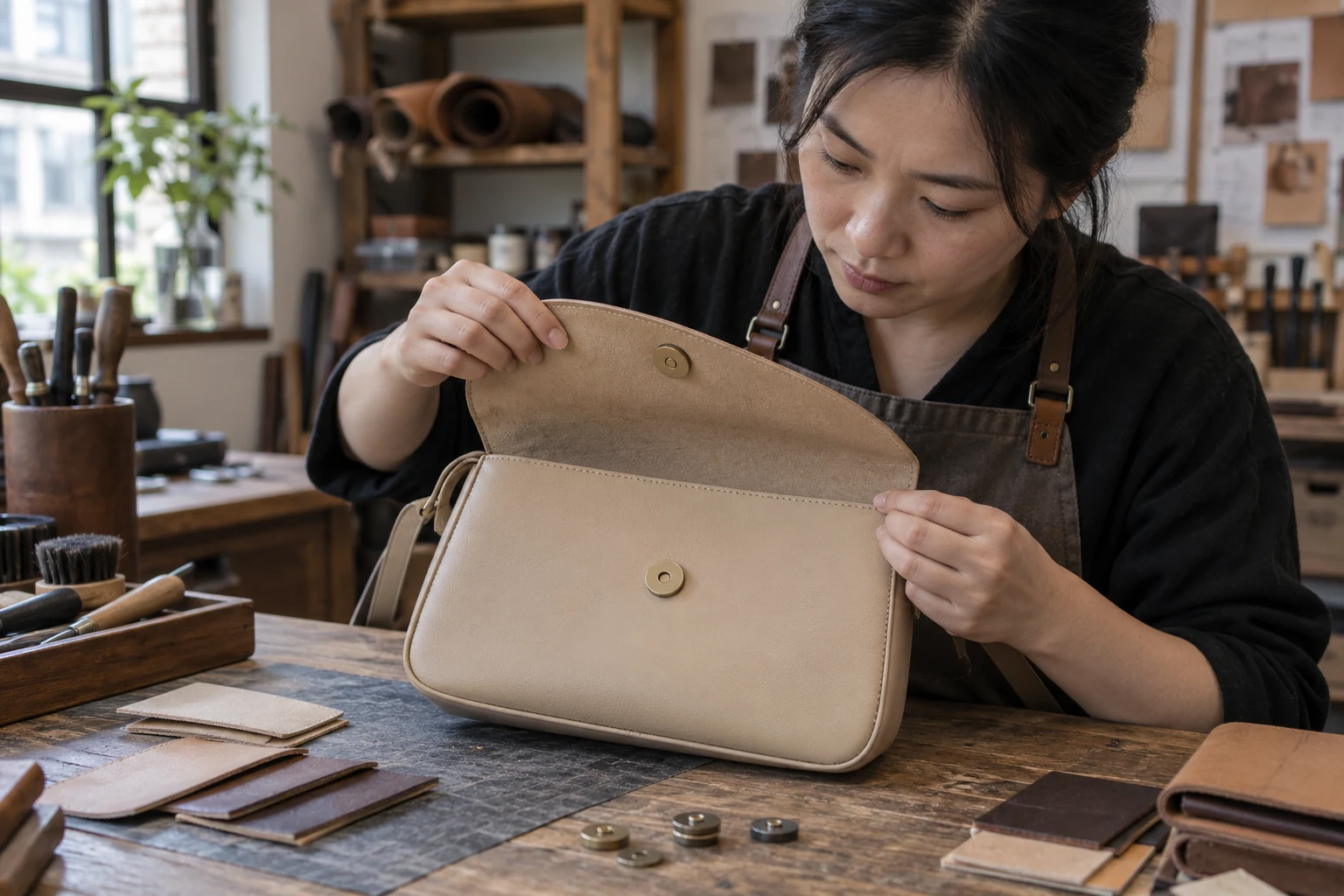
A magnetic clasp that will not hold after leather replacement: check position, gap and shape
Separate alignment, layer spacing and natural flap shape from an actual magnetic-clasp component fault.
Read article →