
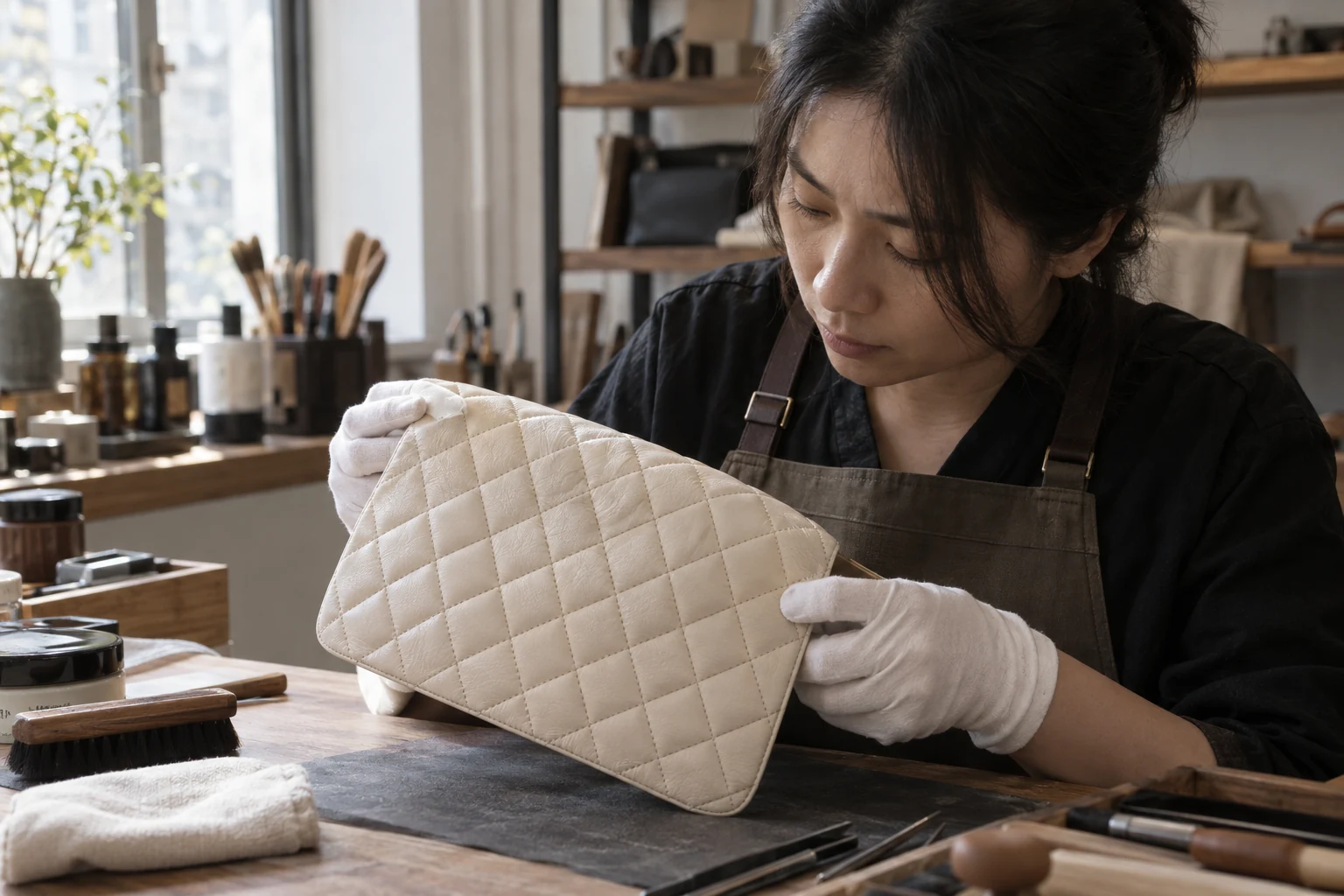
Wear often appears on the raised parts of quilted lambskin. Filling and covering every worn area uniformly can flatten the quilting and obscure stitch channels. The surface has a relationship between raised panels, valleys and stitches that must be preserved.
Map the wear in side light
With the bag in its natural shape, mark wear at panel centres, edges, channels or intersections. Compare neighbouring sound areas to distinguish colour loss, surface damage and a changed overall profile. Internal padding or support problems are not simply surface defects.
Photograph several continuous diamonds, not just one spot, to reveal a repair that becomes too flat or too high. Side light is for showing contour, not exaggerating damage with shadows.
Treat the actual defect
Mild colour loss on a raised area may need colour work rather than thick filling. A genuine loss requires depth, scope and stability assessment. Intended stitch channels and natural intersections are not holes to fill.
If only the middle of three diamonds is worn pale, its repair should preserve the rhythm of all three. A broad flat middle panel changes the bag's character even if the colour matches.
Leave space for stitches and channels
Identify protected stitching, hardware and adjacent leather, then validate materials on compatible samples. Watch where product sits and how it terminates, not only how many passes are made. Inspect profile after every stage.
Pause for build-up in channels, covered stitches or sudden stiffness. A final colour coat cannot correct volume, and surface products cannot replace failed internal support.
Check near, far and in normal opening
View the continuity of quilting from normal distance, then inspect boundaries, intersections and stitches close up. Move the flap only through its natural range and check stiffness without force-folding soft leather.
Record colour, contour, stitching and feel separately. A customer's sense that one area looks different may concern any of these, not simply colour. Recheck the appropriate stage instead of dismissing all repairs as inherently different.
Use the target diamond with an untouched reference on either side. Inspect centre, edge, channel and intersection in sequence. If height is wrong, check volume and base condition before colour. Do not press surrounding diamonds flat to compare them.
REBIRTH's Dior chain-bag lambskin and Chanel lambskin-wear cases, together with filling and material-use lessons, help distinguish genuine filling needs from surface colour harmony. Mark raised areas and channels in the learning record.