
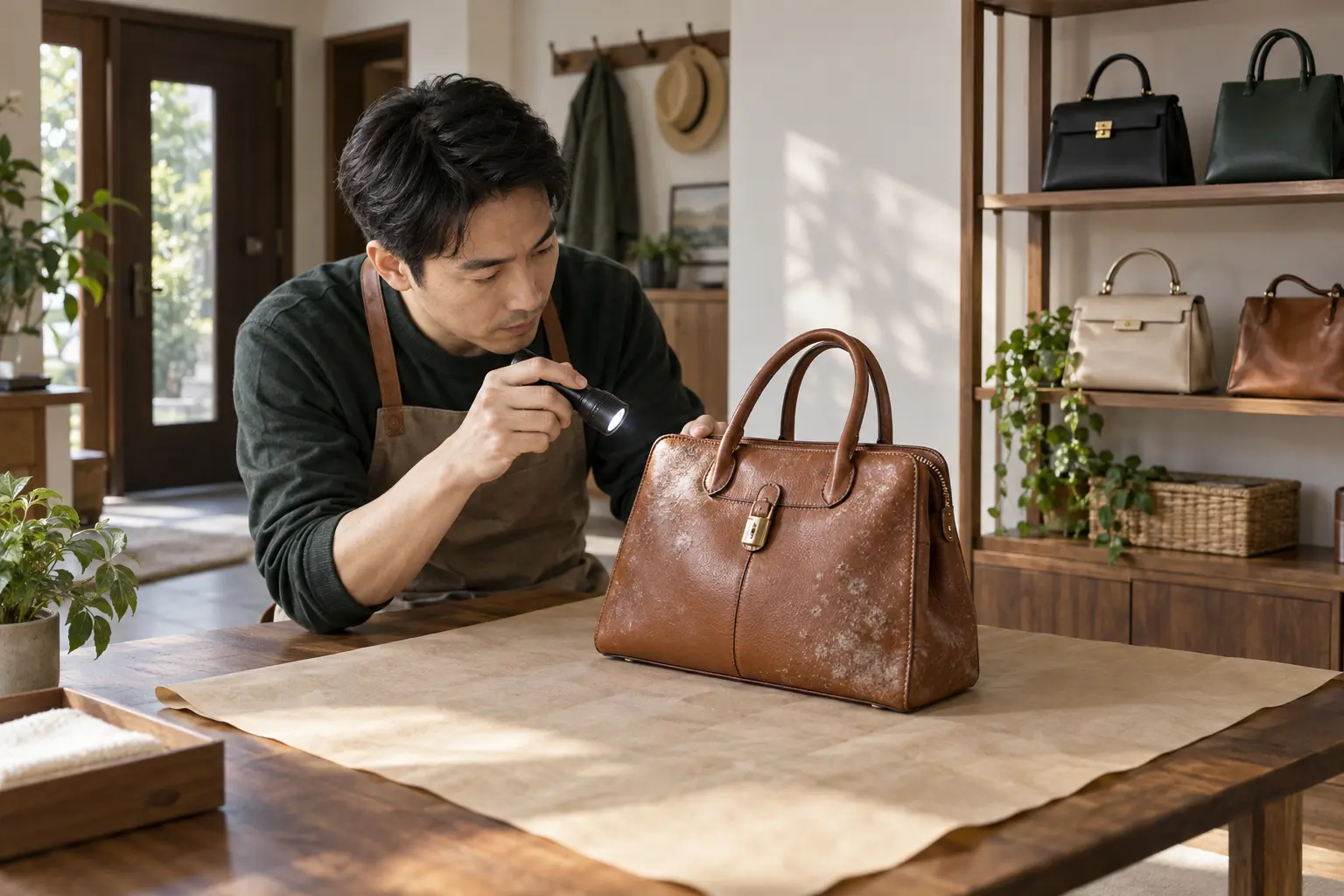
Mould develops through a combination of moisture, material and time. Surface cleaning alone may leave affected lining, internal layers or a damp storage environment unresolved. Isolate the item and address moisture before deciding on treatment.
Start with isolation
- Work with appropriate personal protection and ventilation. Do not beat or brush the bag inside a wardrobe or disperse spores around other belongings.
- Check neighbouring bags and clothing, boxes, cabinet backs, corners and damp packaging.
- Separate affected dust bags, boxes and filling for appropriate treatment or disposal.
- Record humidity and identify the moisture source.
Extensive or recurring mould, deeply affected layers, brittle material or valuable items require professional assessment.
Assess the severity
- A few isolated spots, stable material and little odour.
- Several affected areas, including seams or hardware.
- Strong odour or involvement of the lining and internal layers.
- Recurrence, tackiness, powdering, colour change, cracking or changes to old repairs.
White marks are not always mould. Irregular fuzzy growth, a musty smell and spread around shaded seams suggest mould. Wax bloom can be more uniform, temperature-related and without a musty smell. Cleaning residues may follow wiping patterns or disappear when damp; treatment history matters.
Handling a small, stable area
- Photograph it before handling.
- On an identified, stable material, gently collect loose deposits with a dedicated soft tool. Do not reuse that tool on unaffected items.
- Avoid unknown disinfectants, alcohol or bleach.
- Allow all layers to dry without heat.
- Recheck colour, feel, odour and the affected boundary after drying.
Prevent recurrence
Control humidity and ventilation, leave space around items, and keep them away from walls and floors. Do not overfill shelves. Use breathable dust bags and replace desiccant regularly, keeping it out of direct contact with the bag. Inspect more often during humid weather.
Stop handling if the affected area is large or deep, the surface is tacky or fragile, colour transfers, mould recurs, or asthma or allergy concerns arise. Assess both the item and its environment.
Common questions
Will strong sunlight solve it? Sun can fade and harden leather and age adhesives; it does not resolve affected internal layers or the storage environment.
When can it go back in the wardrobe? When both bag and storage space are dry, odour has stabilised and there is adequate space and ventilation.
Check on day one, day seven and then weekly for a month. Recurrence in the same area calls for a closer professional and environmental assessment.