
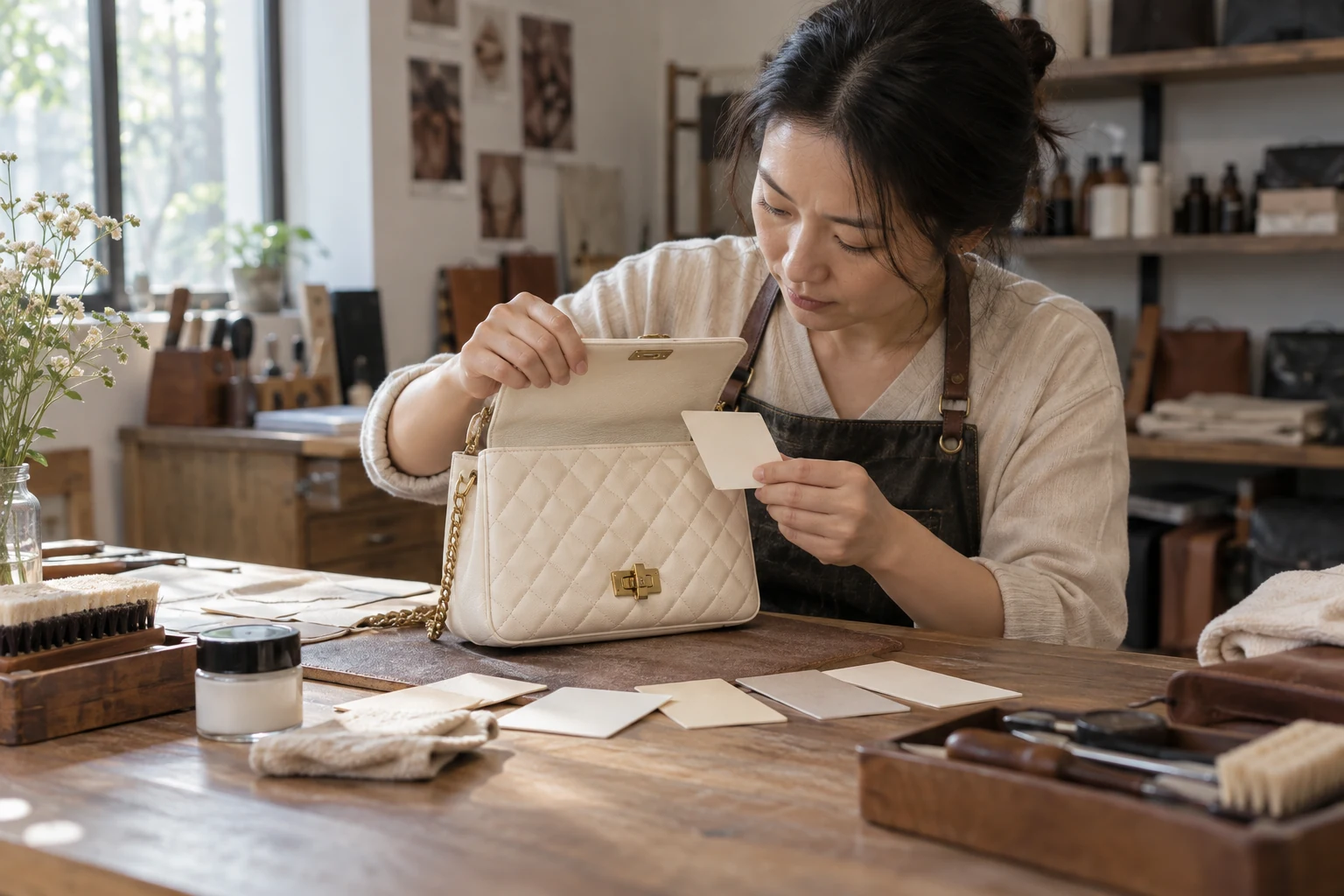
Making a yellowed bag pure white can leave stitching, edging and inner surfaces looking even yellower. Separate soiling, material change and an original warm undertone, then agree a harmonious whole-item target.
Which white was it?
Off-white, cream, cool white and grey-tinted pale colours differ. Compare normally exposed, protected and similar inner materials, recording their relationship. A protected area can inform the reference but may differ in original material or finish and is not automatically the only true colour.
Use neutral ambient light. Warm lamps can yellow the view and automatic white balance can erase differences. Place the selected reference and sample together rather than comparing separate images from memory.
Soiling or lasting change?
Local deposits, overall tone change and a discoloured old repair can all be called yellowing. Use history and surface condition before deciding on a controlled cleaning test. Do not keep increasing intensity to achieve whiteness. Stop expanding if the finish destabilises or its own colour transfers.
A flap warmer than a protected lower area may also have correspondingly aged thread and edges. Even if the leather can be lightened, a cool-white front may exaggerate the remaining differences.
Compare beside stitching and hardware
Establish a dry target sample and hold it beside leather, thread and edges. Record hue, lightness and gloss rather than white number one. More white will not correct a reflection difference.
Raised quilting and channels create natural shadows. Do not repeatedly fill a channel to cover its shadow. Pale colours expose uneven thickness, so assess colour harmony and preserved contour together.
Show the whole scope
Explain which areas belong to local, full-panel or wider treatment, including thread, inner surfaces and edge paint. A single refurbishment price does not define what the customer can expect.
After completion, check front, back, both sides of the flap and seam transitions in matching light and during natural opening. The agreed goal, not a sheet of pure-white paper, is the standard.
Keep leather reference, stitching, edge and target sample in one comparison record. Assess warm or cool direction, lightness and gloss in order. If a sample suits the leather but is too white beside thread, revisit scope rather than automatically painting the stitches. Change one colour direction per round and retain the earlier sample.
REBIRTH's yellowed Chanel colour case and colour-matching practice help establish the correct pale target. Record the relationship between reference, sample and agreed result, focusing on why that undertone was chosen.