
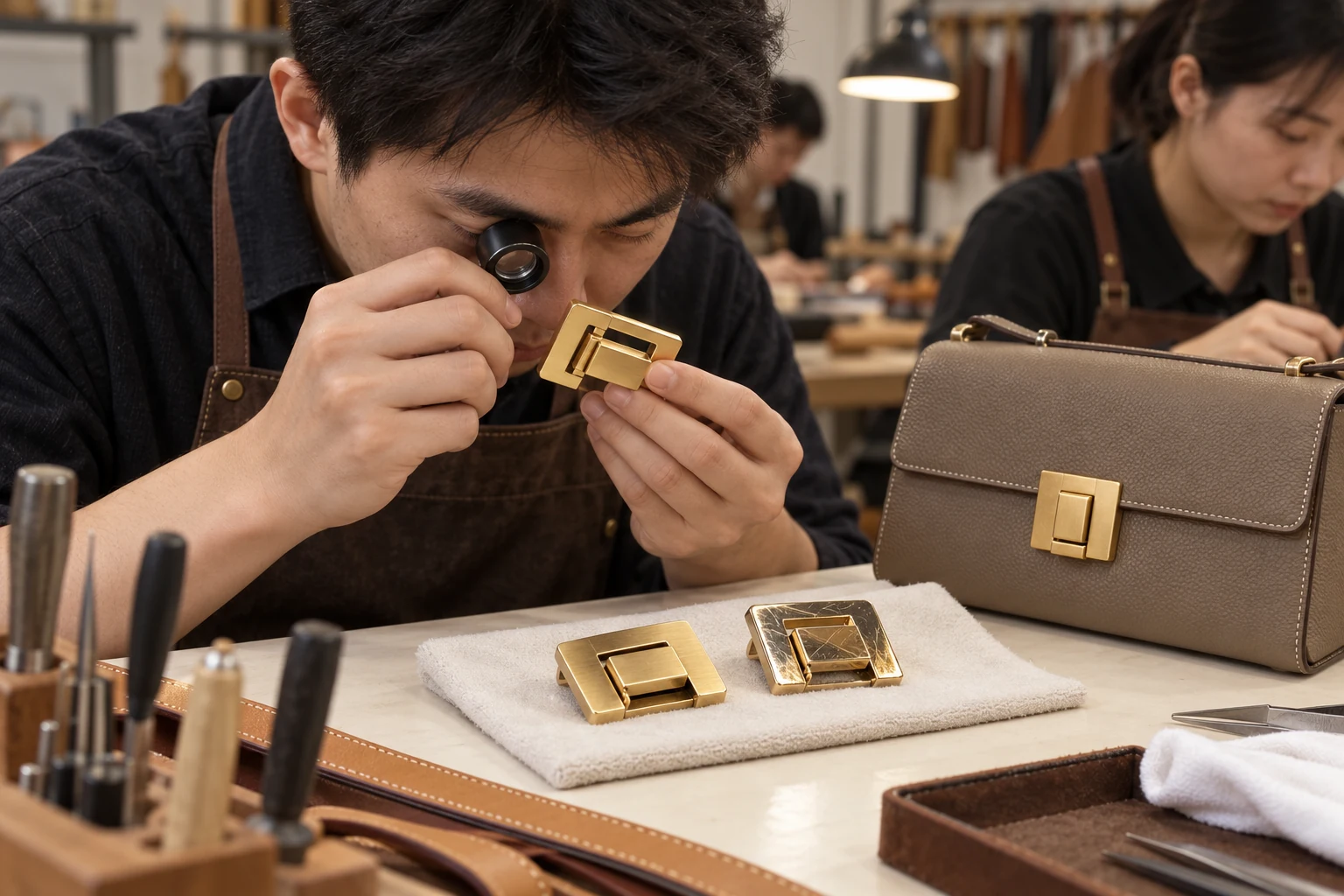
A gold-coloured fitting may become shinier after polishing yet lose its fine brushing or expose another colour at the edges. Brightness alone is not a successful repair. Appearance depends on the base material, surface treatment and intended style. A plating lesson in a course catalogue does not replace suitable facilities, protection or specialist training.
Agree the original effect
Mirror finishes need clear reflections, brushed finishes need consistent directional texture and matt finishes should not become glossy. Photograph front and side-lit views and retain an intact reference. Wear-polished and oxidised areas can coexist; the brightest point is not automatically the target.
Describe surface colour, reflection, texture direction and edge condition. Calling every problem lost gold can lead to the wrong service.
Four checks
- Is it only an attached surface deposit?
- Has the scratch penetrated the surface and exposed another colour?
- Do pivots, clasps or screws function correctly?
- How does the work area connect to leather, edge paint and bonded parts?
Gold or silver colour alone cannot identify the base metal or plating. Retain uncertainty and refer where information or capability is insufficient. Appearance work cannot replace mechanical repair.
Why treatment without removal still needs assessment
Leaving a fitting attached does not remove risk to neighbouring materials. Liquid can enter gaps, masking may miss moving parts and tools can scratch leather. Isolation, contact control and management of waste liquid and residues are prerequisites.
A plated clasp on pale leather may have wear on its face but gaps directly beside the leather edge. A similar course example does not remove the need to inspect that construction. Begin observation and style-matching practice on detached scrap hardware.
Acceptance checks
Does the colour match adjacent fittings? Has the intended finish been preserved? Are edges, recesses and moving areas even? Does it work properly, without affecting neighbouring materials? A frontal photograph alone cannot answer all four.
Record treatment honestly. A reworked finish is not untouched factory condition. Photographs do not establish a durability period, and permanent freedom from fading should not be promised.
Online learning can develop assessment, route selection and observation of brushing, protection and detail checks. Chemical, electrical and specialist-equipment work needs appropriate conditions and dedicated training. Recognising that current facilities are unsuitable is part of competence.
REBIRTH's hardware plating without removal, belt-buckle plating and brushing lessons introduce these distinctions. Ask a colleague to identify mirror areas, brushing direction and possible exposed substrate before discussing treatment. If observations differ, improve lighting and reassess rather than using stronger abrasion to test a guess.
Explore hardware lessons and practical learning requirements