
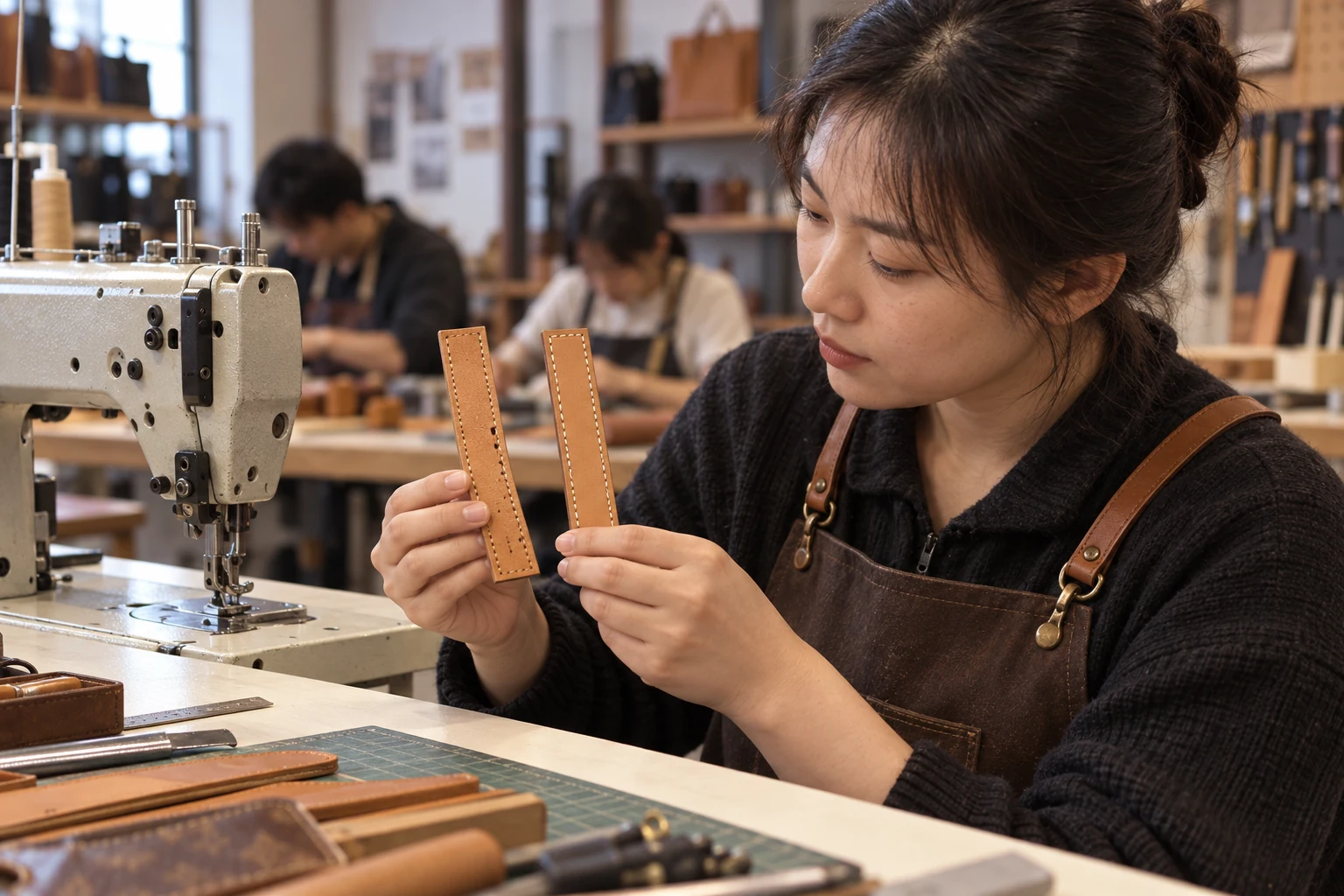
Repeatedly turning the tension control can lose the original setting without resolving skipped stitches or broken thread. The first machine skill is distinguishing material, threading, needle and equipment problems, not adjusting every control.
Machines differ. Follow the manual; this framework does not instruct beginners to alter hook timing or undertake repairs. Disconnect power and prevent accidental starting as required before changing needles, checking threading or approaching moving parts.
Keep the faulty seam
Record whether skipping is continuous or occasional, whether it occurs at the start, straight sections, thickness changes or corners, and whether the upper or lower thread breaks. Keep the stitches intact and photograph both sides. Retain the last successful sample: a fault only after switching to thicker or tackier material needs a different investigation from a sudden fault on every material.
Work from simple checks to specialist help
- Confirm the material and task are within the machine's specifications.
- Check needle type, orientation, installation, damage and thread compatibility against the manual.
- Check the thread path and bobbin installation.
- Sew scrap matching the actual layer count and thickness transitions. Observe feeding, presser-foot marks and stitches.
- Only then make individual adjustments within the manual's permitted range, recording each sample.
Changing needle, thread, tension and speed together does not establish which change helped.
Reproduce the difficult structure
A two-layer flat seam may work while a multilayer folded edge skips. Test that same transition. Check earlier stages for excessive local thickness, unsuitable adhesive condition, slipping layers or a fold that needs redesign. The machine cannot correct every preparation error.
When to stop
Needle strikes, unusual mechanical sounds, loose parts or persistent faults after permitted basic checks require stopping and qualified repair. Do not inspect with hands near powered movement, remove guards or exceed equipment limits to meet a deadline.
A successful scrap test does not automatically validate a customer repair involving original holes, fittings or areas that cannot be repunched. Plan that route separately.
For support, provide machine model, material layers, needle and thread, fault location, completed checks and both sides of the sample. Film only normally guarded, safe operation. REBIRTH's sewing-machine and skiving-machine setup and practical lessons should precede handles, zips and replacement-leather projects.
Keep a fault record with an intact seam, images, layers and transition locations. Distinguish random skipping throughout from skipping at every thickness change so instructors or technicians can choose the right path.