
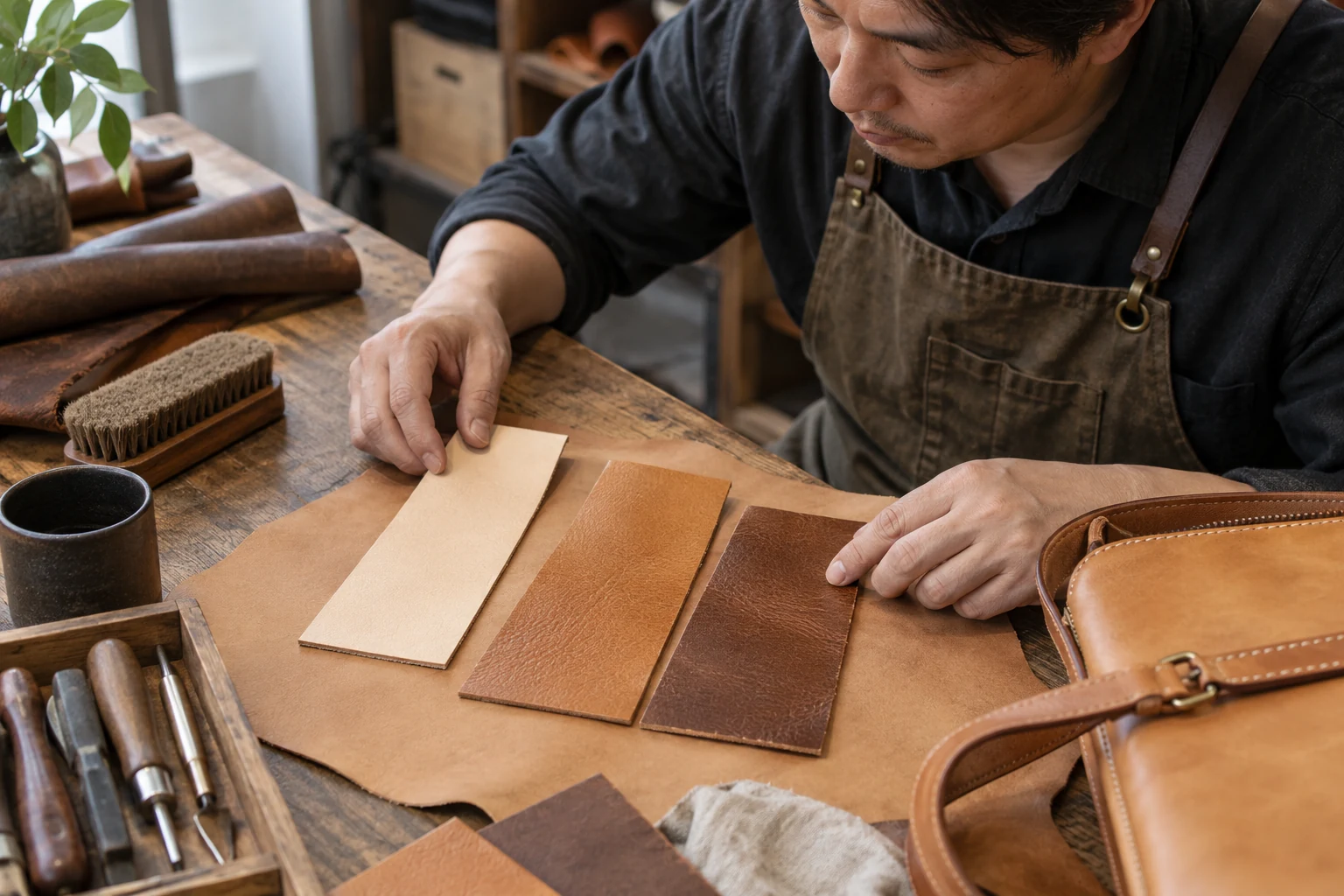
A clean new leather component can look out of place on an old bag; darkening it heavily may create a dull patch instead. Harmony involves undertone, translucency, edges and the distribution of wear. Agree whether the task is giving new material a compatible style or preserving an old item's actual history.
Choose an appropriate reference
Compare normally exposed but lightly worn areas, frequently handled areas and protected areas. Select a reference relevant to the replacement location. A new side strip should not automatically match the darkest hand-grip area.
Mark the reference on a position map and state which differences will remain. Older-looking is not a precise target. Use comparable samples to discuss warm yellow, reddish brown or grey-brown tendencies and how much natural texture should remain.
Use the actual replacement material for samples
Absorbency, finish and natural variation differ between leathers. Retain an untreated section and change one condition at a time. Once stable and dry, compare the sample near its actual installation position, including frontal tone, oblique reflection and edges. A flat sample on a table may behave differently on a curved part; phone enhancements are not a final reference.
Let location guide the character
Natural wear follows contact and protection patterns. That does not mean copying every stain or calling oil contamination patina. Avoid identical dark rings around every edge. For a replacement base strip joining two warm honey-coloured original ends, focus on their hue and translucency rather than dark handle contamination. Extending treatment to make everything equally old changes the agreed scope.
Check before and after fitting
Before assembly, confirm the approved colour, normal bending and harmony between edge and face. Afterwards, inspect the full length, especially joins, turns and stitching. An overly heavy tone needs sample review, not automatic extra coverage.
Document the replacement and appearance-treatment scope. New material may continue changing in use, so current harmony is a more honest target than no future colour difference. One treatment cannot reproduce every characteristic of years of natural ageing.
Create a comparison card marking left join, centre and right join with reference photographs. Give each sample a specific goal, such as reducing red or retaining clearer natural depth. Bend it to approximate the installation shape to expose reflection differences.
Use stable normally exposed original leather as reference, retain natural texture and reasonable tonal variation, and reject black junction rings, dull opaque colour and excessive coverage. REBIRTH's vegetable-tanned ageing-style and restoration lessons help distinguish making a style from treating an old item. Keep untreated, target and off-target samples with the differences explained.