
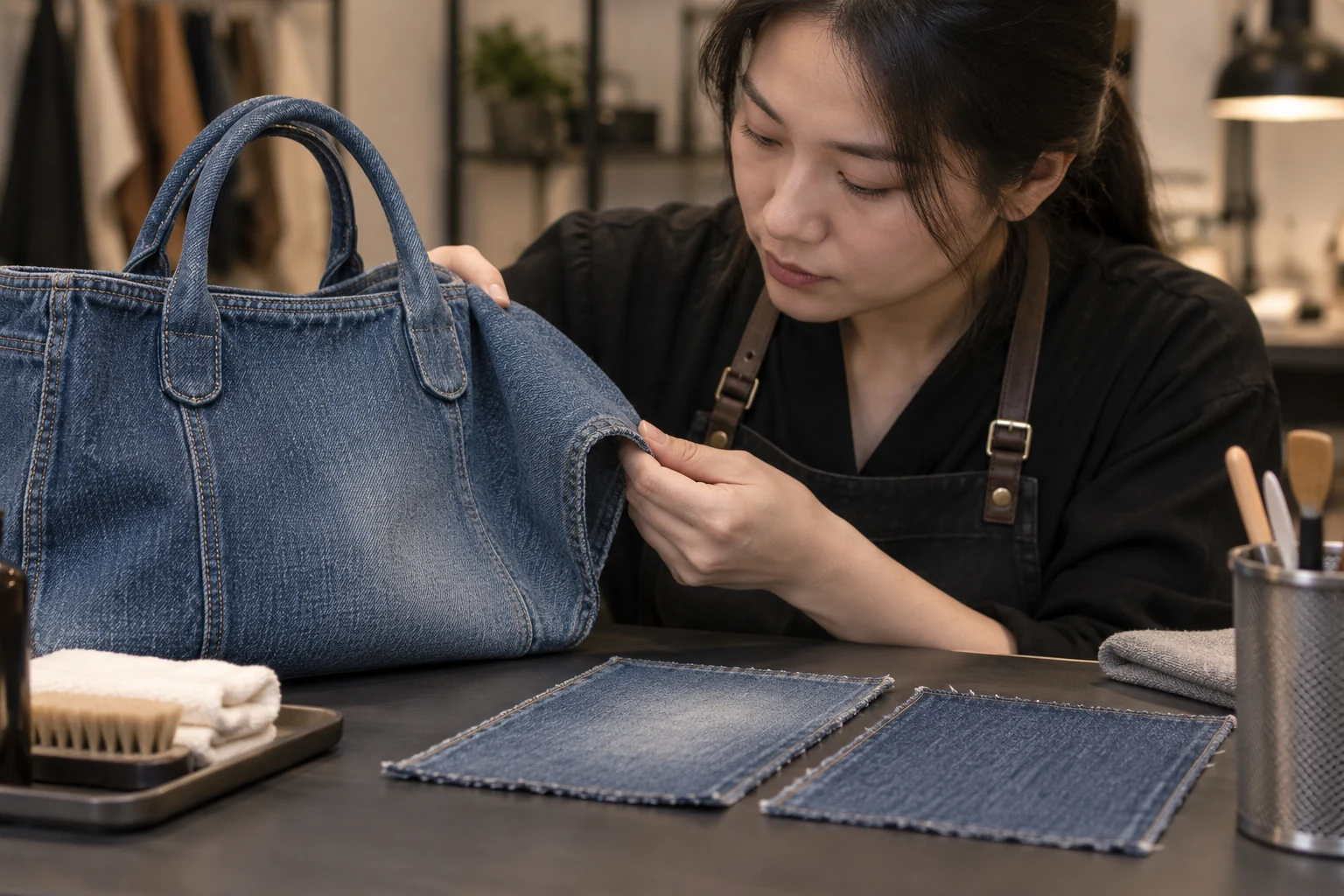
A faded denim bag may become even in colour yet lose textile depth and feel like a hard film. Fabric restoration must preserve appropriate texture and softness. Denim, ordinary canvas and coated fabric are not interchangeable: fibre, dyeing, prints and finishing affect the route. There is no universal fabric-recolouring formula.
Does the fading need full coverage?
Weave height, wear and an original distressed style can make colour naturally uneven. Compare stable areas and agree whether to improve a local abnormality, restore an overall appearance or change the style. Retaining aged character is incompatible with automatically covering everything uniformly.
Separate soiling, fibre wear and dye change. Colour cannot regrow worn nap or damaged fibres, so explain structural issues independently.
Score colour and feel separately
Use practice fabric close to the item and a suitable textile system. Compare different controlled application amounts, leaving half of each sample untreated. Record products and steps. Once ready for assessment, inspect colour, yarn texture and gentle normal flexing in that order. Do not jump from insufficient coverage to an excessively thick coat; find a balance between improvement and retained character.
Why paper swatches are insufficient
Paper lacks the same weave, nap and absorbency. Colour may settle between yarns or collect on raised areas. Application and system matter even with an identical mix. Two samples can photograph similarly while one drapes naturally and the other bends stiffly. Feel and movement are part of the result.
Control local boundaries
Repeated product on a faded point can create an area different in both colour and stiffness. Establish scope and transition on samples before the customer item. Resolve colour transfer, leather-trim contamination or old residues as separate assessment questions.
Validate colourfastness and durability using methods appropriate to the system and use. A blow-dried surface that does not immediately shed colour is insufficient, and one test should not be applied indiscriminately to all originals.
For instructor feedback, provide original fabric close-ups, before-and-after views, system, treated area and sample-flexing observations. Ask whether material choice, amount, cure or the original textile is responsible rather than changing products blindly.
REBIRTH's denim-colour and textile-restoration lessons help distinguish fabric from smooth leather. Observe samples flat, hanging and gently bent, scoring colour, weave and softness. A closer colour with markedly worse feel is not progress; review compatibility and unnecessary coverage before adding more.