
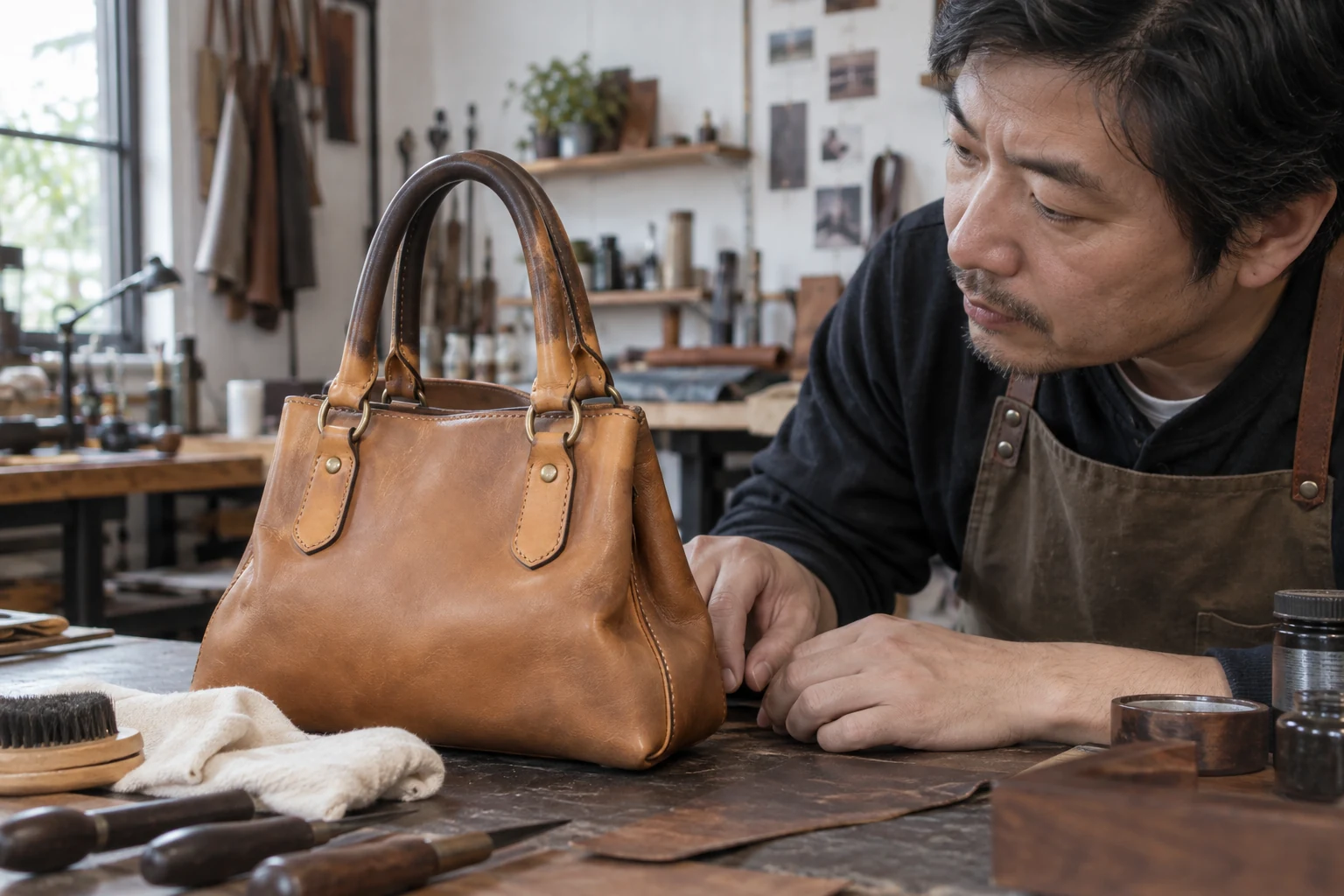
A handle may be dark at the grip, pale at the ends and different again near hardware. Trying to clean the centre to the lightest end can expand treatment unnecessarily. Separate contamination, natural material change and surface or structural ageing first.
Inspect by section
Photograph the grip, transition and attachment on each handle. Record smoothness, tackiness, cracking and raised fibres as well as colour. Cracks near attachment holes concern reliability and must not be treated as merely another dark area.
Ask about hand cream, oils and previous recolouring. History supplies clues, not a diagnosis. Added materials can alter the surface and make a pale-colour target less predictable.
Choose a realistic reference
Leather protected by fittings may reveal original tone but differ naturally from long-exposed areas. A stable, normally exposed transition can be a better current appearance reference, while protected-area photographs remain part of the record.
If the centre is dark brown and ends honey-coloured, the goal might be reducing an abrupt contaminated appearance while retaining reasonable tonal depth, rather than returning every area to factory-pale colour. Agree this before judging whether a test merits continuing.
Inspect the dry test boundary
After material and surface assessment, use a controlled small test permitted by the chosen product. Observe transferred soiling and stable dry colour and feel. Do not judge lightening while wet or repeatedly increase force to match a pale neighbour.
New rings, roughness, transfer of the leather's own colour or more visible cracks are stopping signals. Reassess condition and goal. Immediately concealing a test problem with colour hides evidence and may cover the vegetable-tanned character intended for preservation.
Appearance and load-bearing condition are separate
Recheck attachments, holes and folds as well as colour transitions. An even-looking surface does not establish internal reliability, and covering a crack does not remove it. Compare the empty bag and its normal shape consistently, checking handle heights, twisting and attachments. Record replacement or structural work separately and include transitions in handover photographs.
Use six observation points: grip, transition and attachment on each handle. Record colour separately from surface condition. A dark grip can be stable; a pale attachment can still be cracked. Return to the same six points after testing and watch for expanding rings in transition areas. Photograph both handles together under the same light.
REBIRTH's vegetable-tanned restoration lesson can be reviewed around reference selection, the benefit of further work and preservation of material character. Keep dry test images and reasons for stopping. Compare condition on the next bag rather than copying a previous number of passes.