
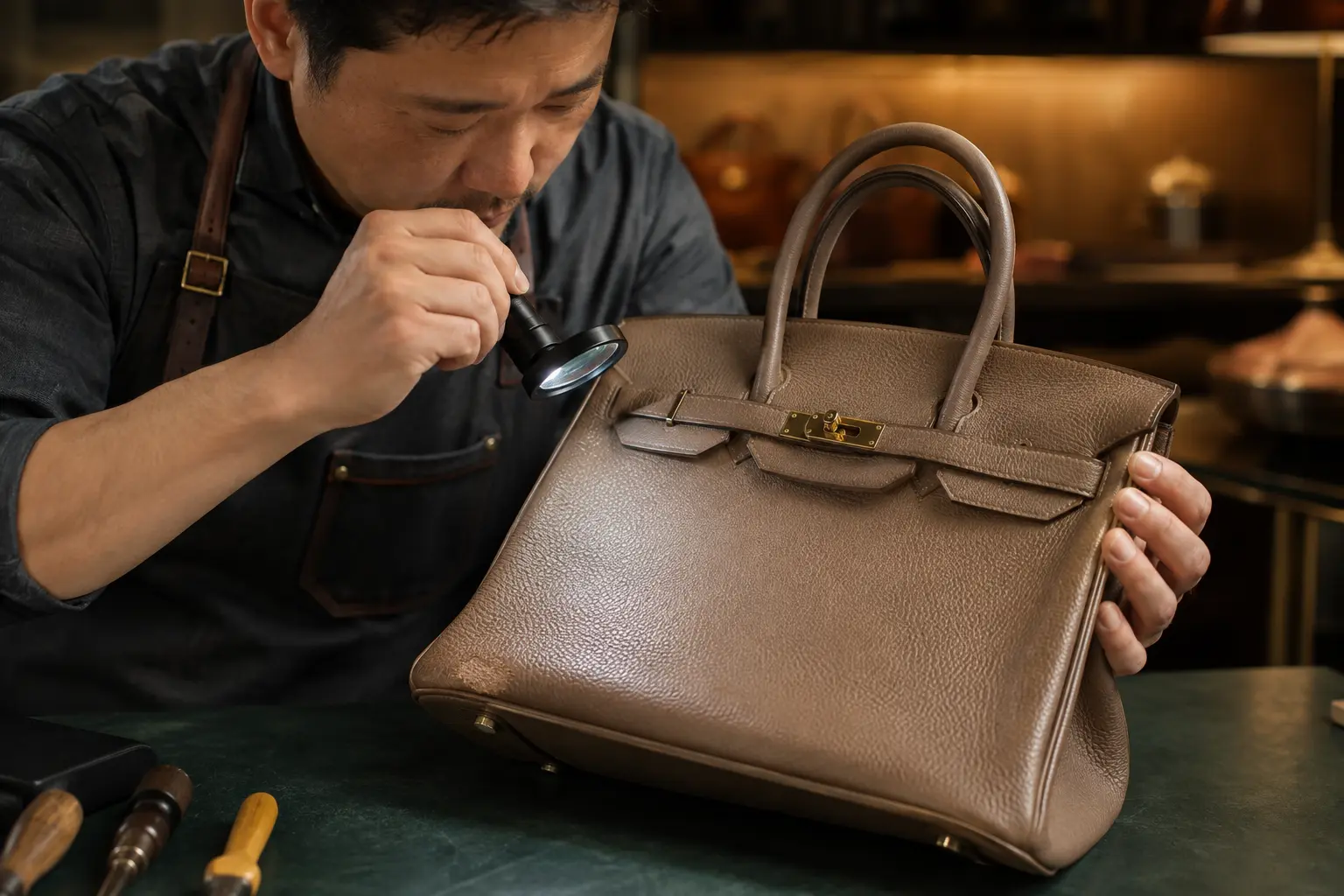
Professional care begins by identifying the problem, before reaching for a cleaner. If the initial assessment is wrong, even skilful use of tools and products can make the damage worse.
Choose the method to suit the material and its condition. Do not treat every problem in the same way simply because a particular product is available.
First, establish what you are seeing
A darkened surface may be dusty or greasy, but it may also have an ageing finish. Uneven colour can result from staining, colour loss, wear or changes in a previous recolouring layer. Cleaning removes soiling that can safely be removed; it cannot replace missing colour, finish or fibres.
What to check
- Material: smooth leather, aniline leather, suede, patent leather, coated canvas or fabric.
- Colour: light, dark or contrasting colours, and any visible colour loss.
- Surface: tackiness, stiffness, cracking, blistering, peeling or previous recolouring.
- Construction: whether the body, edge paint, hardware and lining need separate treatment.
- Cause: everyday dust, grease, dye transfer, moisture, chemical exposure or wear.
Deciding what to do next
Use the material, colour stability, surface condition and construction checks above to decide whether treatment is appropriate and which areas need separate handling.
When to stop
Stop extending the treatment and seek a professional assessment if the surface is tacky or blistered, the leather is brittle or cracked, colour comes off with wiping, suede has severe colour bleeding, patent leather has dye migration, or an earlier repair layer is of unknown origin.