
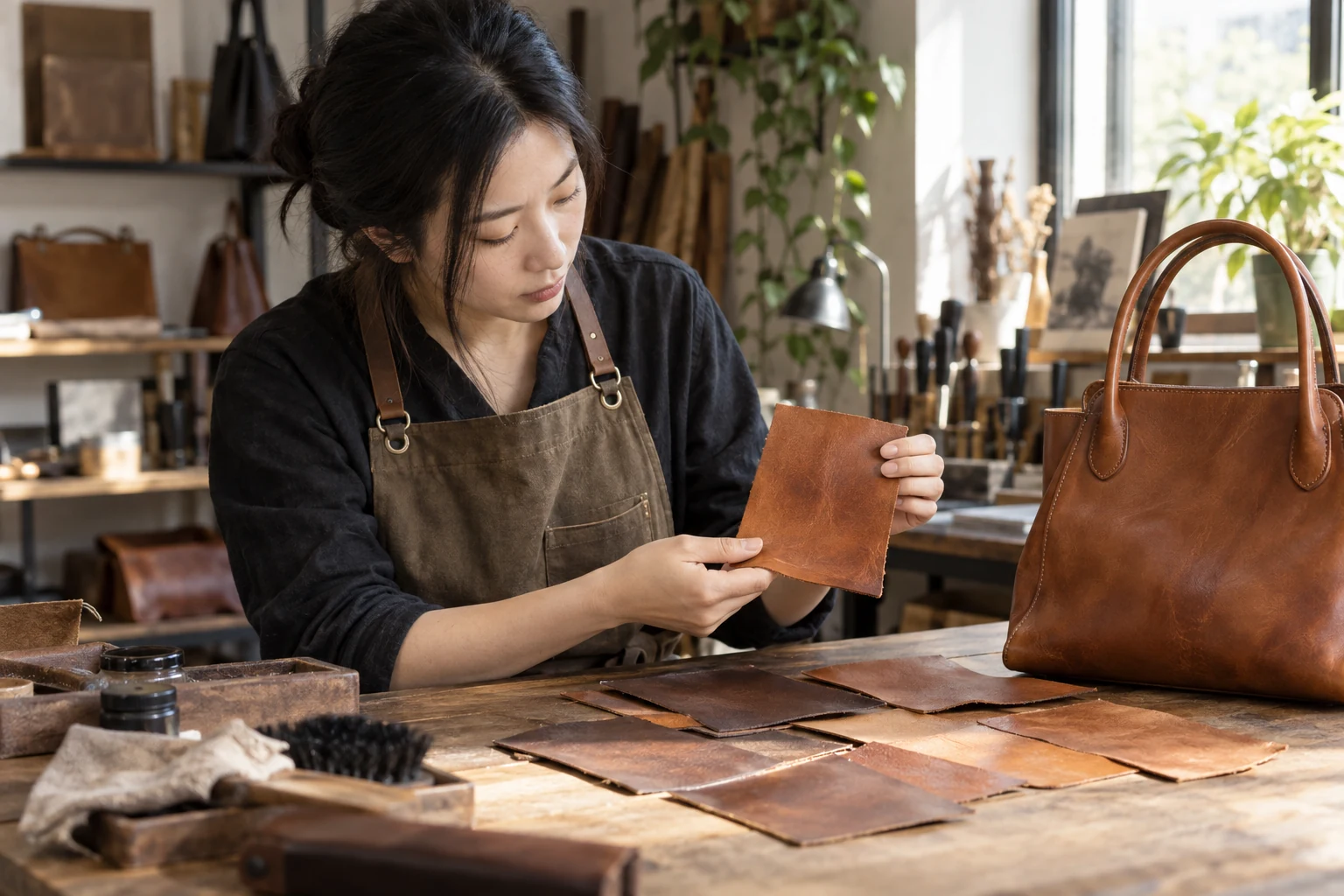
A close brown match can still look like a veil over the leather: grain remains but visual depth is lost. Greater uniformity can cover the very character the work was meant to preserve.
Identify the actual surface
Aniline-dyed leather often retains visible natural variation, but finished products differ. Visible grain alone does not establish a treatment system. Review reliable material information and history, then assess absorbency, surface layers and wear without placing identification-test liquid on a conspicuous area.
State whether the target is local colour loss, uneven old treatment or a new overall style. An unknown opaque coating underneath may not regain translucency simply through another transparent colour layer.
Check one: the base colour
Transparent and semi-transparent results depend on what lies beneath. The same product can differ on light and dark brown bases. Keep base photographs and use samples close in absorbency and finish to the item. For a pale patch, agree an acceptable transition range instead of chasing the darkest point on the bag.
Check two: texture is not the whole character
Compare tone in soft frontal light and reflection obliquely. Observe the relationship between grain recesses, raised areas and natural colour variation. Making everything equally dark can flatten visual depth without physically filling the grain.
Wait for a stable dry condition, then inspect bright patches, drag and boundaries. A close frontal colour with an abrupt oblique reflection requires surface-effect review, not simply more colour.
Check three: can the local route work across the item?
Curves, seams, folds, wear and differing absorbency may not behave like a flat sample. Plan sequence and boundaries and record clearly different areas separately rather than applying identical pass counts.
Inspect overall appearance from normal distance, then local transitions for translucency, tone and consistent feel. If opaque coverage is needed to hide the base problem, discuss a changed goal rather than calling it restoration of the original aniline character.
A three-part sample card
Score tone, translucency and surface condition separately as close, needs adjustment or cannot proceed. A close colour with unacceptable feel is not a usable sample. Resolve that change before refining tone. Leave half the base untreated so you can see at which stage the depth was obscured.
REBIRTH's aniline-leather colour-overlay style lesson can be paired with colour-matching practice. Keep same-colour samples on different bases and record dry results. Understanding base colour, absorption and transparency is more transferable than a standalone recipe.