
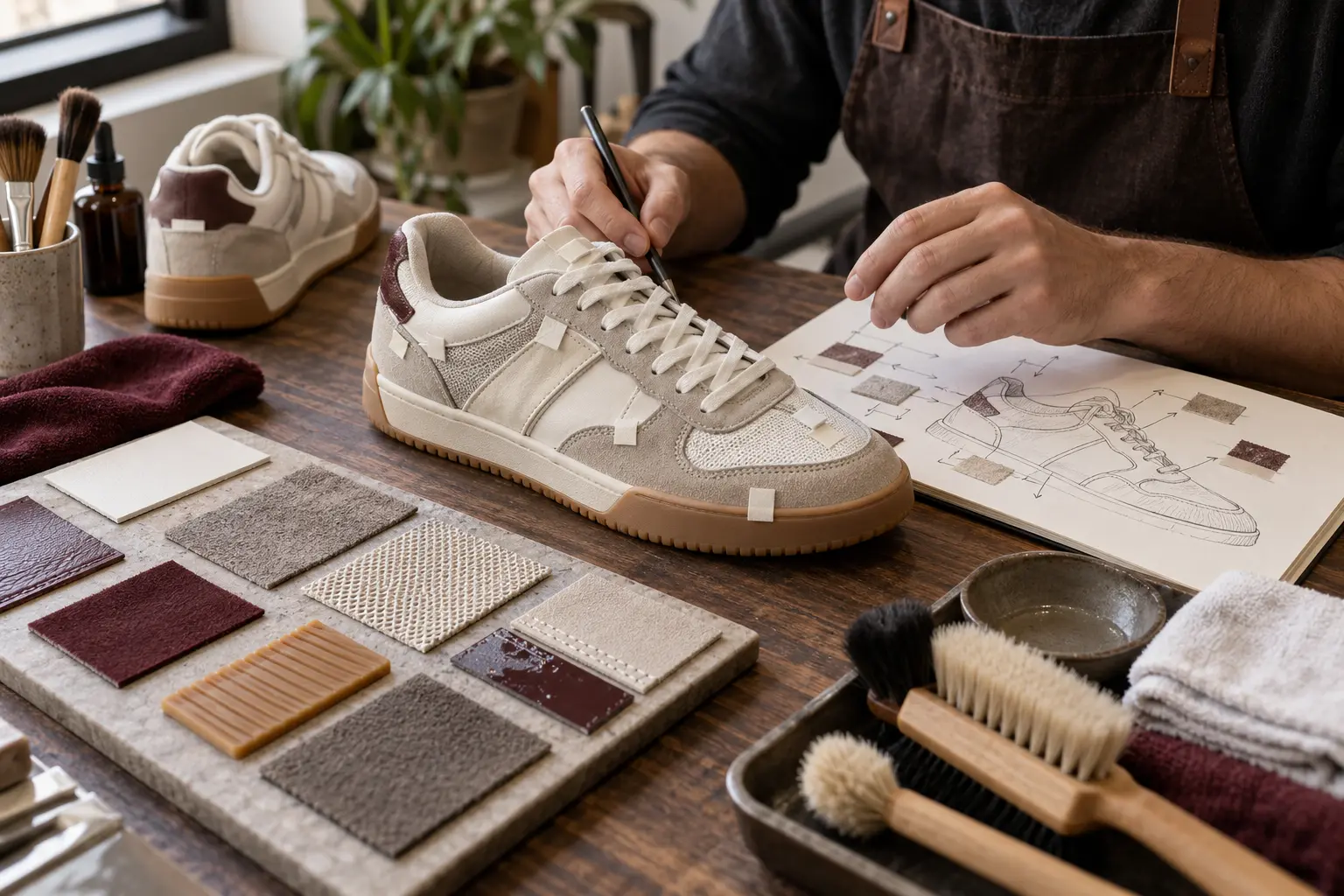
A sneaker combines materials and joins with different tolerances for water, products, friction and temperature. Mesh, leather, suede, heat-bonded films, printed details, midsole foam, outsole rubber, linings, laces and adhesive joints need a whole-shoe material map.
What to mark
- Main upper materials and adjoining panels.
- Suede, pale leather, prints, reflective areas and special finishes.
- Bonded films, printed overlays, decorations and loose parts.
- Midsole and outsole yellowing, powdering, cracking or adhesive ageing.
- Whether laces, insoles and linings are removable, and any colour-transfer risk.
The most sensitive area limits overall treatment
A robust mesh body does not cancel the risks of sensitive suede, prints or aged bonds elsewhere. Overall treatment must respect the weakest material or joint.
Working sequence
- Photograph the shoes and mark materials and defects.
- Remove loose dust dry.
- Test each material and area inconspicuously.
- Specify product, tool, moisture and friction for each section.
- Plan the order around sensitivity and likely movement of soiling.
- Recheck colour, grain or texture, bonding and shape after cleaning.
Stop extending a method if colour transfers, suede hardens or clumps, print edges lift, bonds change, foam powders or colours migrate between panels.
Contact REBIRTH for sneaker care skills and process training for mixed-material, limited-edition or high-risk shoes.