
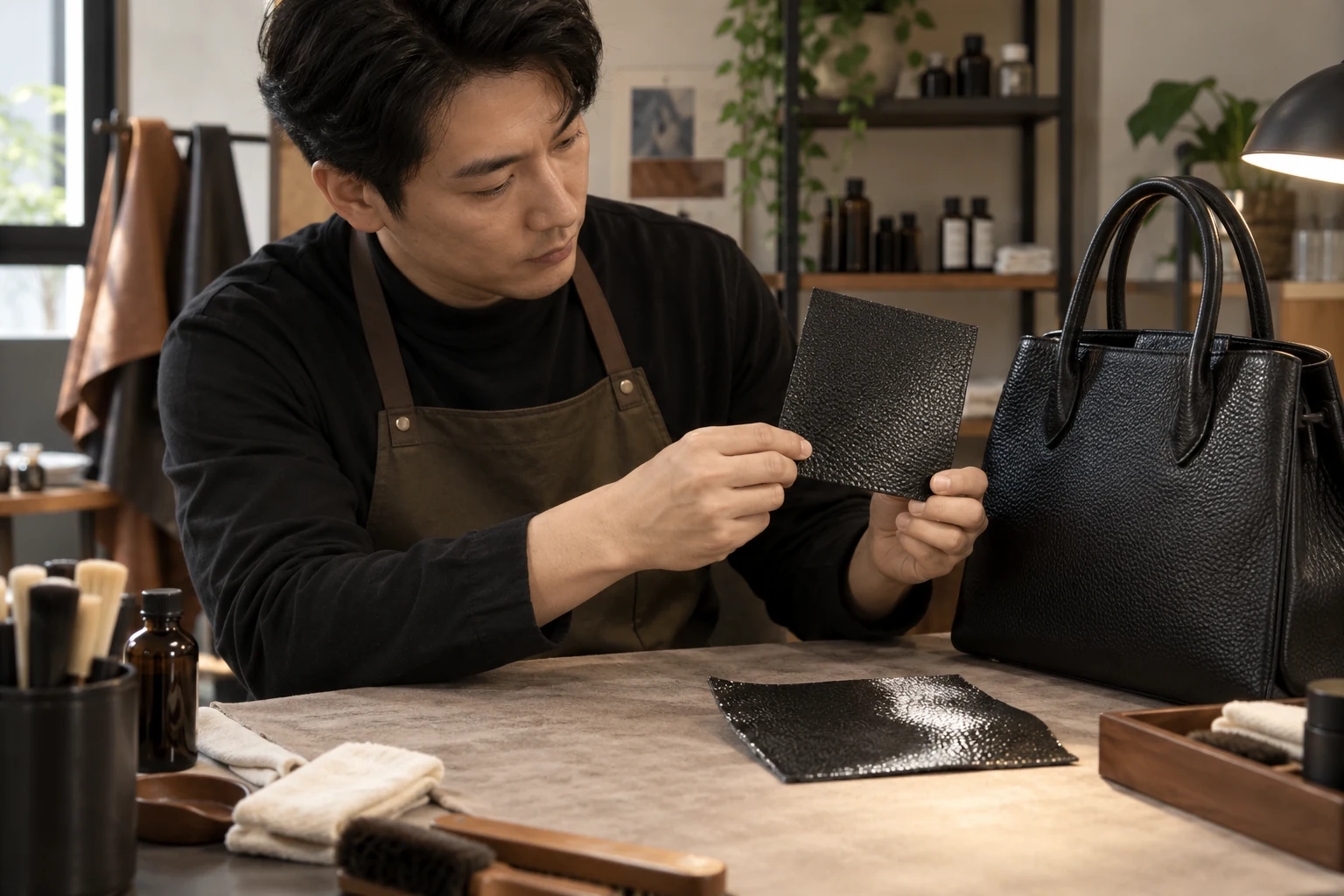
Black may cover quickly, yet a restored bag can look plastic-like, with broad highlights, obscured grain and stiff folds. That happens when coverage takes priority over the original appearance and feel. These observations concern stable finished black leather; suede, patent and oil-waxed leather need their own assessment. A model name does not establish the finish, even across similar bags.
Three references
Assess whether the black is warm, cool or greyish; whether the gloss is diffuse, soft or mirror-like; and the grain, softness and surface friction. Retain an unchanged stable area for comparison under the same light. A handle polished by use is not the gloss reference for the whole body, and automatically brightened phone images cannot establish the correct black.
Separate the variables on samples
Use comparable practice leather with the same base preparation and colour system. First compare the minimum necessary coverage and remaining grain. Then compare compatible topcoat effects on separate samples. Do not try every material repeatedly on one piece.
If colour is close but gloss too high, investigate gloss before adding black. Pale exposed fibres may require a contour assessment rather than dark colour alone. Once the finish is thick and stiff, a gloss adjustment cannot undo every layer; reconsider whether the process has gone too far.
Local boundaries
A repaired corner may match from the front but show a shiny ring obliquely. Check coverage and layer boundaries, then texture, then colour. Spraying the entire bag immediately would change original surface that could have been retained.
A local repair should look natural within agreed viewing and use conditions and achievable limits. Discuss visible local differences, especially on valuable items. Do not expand restoration without agreement to pursue an absolute invisible result.
Check after curing
Complete the specified cure and inspect under normal room light and another everyday light source. Compare gloss and grain with untouched areas, gently move normally flexible parts and use adhesion and colourfastness checks appropriate to the system. Do not improvise destructive tests on customer goods. Colour transfer, tackiness or peeling must be investigated, not concealed with oil before handover.
Score colour, gloss and texture separately in practice. Knowing when to stop coverage to preserve grain is more useful than covering everything in black. REBIRTH's black-bag recolouring, lambskin wear and local corner-repair cases can help you track scope, leather feel and completion criteria. Bring samples for guidance on complex finishes.
Mask half a sample and compare colour in diffuse light, texture in side light and gloss at changing angles. If colour matches but grain is lost, the next exercise should address coverage and base preparation, not more black.