
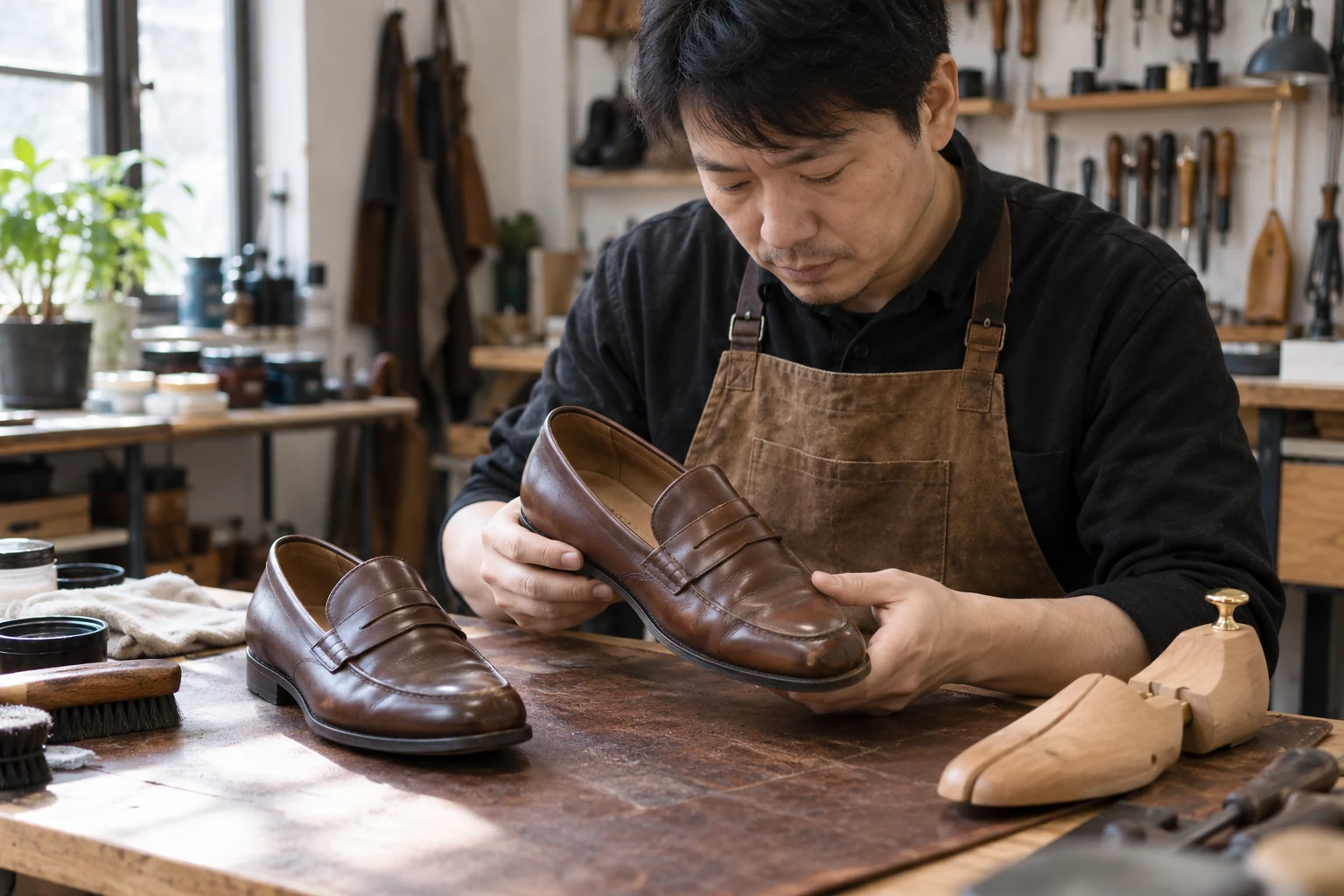
A shoe may have pale toe wear and normal forefoot creases. Treating both as areas to fill perfectly flat can improve the toe while making the flex area stiff. Shoe uppers repeatedly change shape during walking, so assessment must include that movement.
Map the upper
Photograph toe, flex area, sides and heel, noting wear, creases, splits and old treatment. Distinguish natural use creases from material rupture; not every crease should be filled. Check sole bonds, lining and overall shape so appearance work does not overlook use-related damage.
Compare both shoes in the same position. Wear need not be symmetrical, and the less-worn area is not an automatic target that the worse shoe must reach at any cost.
Contour at the toe, movement at the flex area
Toe repair balances colour, smoothness and original contour. Flex areas also need stable material and natural movement. Cracked or fragile leather requires suitability and continued-use assessment; hiding a split does not restore strength.
A shallow toe scuff may suit local surface work while natural forefoot wrinkles should remain mobile. Applying a fill-and-cover route to both expands unnecessary treatment.
Make the sample relevant
Use a compatible sample resembling the upper to assess colour and finish, then reasonable bending once stable. A sample cannot replace checking the actual shoe's ageing. Record substrate, existing finish and process, not just a successful colour.
Compare with both shoes, sole edges and decorations. A fresh-looking local patch may be more conspicuous than modest remaining wear. Discuss wider scope for overall harmony rather than covering both shoes because one colour test failed.
Inspect at rest and in normal shape
Check colour and contour at rest, then the locations that flex in ordinary wear. Do not overfold or pull hard as a durability claim. New stiffness, cracks or obvious boundaries require review of that area's material and process.
Record overall paired views, toes and flex areas. Match aftercare to actual material and treatment; one product is not suitable for every shoe. Appearance restoration cannot replace a failed structural repair.
Give each shoe toe, flex and heel rows with colour, contour and material condition. Compare harmony without requiring identical natural wrinkles. If the toe improves but a hard edge appears at the forefoot, reject that part of the result despite an attractive overall image. Mark original splits differently from ordinary creases.
REBIRTH's Hermès shoe-restoration case and smooth-leather cleaning, filling and recolouring lessons can be reviewed by the zone and reason for each step.