
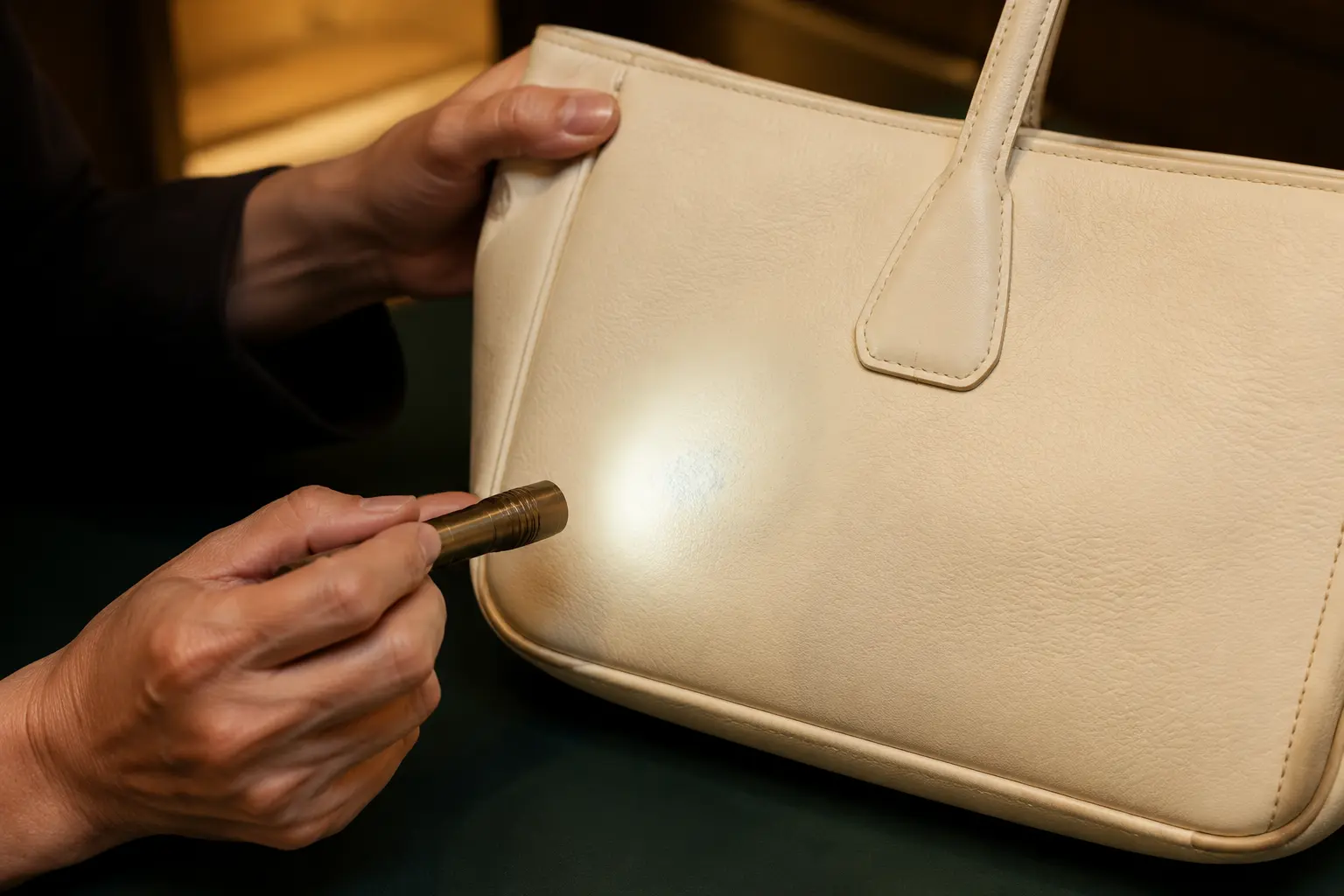
Light-coloured leather does more than show dirt: it makes almost any local change easier to see. Poor control of the treatment area, wet-to-dry boundaries or rubbing pressure can create a colour difference more noticeable than the original stain.
Consider both whether the stain can be removed and whether the whole panel can retain a naturally consistent colour and sheen.
Look beyond the visible stain
- The contamination may have penetrated the surface, rather than being loose dust.
- The original colour may already be worn; removing dirt can expose the colour difference.
- An earlier recolouring layer may come away during cleaning.
- Differences in local moisture levels can leave water marks or rings.
- Dye from dark edge paint, the lining or clothing may transfer during treatment.
A careful assessment sequence
- Look at the overall colour in diffuse natural light, rather than focusing only on the spot.
- Gently touch-test with a clean white cloth to check for colour transfer.
- Identify the stain's boundary, extent and likely source.
- Test the product in an inconspicuous area and wait for it to dry.
- Work in small, adjoining sections, avoiding sharp treatment edges.
When to stop
Stop if the stain remains while the original colour becomes lighter, the cloth picks up the leather's colour, an area darkens rapidly or the surface loses its sheen. Increasing pressure will usually make the colour difference and surface damage worse.