
Pulling harder to straighten uneven back stitches can wrinkle the leather edge. More expensive thread or a different stitching iron may not solve inconsistent holes, needle order and pull direction. Practise on scrap leather: repeated trials in a customer's original holes can cause irreversible damage, especially around torn or loaded connections.
The back stitch begins at the hole
Misaligned layers, an angled iron or unaddressed thickness changes alter where holes emerge. Before threading, hold the practice piece to the light and compare spacing and distance from the edge on both sides. Thread tension cannot fully correct misplaced holes.
More or larger holes do not automatically make a stronger seam; excessive perforation can weaken the edge. Match needle, thread and hole shape to thickness, use and the taught method rather than one universal size.
Three repeatable actions
Keep the needle-entry order consistent, avoid piercing thread already in the hole, and maintain a similar pull direction and tension. Slow, consistent practice is useful. If thread suddenly resists, check tangling, pierced thread or an abnormal hole before pulling harder and damaging thread, holes or shape.
Use short practice seams
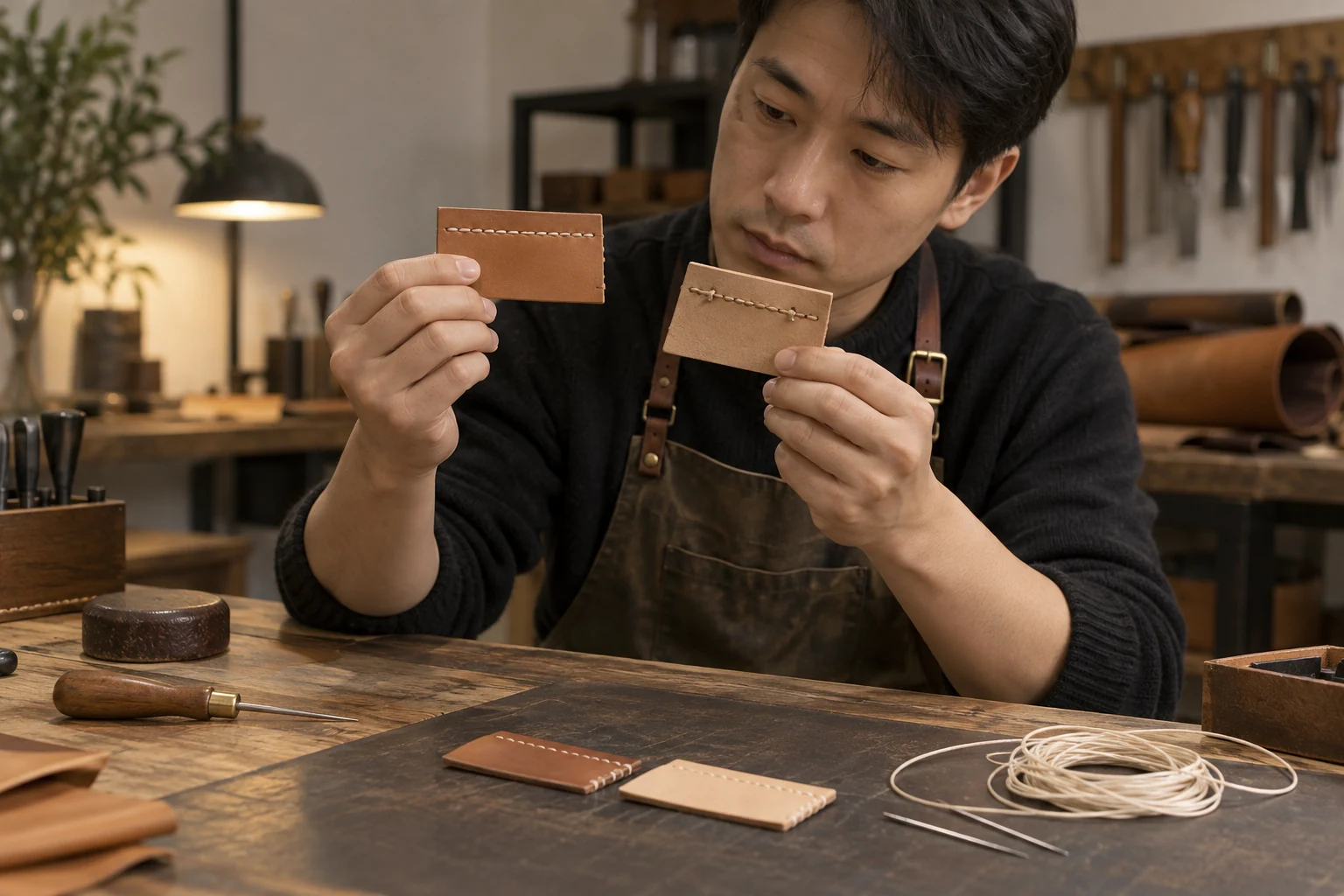
Make two short seams in the same material. Fix the action sequence for the first, then change only one action after instructor observation. Photograph front, back and edge and mark where the difference begins. A neat straight section that becomes uneven after a turn calls for checks of corner hole placement and hand direction. Repeated changes along a straight seam suggest changing needle or pull actions.
This gives clearer feedback and uses less material than discovering a general problem after sewing a whole bag.
Avoid apparent shortcuts
Excessive pulling can shrink an edge; enlarging old holes changes the connection; hiding a defect on the back can still affect use. Learn suitable finishing methods, not just how to conceal thread ends. Connection reliability also depends on material, structure and fastening, not one attractive stitch pattern.
For course questions, provide layer count, needles, thread, tools, photographs of both sides and a short safe demonstration, stating whether needle order is fixed. REBIRTH's hand-stitching, hole-punching and sewing lessons work well in that sequence. Repeated online viewing helps with movement; persistent angle or force problems may benefit from in-person correction.
Compare equal-length seams with the same material, spacing and thread, changing only one consistent pulling action. If the error follows tilted holes, return to hole preparation rather than forcing the later stitches straight.