
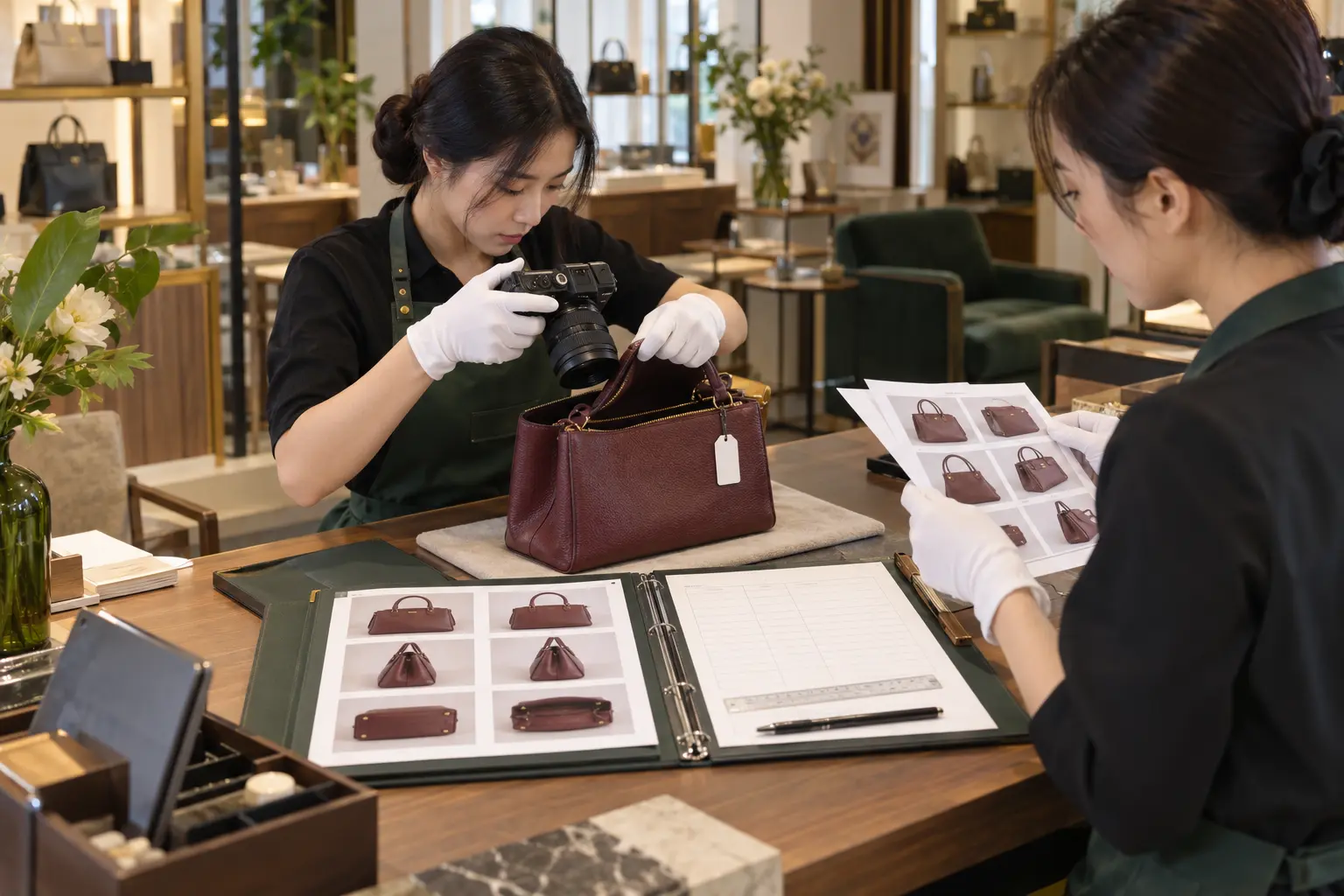
Pre-owned stock may pass through receiving, assessment, care, photography and sales teams. Without one consistent record, marks get reassessed, treatment history is lost and descriptions become unreliable. Use a unique item number so that the next person can reconstruct its history.
Seven record sections
- Identity: internal number, category, brand, model, colour, dimensions and intake date.
- Source and movement: acquisition channel, handlers, storage location and status changes.
- Accessories: straps, locks, keys, documents, dust bag, box and detachable fittings.
- Initial images: six sides, lining, markings, hardware, corners, problem close-ups and side light.
- Condition map: location, type, extent, severity and effect on use.
- Care history: service, tests, product batches, operator, time, abnormalities and result.
- Listing disclosure: remaining visible issues, treated areas, care advice and after-sales limits.
Preserve the intake evidence
- Record appearance and accessories before removing unnecessary packaging.
- Use fixed backgrounds, lighting and camera positions for comparable six-side images.
- Photograph handles, opening, corners, base, hardware and lining close up.
- Name images by item number, date, location and sequence.
- Do not wipe away evidence before the initial assessment.
- Keep original photographs read-only; never replace them with after-treatment images.
Describe observable condition
Minor wear, good overall and already cared for are too vague. A useful entry might read: approximately 12 mm of surface wear at the right front corner, visible in side light, without structural effect; local darkening at the handle base, without recolouring. State location, type, extent, viewing conditions, treatment history and effect on use.
Record care decisions
Set the goal: presentation, hygiene, structural stability or a targeted repair. Define what must remain original and what cannot be promised to disappear. Record test location, batch, tools, amount, time and operator. Capture matching before-and-after views, dry rechecks, remaining issues and aftercare. If the plan changes or pauses, record the trigger, reviewer and customer confirmation.
A care record documents condition and treatment; it is not an authenticity conclusion. Where authentication is required, follow a separate appropriate process and identify the report's source, date and scope.
Build the sales disclosure from the record
- List visible issues relevant to a purchase decision.
- List completed cleaning, conditioning, recolouring, edge-paint or structural work.
- Identify before-and-after photographs clearly.
- Explain current effects on use without absolute claims such as perfect or invisible.
- Have the care team check technical accuracy and sales staff check listing consistency.
- Retain the listing version seen by the buyer and the condition at handover.
The most common distortions are replacing originals with enhanced images, photographing only flattering angles afterwards, and omitting recolouring, replaced edge paint or structural repairs. Keep original evidence protected and all treatment traceable.
Too many images? Use consistent item IDs, location names and four groups: original, process, acceptance and listing. Comparable angles matter more than volume.
Why record product batches? Batch and amount help investigate colour, tackiness and durability problems.
A minimum form includes ID, date, six-side images, accessories, problem location and extent, goal, tests, work, acceptance images, remaining issues, disclosure and reviewer. Start with that before adding more fields.