
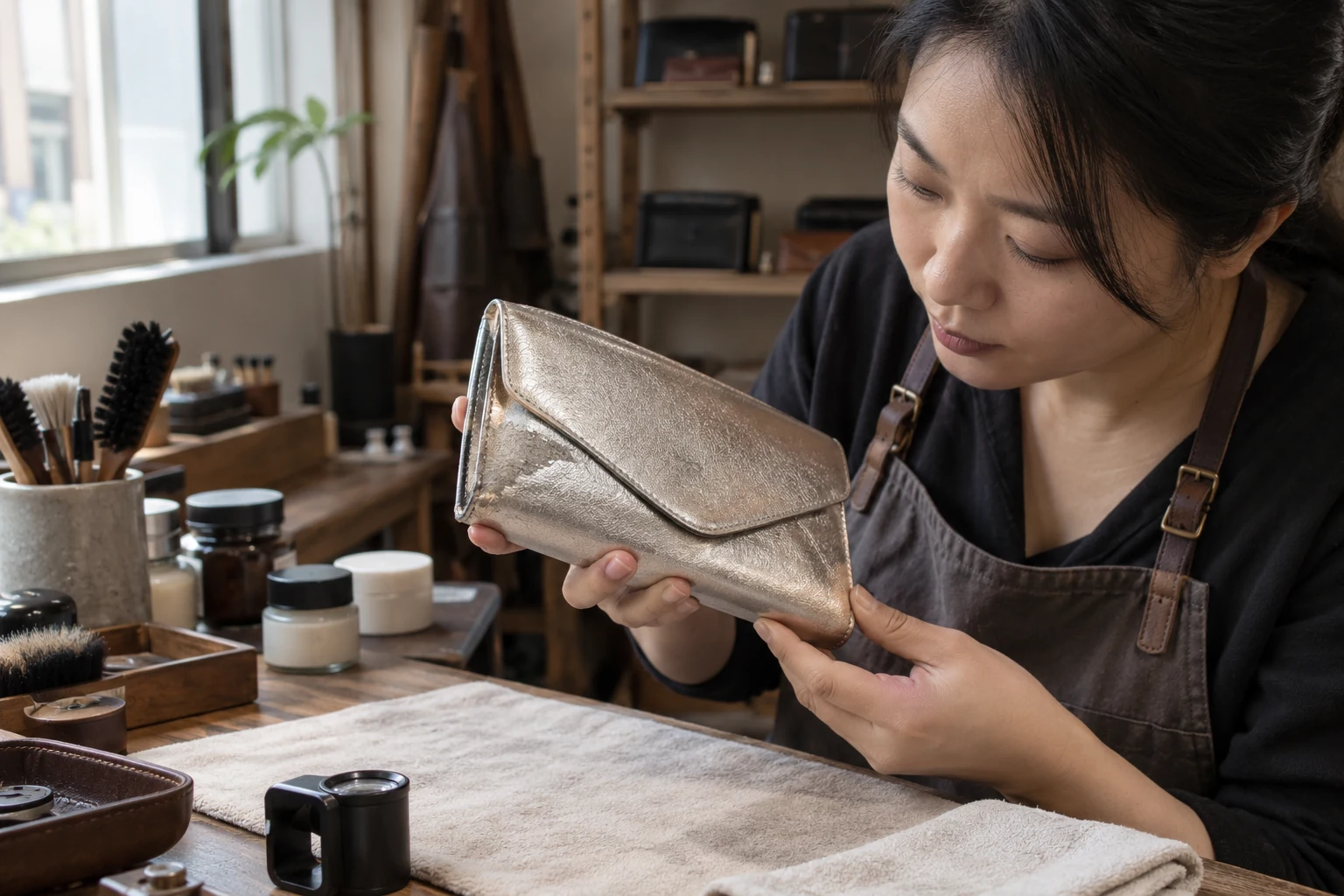
A dull silver-coloured corner may suggest polishing, but metallic leather is not solid metal. The effect layer may already be worn thin, and rubbing as if it were hardware can remove more of it. Establish where the shine comes from before deciding between cleaning and finish restoration.
Map the dullness
Rotate the bag slowly in oblique light. Is dullness concentrated at corners, folds or handling areas? Is a deposit hiding reflection, or is the reflecting layer discontinuous? Two silver bags may use different finishes. Magnify and retain an untouched reference; do not rub hard to prove oxidation. If material information is insufficient, seek more. Observing layer loss does not identify its chemistry.
Three targets
Record frontal tone, reflection while turning and close-up texture. A neutral-grey corner beside fine silver lustre may look less obvious when lightened head-on yet remain dull from the side. Excess reflection with the wrong particle character can look like an attached sequin instead.
Validate on compatible samples
Use a system appropriate to the actual finish and establish whether its effect is achievable before planning local transitions. Similar-looking materials are not automatically compatible. Record base colour, surface condition and dry appearance, not just silver as a product name.
Compare from ordinary changing viewing angles. If a clear patch remains, revise the plan. Lowering camera exposure to conceal it does not improve the physical item.
Check normal shapes
Inspect flat, lifted and naturally bent positions for hard boundaries, abnormal folds and obscured texture. Do not force folds as a durability demonstration. Explain any remaining angular mismatch. Local restoration, an overall style change and part replacement are different scopes.
Mark a fixed position on the table and photograph front, left-turned and right-turned views with the light unchanged. Record patch visibility for each instead of averaging the impression. Check frontal tone and coverage, continuity and grey edges from one side, and abrupt particle or brightness changes from the other. Finish with continuous physical observation at normal distance.
REBIRTH's plated-effect leather content addresses a different skill from brush-plating hardware. Identify the object first, then connect colour, surface repair and effect lessons so experience from one material is not misapplied to another.