
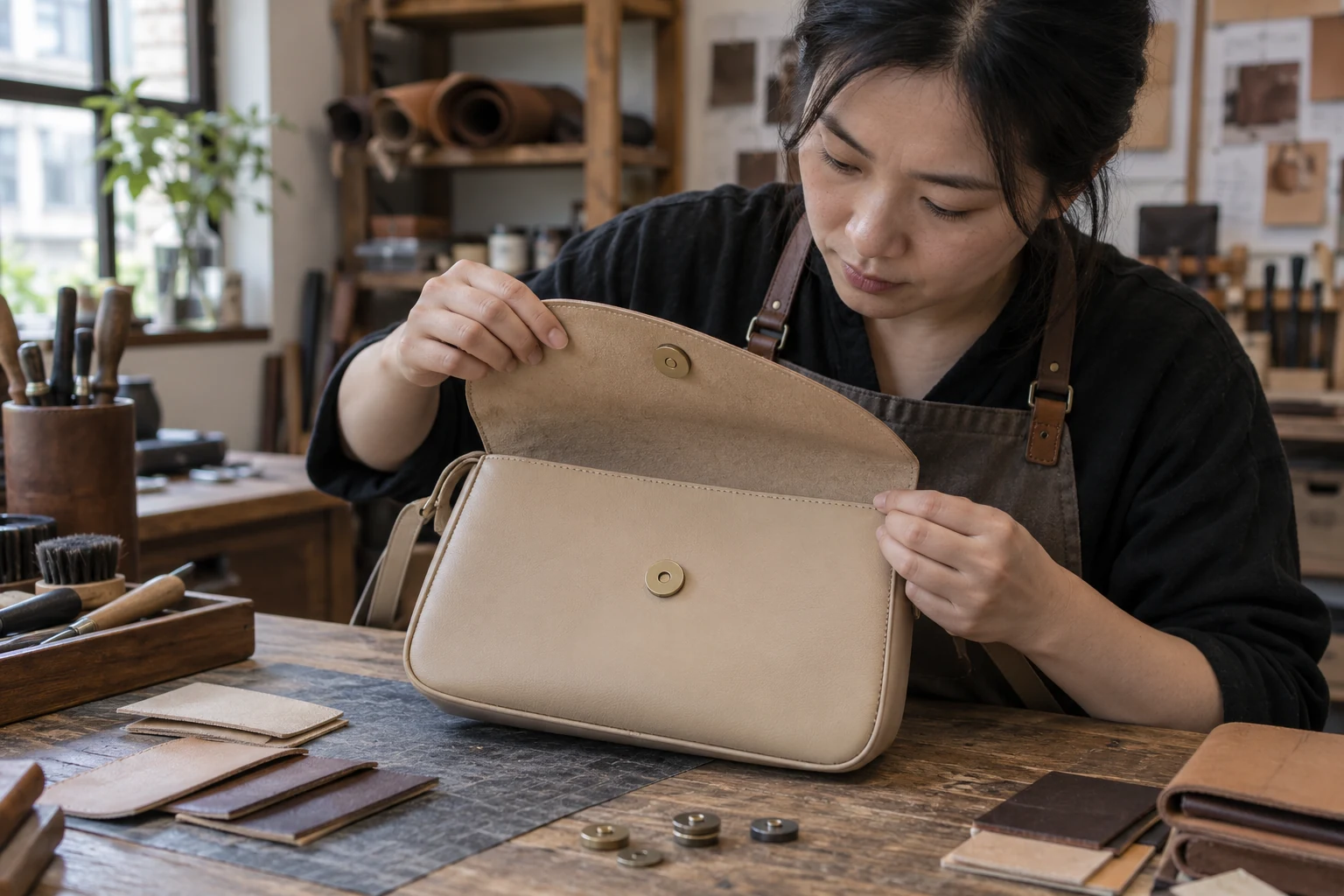
If a clasp looks intact but only catches when the flap is pressed down after leather replacement, do not immediately fit a stronger magnet. Position, covering layers, distance and the flap's resting shape can all affect closure.
Identify the symptom
Let the empty bag's flap fall naturally. Are the halves offset, too far apart or unstable even in contact? Gentle guidance into alignment offers a clue, but record that separately from natural closure. Check visible parts for looseness, distortion and incompatible pairing. Similar outlines do not establish compatibility; follow the actual component requirements and do not bend parts forcibly into place.
Review changed dimensions
Compare original and replacement coverage, layers and thickness, including unnecessary separation between the halves. Mounting depth, backing and fixing also matter; measuring only one leather layer is insufficient.
A fuller replacement surface can increase the gap. Reassess the original structure and fitting rather than pressing a new crease into the flap to compensate.
Re-establish location
Use the flap's natural centre, opposite half and normal closed shape together. A deformed old hole is not the only reference. Check relationships without adding damage before deciding whether to remake the leather or revise the plan.
If one side must stretch to align, inspect the fold line, front-panel shape and local thickness too. Change one condition at a time and record the result instead of repeatedly adding backing, thinning and moving parts without knowing the cause.
Function and appearance together
Check natural closure empty and with reasonable contents. Do the halves find each other easily? Is extra pressure needed? Does opening pull the replacement leather? Also inspect flap alignment, bulges and fixing points. Merely attracting is not sufficient.
Damaged or mismatched components need an appropriate replacement assessment. Greater magnetic force should not compensate for unsuitable construction. Record actual parts and leather changes for future maintenance.
Investigate alignment through gentle guidance, then the assembly gap, then natural shape, with separate notes. Correct alignment that still requires pressure points towards gap or shape; improvement with a small sideways movement points towards location. Record component failure separately.
REBIRTH's Gucci tiger-head magnetic-clasp leather-replacement lesson provides a related example. Compare position, gap and natural closure throughout. Magnetic clasps and press studs work differently, but both benefit from assessing support and location before choosing parts.