
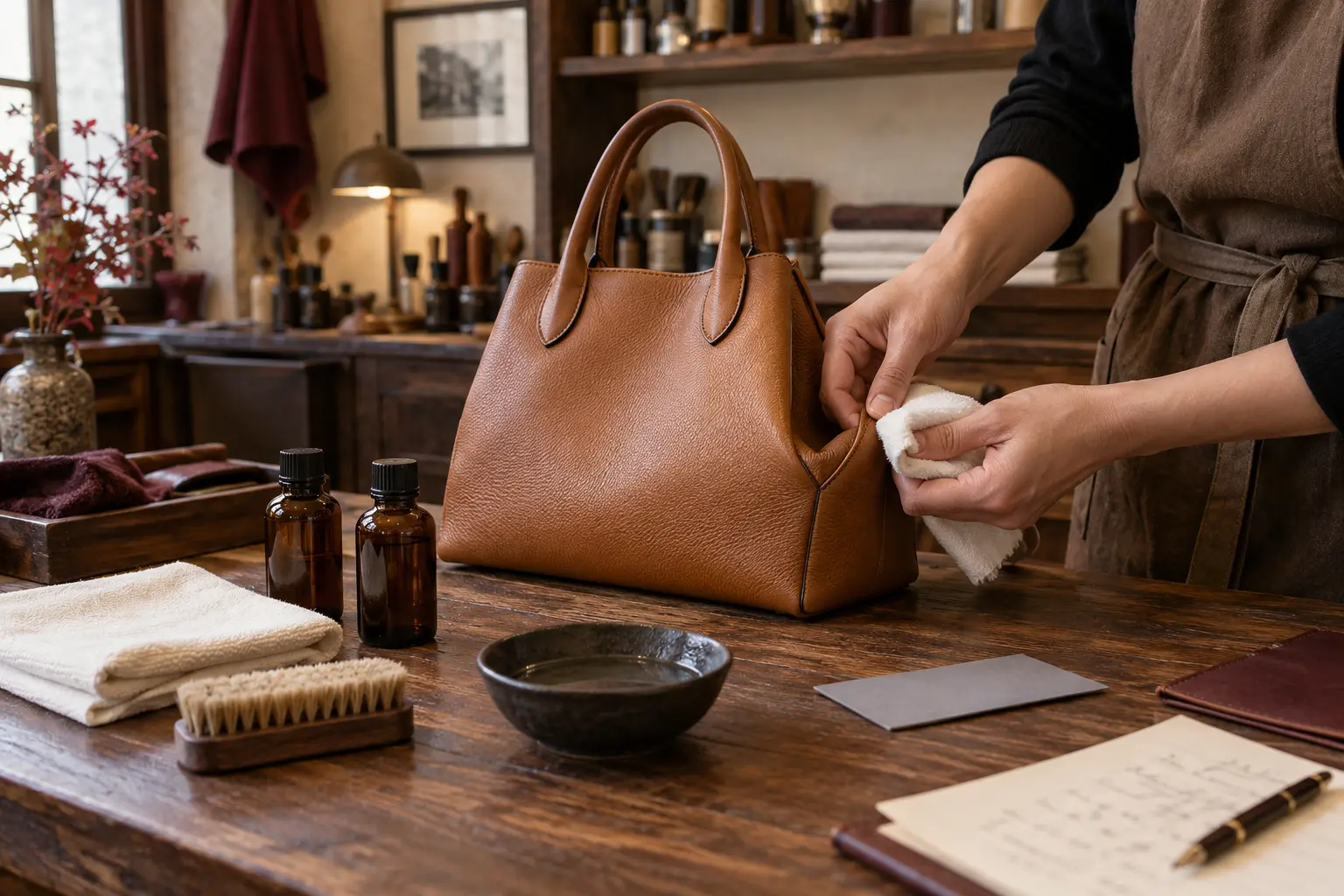
Leather cleaner and leather conditioner serve different purposes. Conditioning over untreated soiling can make stains harder to assess and leave an uneven surface. REBIRTH recommends a clear sequence: assess, test, clean, allow the surface to stabilise, then condition where appropriate.
First decide whether home treatment is suitable
Check the material, colour, finish and existing condition. Light dust on ordinary finished leather presents different risks from suede, patent, pearlescent or aniline leather, a tacky or peeling finish, or previously recoloured leather. If the material is uncertain, the item is valuable or any test mark would be unacceptable, consult the relevant product instructions or a professional first.
Suggested sequence
- Examine the whole item and affected areas in daylight. Record the original colour, sheen and extent of staining.
- Test each product separately in an inconspicuous area.
- Use small amounts of leather cleaner in controlled sections. Do not wet the entire item at once.
- Lift residue with clean materials and let the surface stabilise naturally.
- Check for colour transfer, whitening, tackiness, hardening or conspicuous colour differences before applying a small amount of conditioner.
- Finish evenly and inspect again. More shine does not mean better care.
Why keep the products separate?
Mixing makes concentration, residue and reactions difficult to judge. If something goes wrong, you cannot tell which product or combination caused it. Separate applications with observation time allow you to adjust or stop.
Stop if the surface changes
Do not extend treatment if the cloth lifts the leather's colour, an area suddenly darkens or whitens, sheen disappears rapidly, the surface becomes tacky or hard, grain flattens, or an obvious boundary develops.
For suitable materials, amounts and precautions, follow the official REBIRTH Product Guides. Read the leather cleaner instructions before deciding whether it suits this item.