
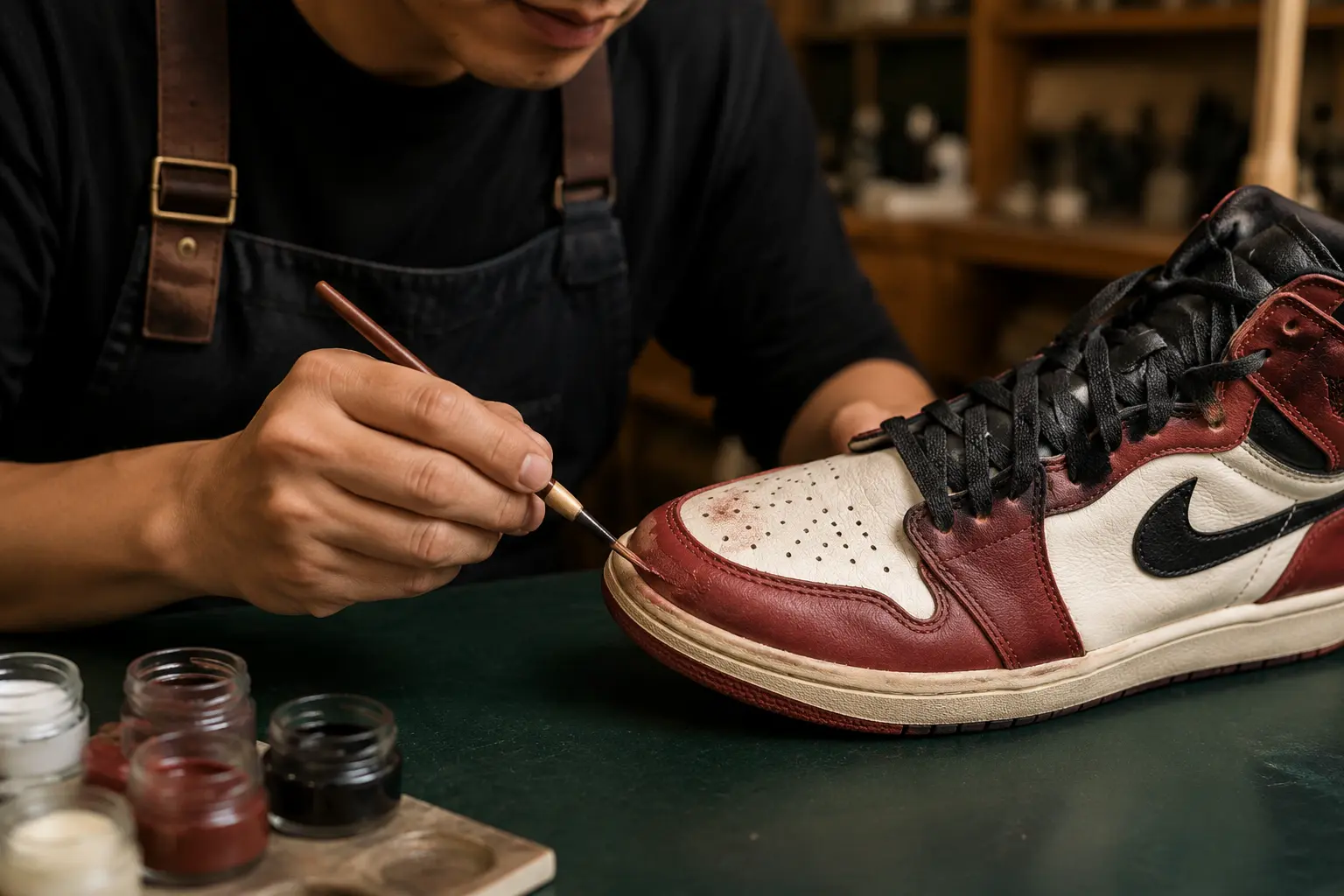
A suitable colour repair retains the material's feel, texture and flexibility instead of imposing a thick opaque surface.
Check first
- How the original colour differs between materials.
- Whether wear is colour loss or damaged fibres.
- The flexibility needed at bending areas.
- Protection for prints and panel boundaries.
Working sequence
- Clean, stabilise and remove unstable surface material where appropriate.
- Prepare a dry colour sample.
- Build a thin local transition.
- Check flexing and rubbing before acceptance.
Thick layers can block mesh openings, flatten texture and crack at flex points. For collectible shoes, also consider originality and treatment disclosure.