
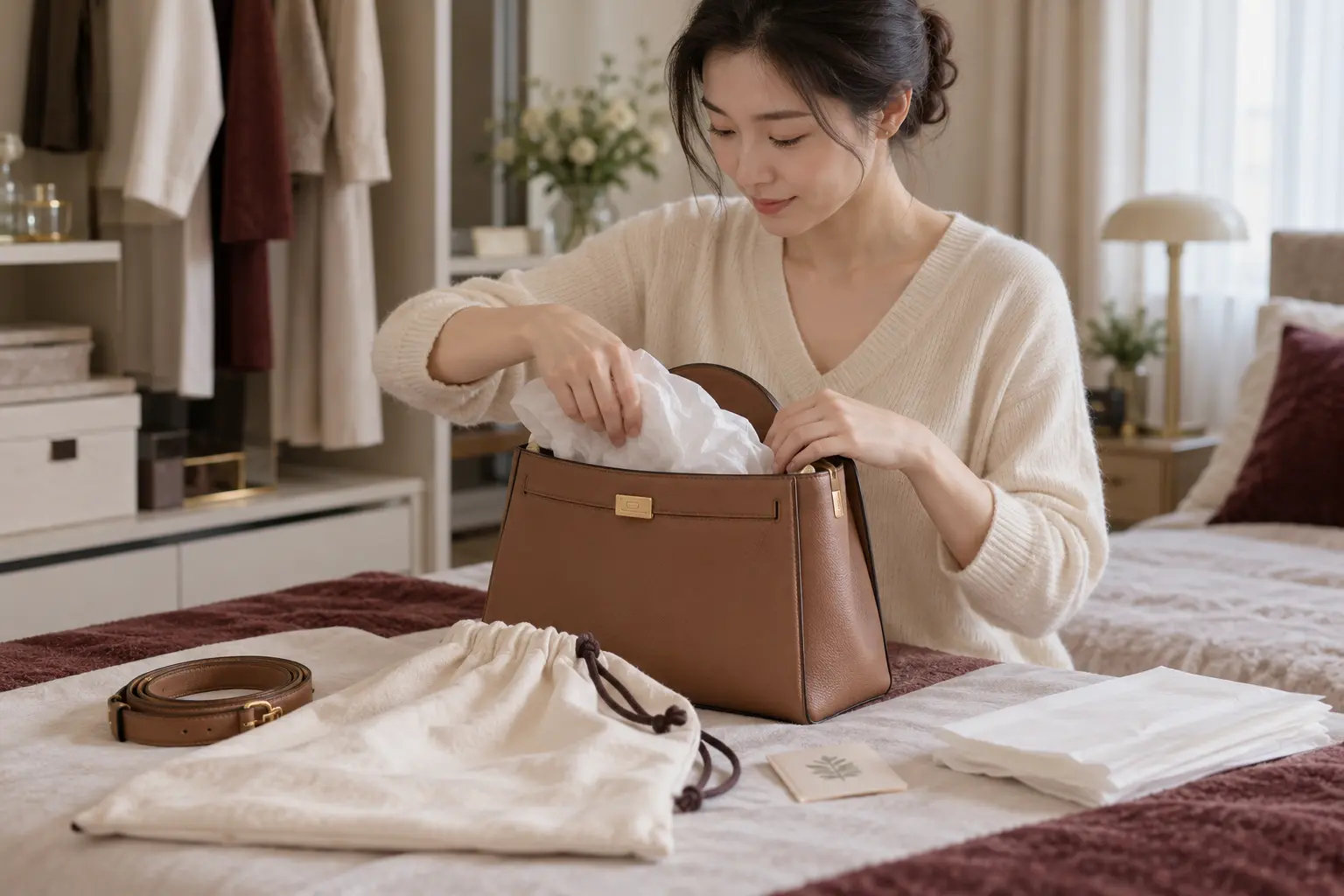
Good storage combines a clean, dry item, gentle support, balanced loading, humidity control, ventilation and periodic checks. Common problems include mould, compression, handle creases, hardware marks, colour transfer to patent leather, sticking edge paint and odour.
Before putting a bag away
- Make sure every layer is dry and investigate any unexplained odour.
- Remove personal belongings, receipts, food and liquids.
- Remove loose dust and record existing marks, colour changes, edge condition and hardware.
- Detach straps when appropriate or support them without sharp folds.
- Separate chains and metal parts from the surface with acid-free paper or clean cloth.
- Avoid direct contact with differently coloured materials, PVC or rubber, particularly on sensitive patent surfaces.
- Record the storage date and next inspection date.
Support without stretching
Use clean, unprinted, odourless, colourfast soft filling. Begin at the base and corners and fill lightly to the bag's natural shape. Do not strain zips or seams. Avoid newspaper and dyed fabric. Support the base evenly when upright; a soft bag may be laid flat with nothing heavy on top. Keep handles in a natural or supported position and leave space between bags.
Choose suitable materials
Breathable clean dust bags, acid-free paper, stable soft filling and hardware protection are useful. An original box offers outer protection but limited ventilation: open it periodically and monitor moisture. Keep desiccant isolated from the item.
Avoid long-term sealed plastic storage, newspaper in direct contact, mothballs, dyed fabric, tight ties and unknown scented anti-mould products.
A five-minute monthly check
- Check for musty, sour or unusual perfumed odours.
- Inspect shape, folds and hardware contact points.
- Look at corners, seams, inner pockets and shaded areas for mould.
- Compare colour and gloss in daylight.
- Adjust support, air briefly and record unchanged condition or any anomaly.
Unpack completely each quarter. Inspect more frequently in humid seasons. Use air conditioning or dehumidification to keep conditions stable, without direct hot or cold airflow onto the bag. Check the bag, box and cabinet back together.
Tackiness, sticking, mould, odour, softened or cracked edges, damp filling or corrosion transferring from hardware are reasons to isolate the item, photograph it and improve ventilation.
Common questions
Is more filling better? No. Overfilling can stretch the body, zips and seams.
Is the original box enough? It can protect the outside, but still needs periodic opening and moisture checks.
Keep a simple ledger: item ID, storage date, material and colour, photographs, filling, position, humidity, monthly checks, actions and next inspection.